
How to Choose the Right Cement Plant Manufacturer?
Choosing the right Cement Plant manufacturer is not a brochure comparison. It is a decision about uptime, fuel use, product consistency, and support years after commissioning. A large capacity figure can look impressive. Yet it says little about how the kiln handles variable raw meal, or how quickly a worn mill part can be replaced. Ask for operating references from plants with similar materials, scale, and fuel conditions. Then verify those references directly.
Quality expert W. Edwards Deming is widely associated with the principle, “Quality is everyone’s responsibility.” He was not a cement-industry specialist, but the principle matters here: design, fabrication, installation, and operator training all affect plant performance. Review the proposed process flow, equipment list, energy guarantees, emissions-control design, spare-parts plan, and commissioning schedule. Ask who handles performance testing, and what happens if agreed targets are missed. Request evidence, not just confident promises.
The cheapest bid may leave costly gaps. A detailed scope can reveal them: for example, whether the price includes refractory installation, control-system integration, or hands-on operator instruction. Small details count. Talk with the manufacturer’s engineers, not only its sales team. Check their experience with your specific clinker and local operating conditions. I would not pretend that a checklist removes every risk; even a strong design can meet unexpected site constraints. But careful questions, documented commitments, and verifiable references make the choice more grounded—and make a polished promise easier to test against reality.
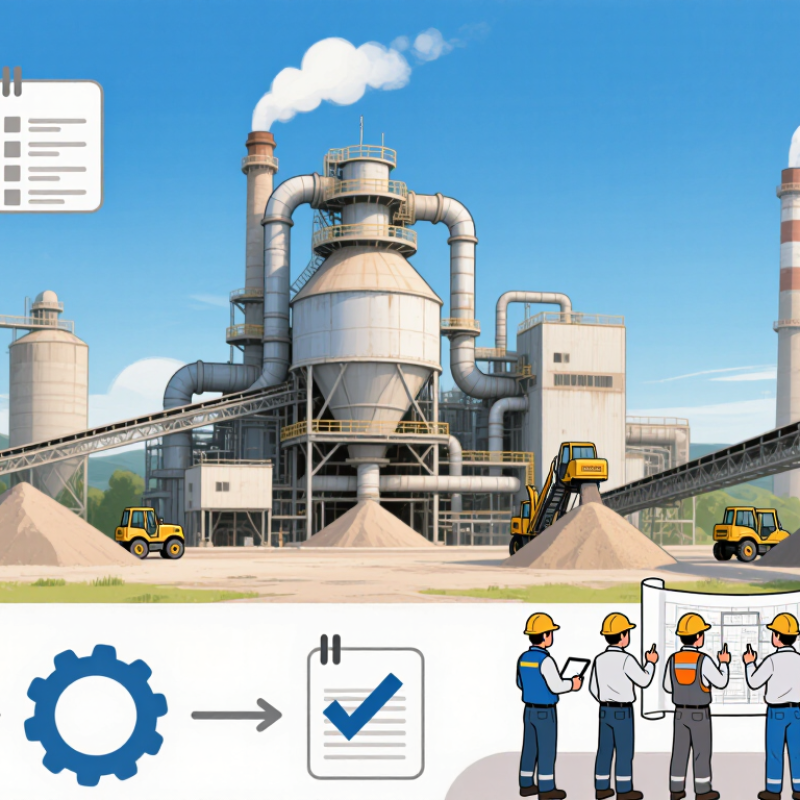
Define Your Cement Plant Project Requirements
Before comparing cement plant manufacturers, define what the plant must produce and where it will operate. Set a target capacity in tonnes per day, then identify the cement types and quality ranges required. Be specific. A plant serving local construction projects may need different equipment from one supplying distant markets. Record expected production growth, too, but separate realistic demand from optimistic forecasts.
Describe the raw materials available, including their chemical composition and seasonal variation. Limestone from two nearby quarries can behave differently. Share test results where possible, and note any gaps; early estimates are rarely perfect. List fuel options, water supply, electricity capacity, site dimensions, transport access, and storage needs. Include desired automation levels, staffing assumptions, dust-control expectations, and a workable project schedule. These details help manufacturers propose equipment that fits the site, rather than a generic production line. Define the project boundary clearly: does it include quarry handling, grinding, kiln systems, packing, installation, and operator training? Write down budget limits and expansion plans. Some requirements will change after engineering review. That is normal, but vague starting points can make quotations difficult to compare.
