
How to Choose the Right Anderson Plug Terminals?
Choosing the right Anderson Plug Terminals is more than matching a connector to a cable. The terminal must suit the plug housing, wire size, and expected electrical load. A mismatch may create a loose connection, excess heat, or unreliable power. Small details matter.
Start by checking the connector series and the manufacturer’s specifications. Anderson-style housings can look similar while using different terminal sizes. Confirm the wire’s conductor area and strand type, then compare them with the terminal’s stated range. Also consider operating current, cable length, and how often the connection will be handled. These checks help narrow the options before you buy.
Installation quality matters just as much as selection. A correctly sized terminal still needs a compatible crimping tool and a clean, secure crimp. Look for a firm fit in the housing, with no exposed strands or damaged insulation. Test the finished connection gently. It should not pull free.
The working environment deserves attention, too. Vibration, dust, moisture, and temperature can affect connector performance, so follow the product guidance for the application. Do not assume that one terminal suits every setup. That assumption is easy to make. It is also where selection can go wrong.
This guide explains the practical checks behind a reliable choice, from compatibility and wire sizing to installation and inspection. When specifications are unclear, verify them with the connector manufacturer or a qualified electrical professional rather than guessing.
What Anderson Plug Terminals Are and How They Work
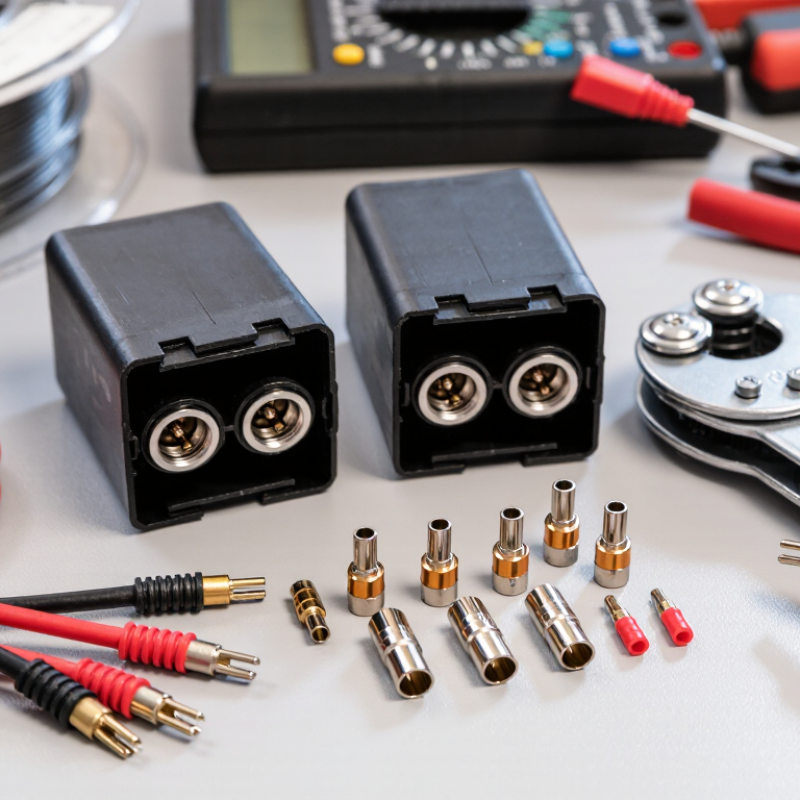
A plug terminal is the metal contact inside a power connector. It joins a cable to the connector, creating a path for electrical current. The housing holds the contacts in position and helps prevent accidental contact with exposed metal. When compatible connectors are pressed together, their contacts meet firmly and complete the circuit. Simple, but important.
Most terminals attach to cable by crimping. A correctly sized crimp compresses the terminal around the conductor, making a secure electrical and mechanical connection. Too loose, and resistance or heat may increase; too tight, and strands can be damaged. That small detail matters. Choose terminals that match the connector housing, cable gauge, and expected current. Check the manufacturer’s specifications rather than relying on appearance alone, since similar-looking contacts may not fit or carry the same load.
Use a crimping tool suited to the terminal, then inspect the joint for loose strands, movement, or uneven compression. Disconnect the power source before fitting or servicing a connector. A neat crimp can still be wrong. I would also recheck the cable size before ordering; that step is easy to rush, and the mistake is frustrating to undo.
