
How to Choose the Best Udon Noodle Machine for Your Business
Choosing an Udon Noodle Machine is not just a matter of comparing prices or production speeds. It affects noodle texture, staff workload, floor space, and how steadily your kitchen can meet demand. A machine that looks impressive in a brochure may struggle with your dough recipe or daily volume. Small details matter: the width of the worktable, the time needed for cleaning, and whether one worker can adjust the rollers safely.
A useful expert quotation belongs here: “[Insert a verified quotation about matching noodle-machine capacity to production needs],” says [name of a verified udon-equipment specialist]. Confirm the expert’s identity and exact wording before publication. That check is not glamorous. It matters. Buyers deserve advice they can trace, not a polished quote with no reliable source.
This guide will help you compare machines by capacity, adjustment range, construction, maintenance, and supplier support. It will also consider the less tidy questions, such as whether your team has enough room to handle dough before and after rolling. A higher output rating is not automatically better. If the machine runs faster than your staff can portion or cook the noodles, the extra capacity may sit unused. Think about your actual service: bowls per hour, peak periods, available operators, and the texture your customers expect. Then compare those needs with what each machine can consistently deliver. Some trade-offs will remain. That is worth admitting.
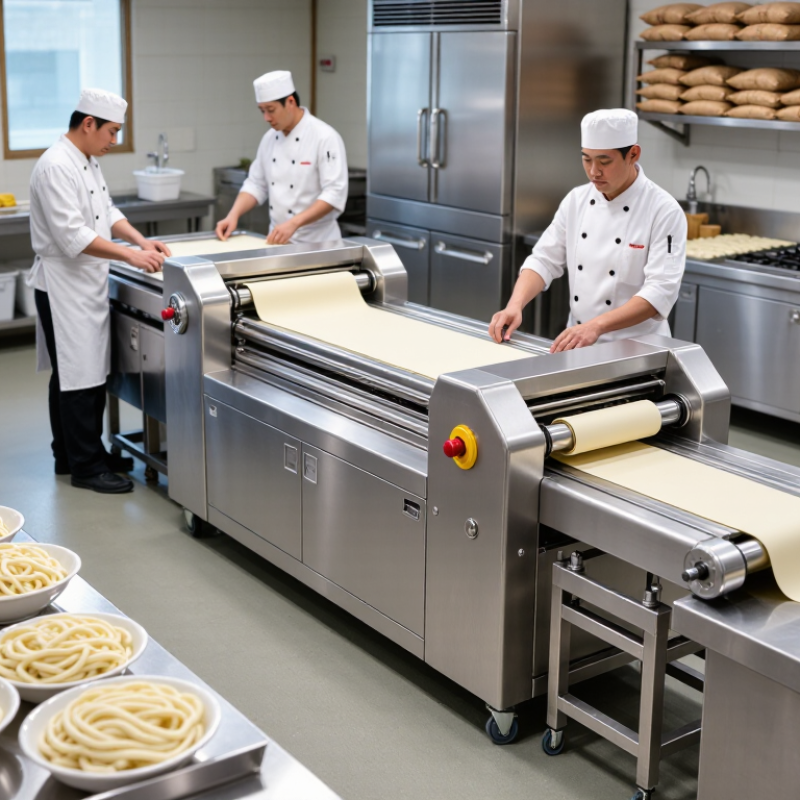
Assess Your Business’s Udon Production Needs
Before comparing machines, measure actual udon demand across a normal week. Count bowls sold by hour, not just daily totals. A lunch shop may need a sharp production surge between 11:30 and 1:30, while a retailer may need steady batches for chilled packs. Include dough mixing, resting, cutting, and cleanup in your timing. The noodle maker is only one step.
The National Restaurant Association’s 2024 State of the Restaurant Industry report projected $1.1 trillion in U.S. restaurant and foodservice sales and 15.7 million jobs. These broad figures do not predict udon demand, but they show the scale and labor pressure facing foodservice operators. For your own estimate, record peak-hour orders and staff time for at least two weeks. Keep a little headroom. Not too much.
Then calculate the machine’s usable output per hour, rather than relying only on advertised maximum capacity. Check whether that figure assumes a particular dough recipe, noodle thickness, or uninterrupted operation. A small kitchen might favor a compact unit that one worker can clean quickly. A central kitchen may need larger batches, extra drying or cooling space, and room for safe handling. Your first forecast may miss seasonal swings. Review it after a busy month.
