
How to Choose the Best Trimless Spotlights?
Trimless Spotlights sit nearly level with the ceiling, leaving no visible trim ring to frame the light. That clean finish can make a room feel calmer, but it also puts more pressure on the planning. The plaster opening, fitting depth, beam angle, and light output all need to work together. Small details matter. A spotlight that looks perfect in a product photo may feel harsh above a kitchen counter or leave dark patches in a hallway.
There is no universal best choice. That sounds obvious, yet it is easy to overlook when comparing finishes and prices. Start by checking the ceiling type and available installation depth, then compare the manufacturer’s dimensions and installation instructions. Consider how the room will be used: a narrow beam can highlight artwork, while a wider beam may suit general lighting. Check color temperature, brightness, and dimming compatibility too. These specifications vary between models, so do not assume two similar-looking fittings will perform alike. Not always.
A reliable choice balances appearance with practical performance. Review product data from the manufacturer, and ask a qualified lighting professional to confirm compatibility when ceiling construction or wiring is uncertain. If possible, test the light in the room before committing; paint colors and surface textures can look different under artificial light. Some compromises remain. A perfectly seamless ceiling may take more careful installation and future repairs than a standard fitting. This guide explains the key features to compare, the questions worth asking, and the common selection mistakes to avoid—so your Trimless Spotlights suit both the space and the way you use it.
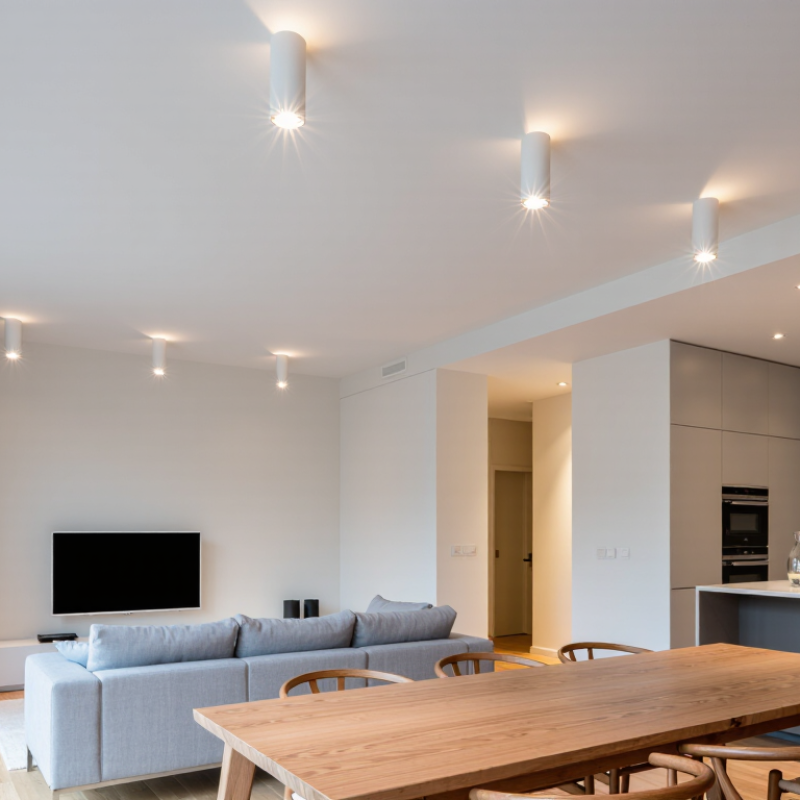
What Trimless Spotlights Are and How They Work
Trimless spotlights are recessed luminaires whose visible edge is concealed beneath plaster or a skim coat. Only the aperture and light remain visible, creating a clean ceiling plane. The fixture usually has a housing, LED module, driver, and adjustable or fixed optic. During installation, the housing is secured above the ceiling and its plaster-in frame is finished over. The LED and trimless faceplate are fitted afterward. Small alignment errors show clearly.
When powered, the driver converts incoming electricity into a suitable current for the LED. A reflector or lens shapes the beam, directing light onto a countertop, artwork, or floor. Choose the beam angle for the task: a narrow beam makes a defined pool, while a wider beam softens coverage. Check whether the unit can tilt, and confirm that its driver fits the ceiling void. Access matters. A hidden driver can be awkward to replace.
Trimless construction does not automatically mean better light or lower energy use. The U.S. Department of Energy’s LED guidance reports that LEDs use at least 75% less energy and can last up to 25 times longer than incandescent lighting; these figures describe LEDs broadly, not trimless models specifically. Compare measured lumen output, color temperature, color rendering, dimmer compatibility, and thermal ratings. I would also check a sample against the actual ceiling finish. White paint can vary. A slight mismatch may remain visible.
