
How to Choose the Best Side Spray Retort in 2026?
Choosing the best Sides Spray Retort in 2026 is not just a capacity decision. The right system must heat every package consistently, fit the product and container, and support reliable production. Small details matter: basket spacing, spray nozzle placement, and how quickly operators can load a batch. A machine that looks efficient on a brochure may perform differently on a crowded production floor.
Market growth gives useful context, but it does not select the equipment for you. Grand View Research estimated the global retort packaging market at USD 4.1 billion in 2022 and forecast a 4.8% compound annual growth rate from 2023 to 2030. This figure covers packaging, not retort machinery, so it should not be treated as a direct measure of equipment demand. Still, it signals continued interest in shelf-stable packaged foods. The report is a starting point, not a buying specification.
For a practical comparison, assess container type, batch size, temperature uniformity, water use, controls, and service support. Ask suppliers for heat-distribution and heat-penetration evidence using your actual package and product. Then review cleaning access, spare-parts availability, and operator training. That sounds simple. It is not. A wider capacity range can help, but it may also raise energy use or complicate changeovers. There is no universal winner. This guide explains how to weigh the trade-offs and choose a Sides Spray Retort that matches your process, not merely the highest advertised output.
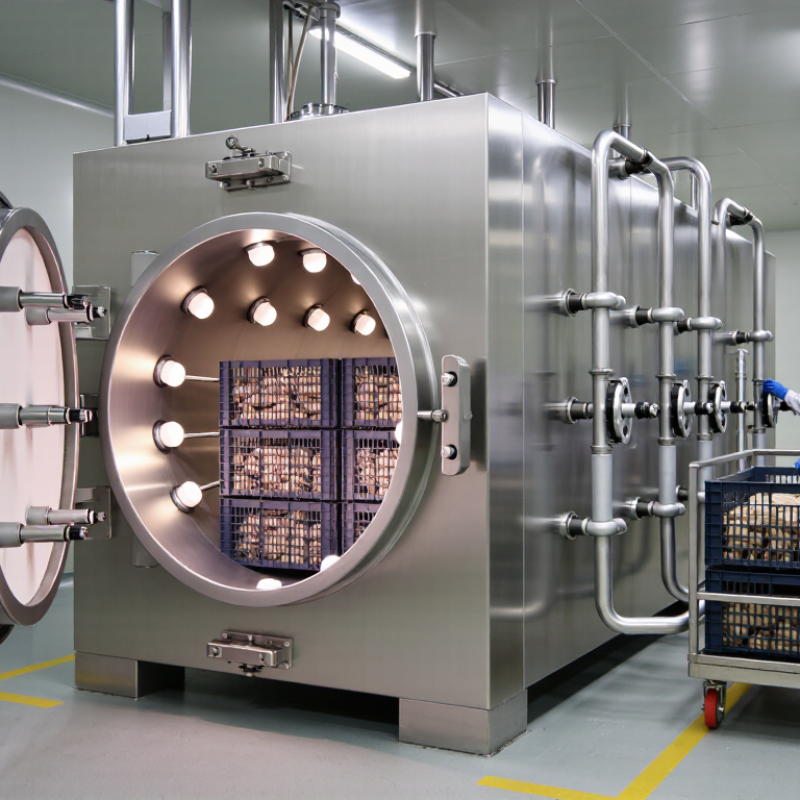
Understanding Side Spray Retorts and Their Operating Principles
A side spray retort heats sealed food packages by circulating hot water through nozzles along the vessel walls. A pump keeps the water moving, helping it reach packages across the load. Unlike direct steam heating, this method uses water as the heat-transfer medium. The details matter. Basket spacing, package shape, and spray coverage can all affect heating.
Operators load the baskets, close the vessel, and bring the water to the required temperature. Air removal and controlled pressure help create stable conditions. The programmed holding period should begin only when the validated process conditions are met, not simply when a display reaches its target. Temperature sensors and routine checks help confirm that the load receives consistent treatment. Small detail, big effect.
During cooling, pressure may need to remain controlled to protect pouches, trays, or other sealed containers from distortion. A side spray system is not automatically suitable for every product or package. Heat penetration varies with food thickness, fill weight, and how containers are arranged. Even a tidy-looking load can hide uneven circulation. That part deserves scrutiny. Before choosing equipment, compare its controls, spray distribution, loading method, and ability to record process data with your actual production needs.
