
How to Choose the Best LT Winding Machine?
Choosing the right LT Winding Machine starts with the coil you actually need to produce. Low-voltage transformer windings can vary in conductor type, dimensions, insulation, and production volume. A machine suited to copper strip may not handle your wire or foil requirements equally well. Details matter. Before comparing models, document your winding range, required tension control, turn-count accuracy, and available floor space. These practical limits help separate useful features from impressive-sounding extras.
A careful evaluation should consider more than rated speed. Ask how the machine handles changes in coil width, winding tension, and setup between jobs. Look for clear operating instructions, accessible controls, guarding, and service support. Request a demonstration using representative materials when possible, and verify specifications against your own production needs. A supplier’s stated capacity is a starting point, not proof of consistent results. Not always. Also consider operator training, maintenance access, tooling costs, and the time required to change a setup. These details affect the machine’s value over years of use.
No single model is best for every workshop. A high-speed machine may be a poor fit for frequent custom jobs, while a simpler unit may limit future output. I would be cautious about choosing from a brochure alone; real production conditions can expose overlooked issues. This guide outlines the main criteria, questions to ask suppliers, and trade-offs to weigh before making a purchase. The aim is a sound, verifiable decision—not a perfect machine on paper.
What Is an LT Winding Machine and What Is It Used For?
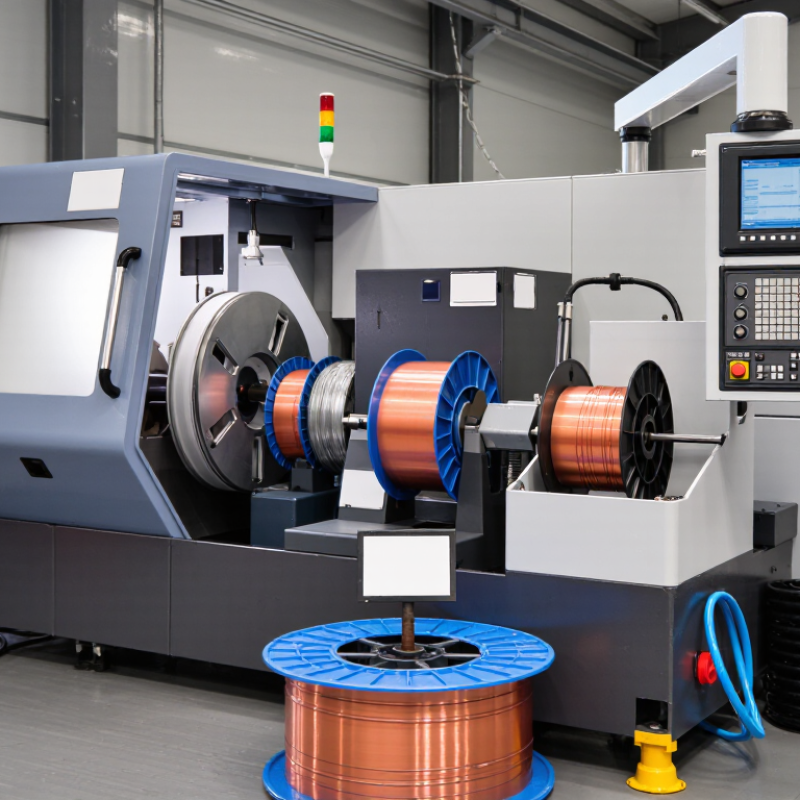
An LT winding machine winds the low-tension, or low-voltage, coil used in a transformer. It guides copper or aluminium conductor around a coil former, keeping turns orderly and tension controlled. In many designs, the low-voltage winding carries higher current and uses a larger conductor, though actual specifications depend on the transformer. The machine may include a winding spindle, tensioner, turn counter, and adjustable guides. These parts help maintain spacing and reduce loose or crossed turns.
Choosing a machine means matching it to the coil’s dimensions, conductor type, and production volume. Check the usable winding width, spindle capacity, speed control, and whether the tension system suits flat strip or round wire. A workshop winding short coils may need a simpler setup than a factory making large batches. Small shifts in guide alignment can leave uneven edges. A test coil is still useful; machine settings alone do not prove winding quality.
Tips: Ask for a trial using your actual conductor and coil former. Inspect turn spacing, edge alignment, and tension marks. Keep a record of settings that work, but verify them after changing materials or coil sizes. It is easy to overlook that step.
| Winding or Machine Type | Typical Use | Common Conductor | Useful Machine Features | What to Check Before Choosing |
|---|---|---|---|---|
| LT (low-tension) transformer winding machine | Winding the low-voltage side of distribution and power transformers. “LT” generally refers to the lower-voltage winding; its exact voltage range depends on the applicable standard and equipment design. | Copper or aluminium wire, strip, or foil, depending on the winding design | Adjustable speed, controlled tension, programmable turn counting, and a suitable mandrel or winding fixture | Confirm the winding drawing, conductor dimensions, coil dimensions, required tension, and the machine’s rated load and spindle capacity. |
| Wire-winding machine | Round-wire windings, including designs where the conductor is wound in multiple turns or layers | Insulated copper or aluminium wire | Accurate turn counting, level winding or traverse control, adjustable speed, and consistent wire tension | Check wire diameter range, traverse width, turn-counter accuracy, insulation protection, and whether the winding pattern is supported. |
| Strip-winding machine | Low-voltage windings made from wider, flat conductors | Copper or aluminium strip | Strip-guiding rollers, tension control, edge alignment, and adjustable winding speed | Verify strip width and thickness limits, coil width, mandrel dimensions, and provisions to prevent conductor edges from being damaged. |
| Foil-winding machine | Transformer windings designed with broad foil conductors, often with insulation material between turns or layers | Copper or aluminium foil | Foil tension control, insulation-paper feeding, edge guiding, and coordinated winding and material feeding | Check foil width and thickness capacity, insulation-feed compatibility, coil dimensions, and the control method for maintaining uniform tension. |
| Manual or semi-automatic machine | Small-batch production, repair work, prototypes, or winding jobs with frequent setup changes | Wire or strip, subject to the machine’s specifications | Simple setup, operator-controlled speed, clear turn display, and accessible adjustment points | Compare expected production volume with operator workload, setup time, repeatability, and available safety guarding. |
| Programmable or CNC winding machine | Repeated production runs or winding patterns requiring stored settings and consistent operation | Wire, strip, or foil when supported by the machine configuration | Recipe storage, programmable speed and traverse, digital turn counting, and alarms for selected operating conditions | Confirm the required winding sequence can be programmed, review control-system usability, and check training and service requirements. |
| Horizontal or vertical winding layout | Different coil sizes, handling methods, and workshop arrangements | Depends on the winding process and machine setup | Horizontal layouts can simplify some loading tasks; vertical layouts may suit particular coil-handling or floor-space needs | Assess coil weight and dimensions, loading and unloading method, operator access, available floor space, and lifting equipment. |
| Selection note: There is no single best LT winding machine for every job. Use the transformer winding drawings and production requirements to compare conductor type and size, coil dimensions, tension control, turn-counting needs, output volume, safety features, and available support. Confirm all capacity figures with the machine supplier before purchase. | ||||
