
How to Choose Home Connectors in 2026?
Choosing Home Connectors in 2026 is less about buying the newest plug and more about making every part of a home work together. A connector may sit behind a wall-mounted display, inside a network cabinet, or beside a smart thermostat. Yet the wrong interface can leave a costly device disconnected. Check physical fit, supported protocols, power requirements, and the manufacturer’s compatibility notes before comparing prices. Small details matter.
The International Energy Agency’s Buildings report states that buildings account for about 30% of global final energy consumption and 26% of energy-related emissions. Those figures are not connector sales data, but they show why dependable controls and connected systems matter. For smart-home devices, standards such as Matter can help equipment from different brands communicate. Connectivity Standards Alliance president and CEO Tobin Richardson has described Matter as “a unifying, IP-based connectivity protocol built on proven technologies.” Treat that as a useful direction, not a guarantee: certification does not make every product or feature compatible.
Start with the devices you already own. Check whether a connector supports the right cable, network, and operating platform. Look for clear specifications, safety certifications, warranty terms, and accessible technical support. For example, a sleek hub is of little use if it cannot reach the router through two brick walls. And product pages can be vague. That deserves a second look. This guide compares the practical trade-offs so you can choose Home Connectors that fit your setup today, while leaving room for future upgrades.
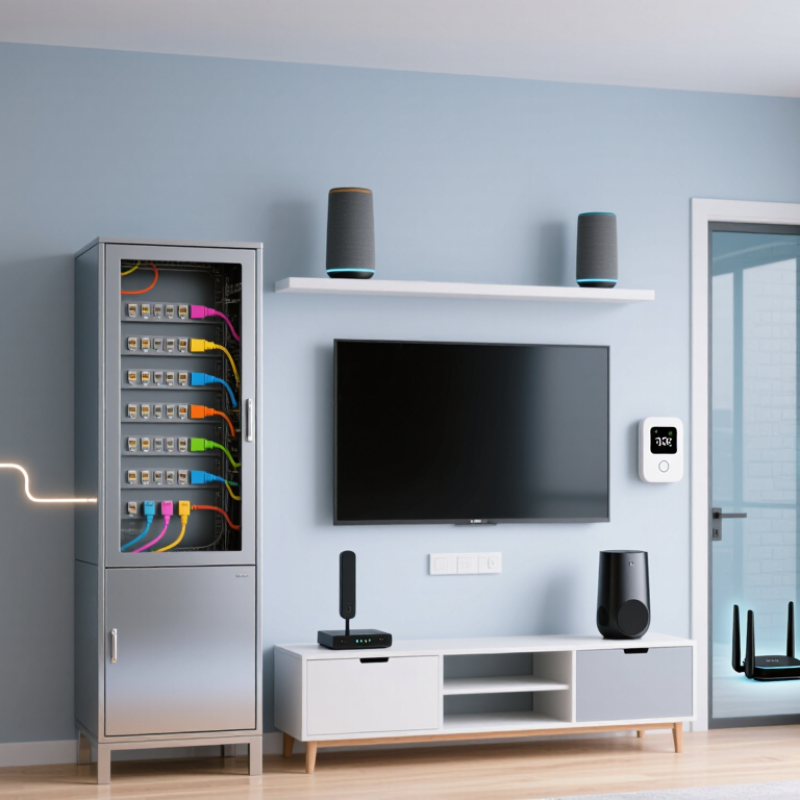
Define Home Connectors and Their Role in a Modern Home
Home connectors are the points and components that let household systems link together. They include power outlets, data ports, cable connections, and interfaces for sensors or control devices. In a modern home, these connections help lighting, heating, internet access, and security equipment work reliably. They are easy to overlook until a plug is loose or a signal drops. Small details matter. The term is not perfectly standardized, so check what a product or installer means by “connector” before comparing options.
Tips: List the devices you use in each room. Note where power and network access are needed, including near desks, televisions, and ceiling fixtures. Check connector types, capacity, and placement against device requirements. For fixed electrical work, ask a qualified professional to assess the installation rather than relying on appearance alone.
A well-planned setup can reduce trailing cables and make future changes less disruptive. Compatibility matters, but so does access for maintenance. A connector hidden behind a heavy cabinet may work today and frustrate you tomorrow. It is also worth leaving some flexibility; household needs change, and predicting every device is difficult. A tidy plan helps, though it cannot make every connection future-proof.
