How to Choose the Best Football Ball Launcher Machine?
Choosing a Football Ball Launcher Machine is not just a matter of picking the fastest model. The right machine should match the player’s level, training space, and drills. A keeper practicing close-range reactions needs different settings from a striker working on long passes. Small details matter: how quickly the feeder reloads, whether the angle changes easily, and how firmly the frame sits on grass or turf.
This guide explains the key features to compare before buying. Look at ball compatibility, launch speed, range, elevation, and control options. Check how the machine handles repeated shots, not just a single demonstration. A steady stream of balls can reveal feed delays or inconsistent direction. That matters. Noise, portability, setup time, and access to replacement parts also affect day-to-day use. A crowded training ground may call for a compact unit, while a dedicated facility may benefit from greater capacity.
Specifications are useful, but they do not tell the whole story. A high top speed may sound impressive and still be unnecessary for a beginner’s drills. Think about who will operate the machine, how often it will be used, and whether the available space allows safe practice. Review the manufacturer’s instructions, warranty, and recommended maintenance before making a decision. If possible, test the controls with the intended balls and training routine. It is easy to overlook setup until the first session. This comparison focuses on practical checks, clear trade-offs, and the details that help you choose with confidence—while leaving room to reconsider if your training needs change.
Understanding How a Football Ball Launcher Machine Works
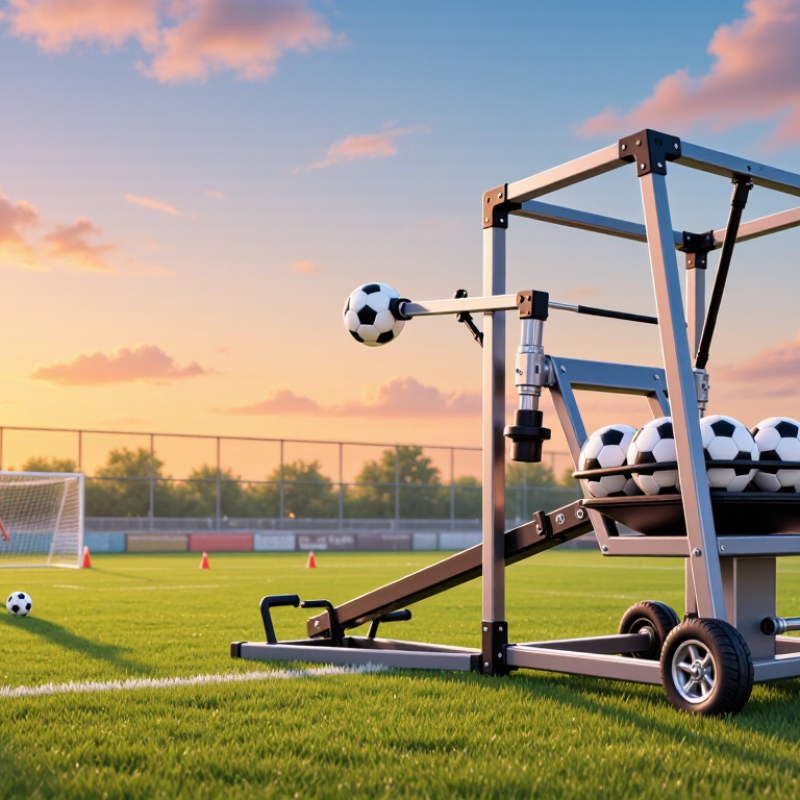
A football ball launcher machine converts stored energy into repeatable passes or shots. Many training models use a hopper and motor-driven wheels, while some use compressed air. The feeder releases one ball at a time into the launch path. Rotating wheels then grip and accelerate it. Their speed helps set the ball’s pace, while the launch angle influences height and distance.
Some machines can vary wheel speeds to add side spin or create a curving delivery. Feed intervals control how quickly the next ball arrives. Small changes matter. A slightly different angle can send a ball above a player’s chest instead of toward their feet. Coaches should test settings with the same ball type and pressure used in training, since worn or underinflated balls may travel differently.
The control panel may show precise numbers, but the result still depends on setup and surroundings. A machine on uneven turf can shift, and wind can alter a high pass. Check that the feed path is clear before operation, and keep players outside the launch line during adjustments. It is easy to trust a preset too much. Watch several deliveries, then make small corrections based on where the ball actually lands.
Matching Machine Capabilities to Training Goals and Player Levels
A football ball launcher should match the decisions players need to practise, not simply deliver the fastest shot. For beginners, choose adjustable speed, elevation, and interval settings. Short, predictable feeds let young players focus on first touch and body position. Older or advanced players benefit from varied trajectories and quicker recovery between deliveries. FIFA’s 2024/25 Laws of the Game specify a regulation ball circumference of 68–70 cm and a weight of 410–450 g. Check that the machine feeds the ball sizes your sessions use; inconsistent sizing can change both flight and rebound.
For passing drills, prioritize repeatable low feeds and accurate direction changes. For finishing, look for adjustable height and enough range to serve crosses from different angles. Goalkeeper sessions need varied placement, but maximum speed is not always useful. FIFA’s 2024/25 Futsal Laws specify a smaller ball, with a circumference of 62–64 cm and a weight of 400–440 g. That difference matters when a club trains across formats. Before buying, test the launcher with your own balls, on your actual surface, and at realistic session distances. A machine can repeat a feed precisely. It cannot read a player’s decision. I would also leave room in the budget for a few awkward trial sessions; settings that look good on paper may need adjustment on the pitch.
Suggested starting rates are 6 balls per minute for beginners, 10 for intermediate players, and 15 for advanced players. Choose a launcher with an adjustable feed interval, then adapt the rate to the drill, player age, and recovery time.
Comparing Speed, Spin, Range, and Ball-Feeding Options
A football ball launcher should match the drills you actually run, not just advertise the highest speed. For passing practice, adjustable low-to-medium settings help players control their first touch. For shooting drills, higher speeds can create more demanding reactions. Check whether speed changes in small increments; a few broad settings may make practice feel repetitive.
Spin affects the ball’s flight and bounce. Topspin can produce a dipping shot, while sidespin makes the ball curve across the field. Look for independent spin controls and test them with the same ball type you use in training. Ball pressure and surface texture can change the result. Small detail, big difference.
Range matters when you need to serve across a full pitch, but maximum distance alone can mislead. Ask whether the machine can also deliver short, consistent feeds. Feeding options vary: a hopper supports repeated drills, while manual loading gives more control over timing. Check capacity, feed intervals, and how quickly settings reset. A specification sheet can tempt buyers to overlook setup time. I would compare those details during a real session, where uneven ground or a rushed refill can interrupt the drill.
Assessing Portability, Durability, Safety, and Maintenance
Portability matters when a football ball launcher moves between a storage room and different training areas. Check its weight, handle placement, wheel quality, and whether it folds without tools. A compact frame can fit in a car boot, but measure the folded machine first. I once underestimated that detail. A lighter unit is easier to carry, yet it may feel less steady on uneven grass. That trade-off deserves a real test, not just a glance at product photos.
Durability depends on more than a tough-looking shell. Inspect the frame joints, fasteners, and ball-feeding parts for solid construction and easy access. If possible, watch several launches and listen for rattling or inconsistent feeding. Safety comes first. Look for clear controls, a stable base, and a way to stop operation quickly. Keep players behind the machine, and follow the maker’s spacing guidance. A setup that feels safe on a dry field may need extra care on wet ground.
Maintenance should be simple enough to become routine. Ask whether the wheels, rollers, and feed path can be cleaned without special tools. After use, remove grass and dirt, check for loose fittings, and store the machine somewhere dry. Small details matter. A complicated cleaning process can be skipped when practice runs late. That is not ideal, but it is realistic. Choose a design whose upkeep fits the time and skills available to your team.

