
How to Choose the Best Fence Machine for Your Needs?
Choosing the right Fence Machine begins with understanding the work it must perform. A machine suited to a small farm may struggle with continuous commercial production. Start by identifying the fence type, wire diameter, mesh size, and expected output. These details affect forming capacity, motor load, and setup time. They also help narrow down which models are worth comparing.
Look beyond the advertised speed. Ask how quickly operators can change settings, how easily common parts can be replaced, and whether the supplier provides clear operating guidance. If possible, inspect sample panels made with the machine. Check the welds, spacing, and finish under ordinary lighting. Small flaws are easier to spot before purchase.
A machine should fit your actual workflow, not an imagined future workload. Consider floor space, available power, operator experience, and the time required for routine maintenance. Request specific figures for production capacity and energy use, then confirm what those figures assume. A quoted maximum may not reflect steady daily output. That distinction matters.
No single specification tells the whole story. A lower purchase price can be appealing, yet downtime and difficult adjustments may cost more over time. Be honest about what you still do not know. Compare service support, warranty terms, and replacement-part availability before deciding. The best Fence Machine is the one that reliably produces the fence you need, at a pace your operation can sustain. Often, the practical choice is less impressive on paper—but better on the shop floor.
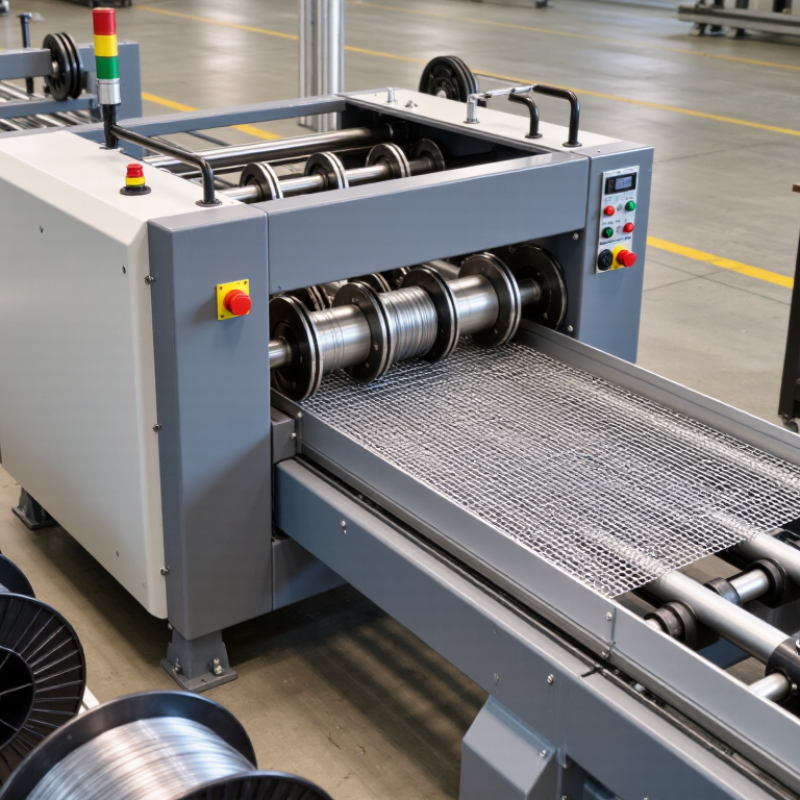
Identify Your Fence Products and Production Requirements
Identify the product before comparing machines. Welded mesh, chain-link fabric, and barbed or field fencing need different forming, welding, and tensioning processes. Record wire diameter, mesh opening, roll width, coating, and finished length. Measure first. A machine built for one specification may struggle with frequent product changes.
Demand also matters. MarketsandMarkets’ Fencing Market report estimated a global market of USD 32.3 billion in 2023 and projected USD 41.4 billion by 2028. That growth does not guarantee demand for every fence type, so use your own order history and sales forecasts. For steel-wire products, World Steel Association’s World Steel in Figures 2024 reports 1,888.2 million tonnes of crude steel production in 2023. This is broad material context, not a measure of fencing-wire supply.
Translate your requirements into a line specification: target output per shift, acceptable dimensional variation, changeover time, operator count, and available floor space. Ask suppliers to demonstrate your actual wire and target product, not a generic sample. Record scrap and stoppages during the trial. It is tempting to chase top speed. Yet a fast line with difficult changeovers can reduce usable output. That trade-off is easy to miss. Revisit the numbers after a pilot run; initial estimates are often imperfect.
