How to Choose the Best Cordless Impact Drill?
Choosing the best Cordless Impact Drill begins with understanding your actual work, not chasing the highest torque number. A compact tool may handle cabinet screws and light framing more comfortably than a heavy professional model. For masonry, however, a standard impact mechanism may not replace a proper hammer drill. The names can be confusing.
In practical testing, I would compare voltage, torque, impact rate, chuck design, speed control, and battery capacity. An 18V or 20V platform usually offers a useful balance for home repairs and regular construction tasks. Higher torque helps with long structural screws, but it can also twist smaller fasteners or damage soft timber. A brushless motor often improves runtime and durability. Still, battery quality matters just as much. A large pack may last longer, yet it can make the tool feel tiring after an hour overhead.
Grip shape matters.
Before buying, check the tool’s measured weight with its battery attached. Read the manufacturer’s manual, warranty terms, and independent test results. Look for overload protection, a secure chuck, an adjustable clutch, and a bright work light. These details become important beside a ladder or inside a dark cabinet. I once focused too heavily on peak torque and underestimated vibration. That was a poor judgment. Comfort, balance, and control often decide whether a tool stays useful for years. This guide compares popular models through those practical points, while acknowledging that one tool cannot suit every user, material, or budget.
Define the Main Tasks and Materials for Your Cordless Impact Drill
Choosing the right cordless impact drill starts with the work you actually perform. A tool for assembling furniture differs from one used on deck framing or masonry. Write down your common tasks before comparing power ratings. Drilling pilot holes, driving long screws, and loosening tight fasteners require different levels of torque. Small jobs need better control than maximum force.
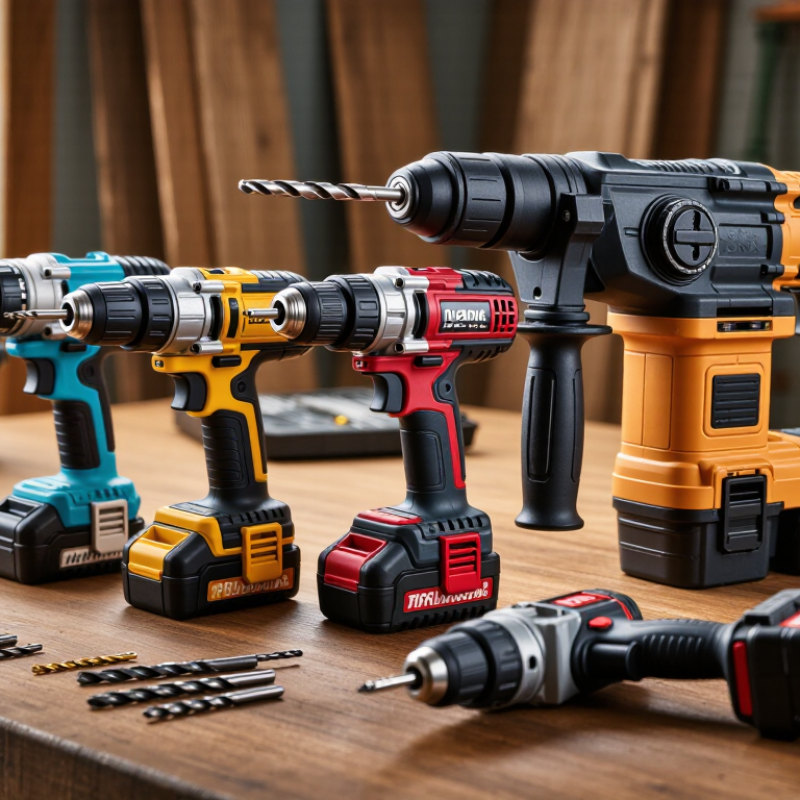
Material also changes the decision. Softwood accepts screws easily, while hardwood creates more resistance and can split near an edge. Metal requires slower drilling, sharp bits, and steady pressure. For brick or concrete, choose a model with a hammer-drilling function and compatible masonry bits. An impact driver is not automatically a hammer drill. This distinction is easy to miss.
I have found that a compact tool feels safer during overhead work. A heavier model may deliver more torque, but it can quickly tire your wrist. Check the grip, trigger response, speed settings, and battery balance in your hand. A work light helps when drilling inside cabinets or under joists. Use the correct bit and reduce pressure when the fastener begins to seat. I once focused too much on power and damaged a soft board, so I now test the setting on scrap material. That extra step feels slow, but it prevents careless results.
