
How to Choose the Best Coffee Color Sorter Machine
Choosing a Coffee Color Sorter Machine is not just a matter of comparing prices or advertised capacity. It means matching the equipment to your beans, production targets, and quality standards. Green coffee, roasted beans, and specialty lots can present different color and defect patterns. A machine that performs well on one sample may not deliver the same results on another. Details matter.
Start by identifying which defects you need to remove, such as discolored beans, stones, or other visible foreign material. Then compare sorting accuracy, processing capacity, camera resolution, and the machine’s ability to handle your bean size and flow rate. Ask how operators adjust sensitivity and air-ejection timing. Throughput numbers alone can be misleading. Small differences matter.
During supplier evaluation, request a test using representative samples from your own production. Observe the accepted and rejected beans, and check whether good product is being discarded unnecessarily. Ask about cleaning access, routine maintenance, spare parts, operator training, and technical support. Get key performance details in writing, and clarify the conditions under which test results were measured. Ask again if anything is unclear.
No specification sheet can replace a careful trial. Even a well-matched sorter may need adjustment as bean quality or operating conditions change. That is worth planning for. The right choice balances reliable sorting, practical day-to-day operation, and support your team can actually access. Compare machines against your real requirements, not only the most impressive claims.
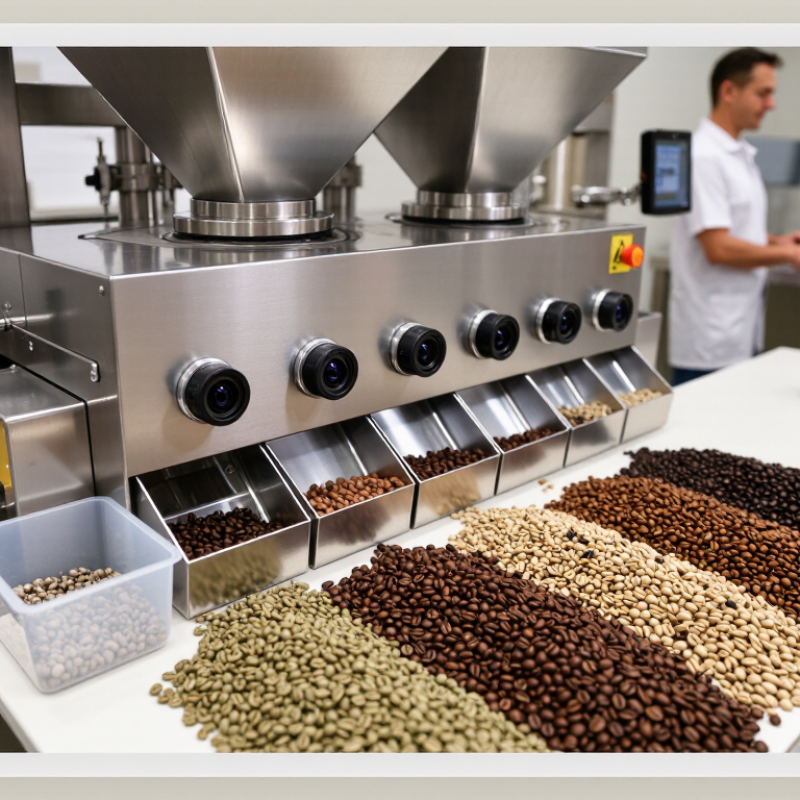
Identify Your Coffee Sorting Needs and Operating Requirements
Before comparing coffee color sorter machines, define the job the equipment must do. Are you sorting green beans, roasted beans, or both? Note your normal hourly throughput, batch size, bean size range, and the defects you need to remove, such as pale beans, dark beans, or foreign material. Be specific. “Better quality” is not a useful target by itself.
Set measurable expectations for sorting accuracy, acceptable good-bean loss, and daily operating hours. A small roastery may value easy changeovers and a compact footprint, while a larger processor may need steady throughput and simple integration with conveyors. Check the available power, compressed-air supply, dust extraction, and room for cleaning access. Details matter. Poor feeding can undermine even a capable sorter.
Ask for a trial using representative samples from your own supply, not only clean demonstration beans. Compare the accepted and rejected fractions, and record both defect removal and good beans lost. A spreadsheet helps, but it cannot capture every harvest’s variation. I would also ask operators to test recipe changes and routine cleaning; controls that seem obvious during a demonstration may feel less clear during a busy shift. Choose around your real workflow, then leave room for seasonal changes.
