
How to Choose the Best Analytical Balance for Your Lab
Choosing the right Analytical Balance is not a catalog exercise. It affects sample quality, repeatability, and confidence in reported results. A 0.1 mg reading can matter when a technician weighs a small reference standard or prepares a concentrated solution. The wrong capacity, draft shield, or readability can quietly add uncertainty.
Professional guidance offers practical benchmarks. USP General Chapter <41>, “Balances,” sets a repeatability criterion: twice the standard deviation must not exceed 0.10% of the smallest net weight. Its test uses at least ten repeated measurements. That threshold turns “good enough” into a checkable requirement. NISTIR 6969, “Selected Laboratory and Measurement Practices and Procedures to Support Basic Mass Calibrations,” provides guidance on mass calibration. EURAMET Calibration Guide No. 18 addresses calibration of non-automatic weighing instruments. These references help laboratories connect instrument specifications with real procedures.
Yet a specification sheet cannot predict every bench. Air currents from a nearby vent, vibration from a centrifuge, or a warm weighing vessel may disturb readings. A balance with finer readability is not automatically the better choice. Consider expected sample masses, required uncertainty, daily workload, available space, and service support. Then verify performance under the conditions where weighing will occur. Easy to overlook. Even experienced teams may underestimate routine handling effects. This guide explains how to compare capacity, readability, repeatability, calibration features, and usability, while noting where selection still requires judgment. A careful choice starts with the task—not the most impressive number on the display.
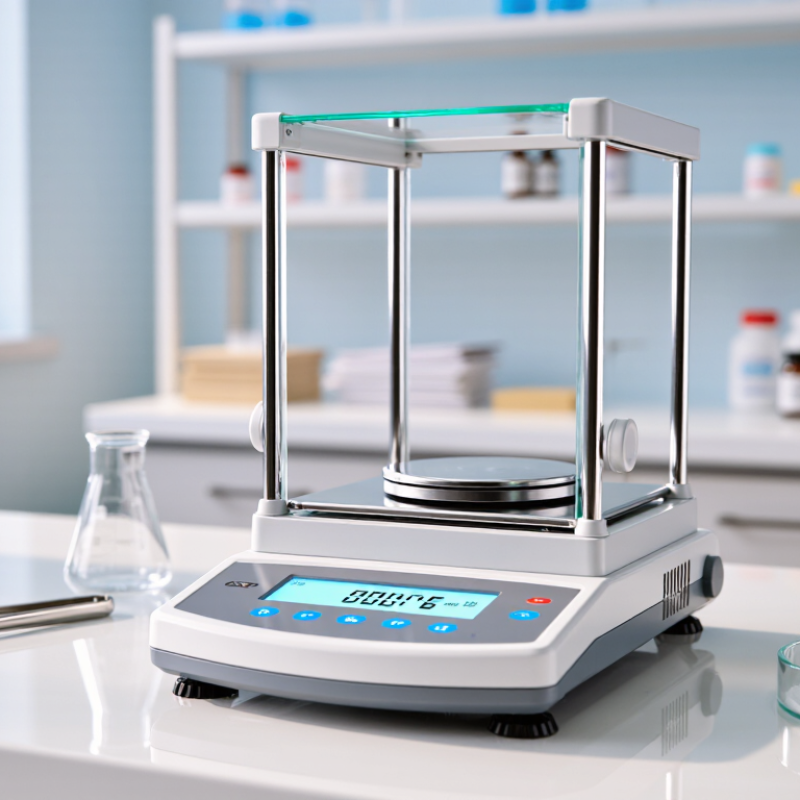
Define Your Laboratory’s Measurement Needs and Required Readability
Begin with the smallest net sample your lab routinely weighs, not the balance’s maximum capacity. A 200 mg powder portion placed in a drafty hood behaves differently from a 20 g vessel on a stable bench. List typical sample masses, container sizes, and tolerances. Then select readability—the smallest displayed increment—with those tasks in mind. A 0.1 mg display may suit many routine milligram-level weighings, but it does not guarantee that every result is accurate to 0.1 mg. A tidy specification sheet can still mislead.
For compendial weighing, USP General Chapter <41>, Balances, provides a useful benchmark: repeatability standard deviation should not exceed 0.10% of the test weight. It also defines minimum weight as 2,000 times the measured standard deviation. For example, a standard deviation of 0.05 mg gives a calculated minimum weight of 100 mg. This makes repeatability testing relevant to your actual sample range. These criteria are not a substitute for checking your lab’s specific method or quality requirements.
Tips: Weigh a representative sample several times under normal room conditions. Watch the final digits settle; note drafts, vibration, and static. Compare observed repeatability with your required tolerance before choosing finer readability. Finer is not always better. If the readings drift, investigate the setup before blaming the balance.
