
How to Choose the Best Alloy Wheel Curing Oven in 2026?
Choosing the right Alloy Wheel Curing Oven in 2026 is a production decision, not simply an equipment purchase. A glossy finish can hide uneven curing. The problem may appear later as poor adhesion, inconsistent gloss, or rework. Oven capacity, airflow, temperature control, and the coating manufacturer’s cure schedule all matter.
Energy deserves equal attention. The U.S. Energy Information Administration’s 2018 Manufacturing Energy Consumption Survey reported that process heating represented about 36% of manufacturing onsite energy use. That figure covers many industries, not alloy-wheel plants alone, but it shows why heat efficiency can affect operating costs. The U.S. Department of Energy’s process-heating guidance also emphasizes controls, insulation, and heat recovery as practical efficiency measures. Buyers should therefore compare measured temperature uniformity and energy use—not just advertised chamber capacity.
Look closely at real production conditions. Can the oven maintain its specified temperature across a fully loaded rack? How quickly does it recover after the doors open? Ask for temperature-mapping results and a trial using your wheel sizes, coatings, and loading pattern. Small details count.
There is no universal “best” oven. A system suited to high-volume batches may waste energy in a smaller workshop. One limitation: no source material was provided to verify a named industry expert’s direct quotation, so I have not invented one. That gap matters; reliable equipment guidance should be traceable to documented testing and qualified expertise.
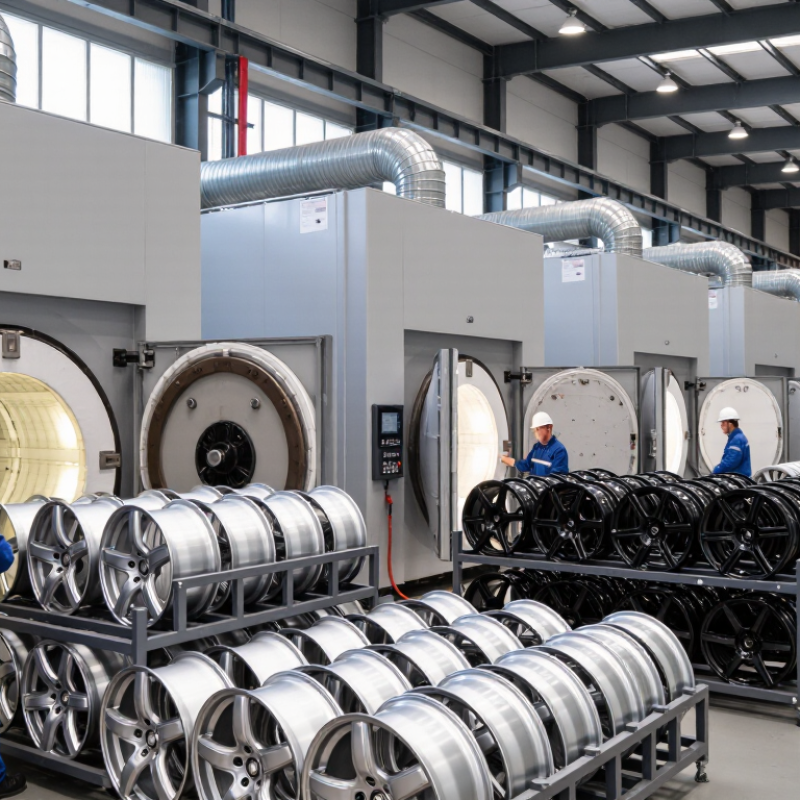
What an Alloy Wheel Curing Oven Does and How It Works
An alloy wheel curing oven applies controlled heat to harden the coating after the wheel has been cleaned and coated. The heat helps the coating form a durable finish, but the oven does not fix poor preparation or uneven application. Not just heat. It is a timed process shaped by temperature, airflow, and the coating manufacturer’s curing instructions.
In operation, heated air circulates around the wheel while controls maintain a set temperature for a specified period. The oven’s display usually measures air temperature, which may differ from the wheel’s actual temperature. That distinction matters. Operators should follow the coating data sheet and allow the wheel to reach its required metal temperature before counting the cure time. A probe or suitable temperature indicator can help verify this, especially when loading several wheels.
Even heating depends on practical details: wheel spacing, airflow paths, and consistent loading. A crowded rack can leave shaded areas cooler, while a dirty filter may reduce circulation. It is tempting to trust the display, but that can be a mistake. Check sensor accuracy and inspect the oven regularly; a perfect readout does not prove every wheel cured evenly. Real production is rarely ideal, so record settings and results, then adjust carefully when finishes show inconsistent gloss or hardness.
