
Why Choose Socket Weld Stub Ends for Industrial Piping?
Industrial piping choices are rarely decided by fitting price alone. Reliability, access, pressure class, material compatibility, and weld quality all shape the decision. The International Energy Agency’s World Energy Investment 2024 report estimated global energy investment at about $3.1 trillion for that year. That scale of infrastructure spending underscores the value of dependable components, though it does not prove one fitting type is superior.
A Socket Weld Stub End provides a socket connection for pipe attachment, but its suitability depends on the service and design. ASME B16.11 covers forged socket-welding fittings, while ASME B31.3 sets requirements for process piping design, fabrication, inspection, and testing. These standards offer a sound starting point; engineers still need to verify dimensions, materials, pressure-temperature limits, and project specifications. Fit matters. So does workmanship.
This article examines why industrial teams may choose socket-weld connections, where their compact geometry can help, and what installation details deserve close attention. Deloitte’s 2025 Engineering and Construction Industry Outlook discusses continuing cost and productivity pressures across the sector—factors that make maintainability and fabrication quality practical concerns. Still, a socket-weld option is not automatically the best one. Service conditions, inspection access, and the consequences of a weld defect require honest review before selection.
What Is a Socket Weld Stub End?
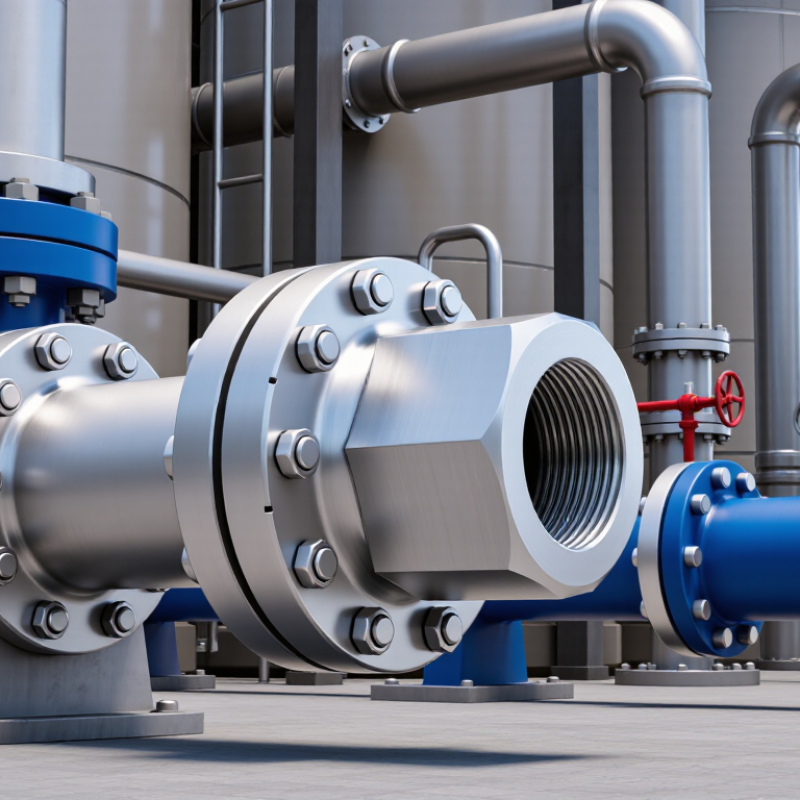
A socket weld stub end is a short pipe fitting with a recessed socket at one end. The pipe slips into this pocket, which helps align the parts before welding. A fillet weld is then made around the outside edge. It is commonly used on smaller-bore piping where a compact, rigid connection is needed.
Small details matter.
The pipe should not be pushed hard against the socket bottom; a slight gap allows room for heat-related expansion during welding. The required gap and weld dimensions depend on the applicable design rules and fitting specifications. Check the pipe schedule, fitting bore, material, and service conditions before installation. A mismatch can leave an internal step that disrupts flow or creates a spot where residue collects.
The name can cause confusion.
“Stub end” often refers to a different fitting used with a lap-joint flange, while “socket weld” describes a specific pipe connection. In practice, terminology may vary between suppliers and drawings. Confirm the fitting’s shape and dimensions rather than relying on its label alone. The connection is strong, but it is not easy to dismantle. Weld access and inspection deserve attention, especially in tight spaces.
