
How to Choose Injection Molding Equipment in 2026?
Choosing Injection Molding Equipment in 2026 is not simply a matter of buying the largest or newest press. The right machine must match part geometry, resin behavior, production targets, and available floor space. A thin-walled packaging part may need fast, repeatable cycles, while a thick technical component requires careful control of cooling and packing. Small details matter. Clamp force, screw design, shot capacity, and tie-bar spacing can determine whether a mold runs reliably or causes avoidable delays. A machine that fits today’s order may also limit tomorrow’s product plans, so forecast volume and expected mold changes deserve a realistic review.
This guide examines hydraulic, all-electric, and hybrid presses, along with automation, energy use, service access, and total ownership costs. It encourages buyers to look beyond brochure specifications. Check how cycle-time claims were measured, whether technicians can reach your facility, and how quickly critical spare parts are available. A quoted energy figure means little unless the resin, mold, and production conditions are comparable. That caveat is easy to miss. Even a well-matched press can underperform when setup, operator training, or mold maintenance is overlooked. Compare supplier data with production trials and verified customer references where possible. No single machine is perfect; the sound choice is the one that meets defined requirements and leaves room for measured growth.
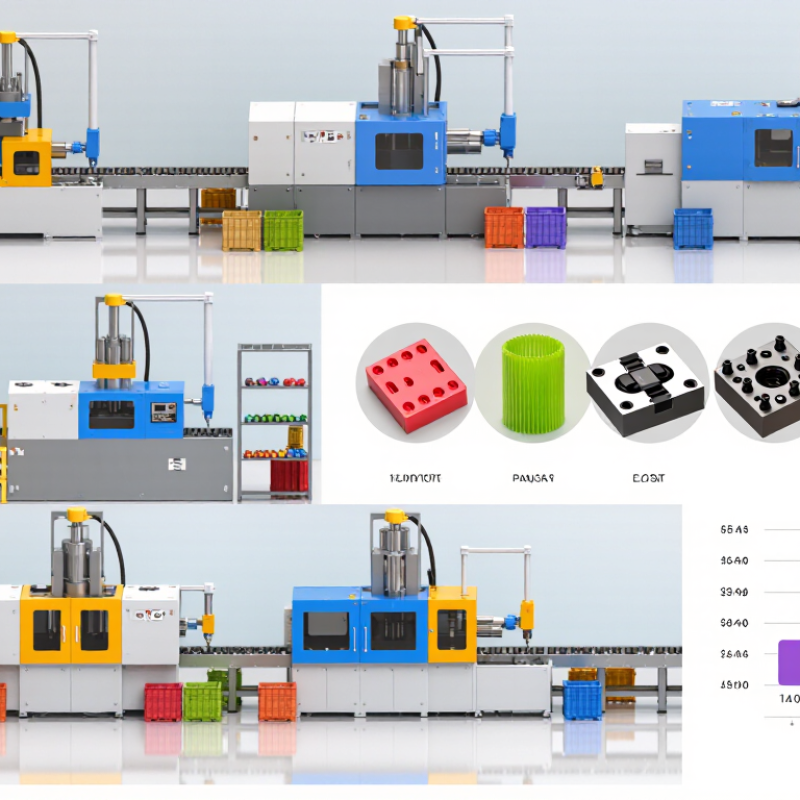
Define Production Requirements and Part Specifications
How to Choose Injection Molding Equipment in 2026?
Define Production Requirements and Part Specifications
Start with the job the machine must perform, not its advertised capacity. Estimate annual demand, peak monthly output, operating shifts, and acceptable cycle time. Include likely product changes; forecasts are rarely perfect. A machine sized only for today’s volume may become a bottleneck.
Document each part’s material, dimensions, weight, wall thickness, tolerance, and surface requirements. A thin-walled tray may need fast, consistent filling, while a thick component may require longer cooling and careful pressure control. Record the expected number of cavities and whether the mold uses a cold or hot runner. Small details matter. In equipment reviews, projected area and cavity count help inform clamping-force estimates, while part and runner weight guide shot-size selection. These are starting points, not substitutes for checking the actual mold and process.
Ask suppliers to verify the proposed machine against your part drawings, mold dimensions, material data, and target cycle. Check platen size, tie-bar spacing, injection pressure, and available control features. Also account for dryers, temperature-control units, robots, and floor space. A specification sheet can look convincing. The real setup may differ. Pilot trials can expose issues such as uneven filling or difficult part removal before production begins. Keep the assumptions visible, especially when drawings or demand figures are still changing.
