
How to Choose Drying Oven Manufacturers in 2026?
Choosing Drying Oven Manufacturers in 2026 is about more than comparing prices or browsing polished product pages. The right supplier should understand what your process needs: working temperature, load size, airflow, materials, and the consistency required from one batch to the next. Small details matter. A crowded chamber may heat differently from an empty one, and a convenient digital display does not prove temperature uniformity.
A careful evaluation starts with evidence. Ask manufacturers for temperature-distribution data, operating instructions, maintenance guidance, and details about control and calibration options. Check whether the oven suits your actual parts and daily workload, rather than an idealized test setup. If possible, discuss a sample load or see a demonstration under conditions close to yours. One short demo is not enough. A brochure can be useful, but it cannot answer every practical question.
Service matters after delivery. Find out how the manufacturer handles installation, spare parts, troubleshooting, and staff training. Ask for references from customers with comparable applications, and listen for specific, verifiable answers rather than broad promises. Keep your own requirements written down; changing them halfway through a comparison can make a weak option look better than it is. No checklist removes every risk, and supplier claims still need scrutiny. Yet a structured review helps you compare Drying Oven Manufacturers on performance, support, and fit—not just on the lowest quotation.
Define Process Needs: Load Size, Moisture Target, and Operating Temperature
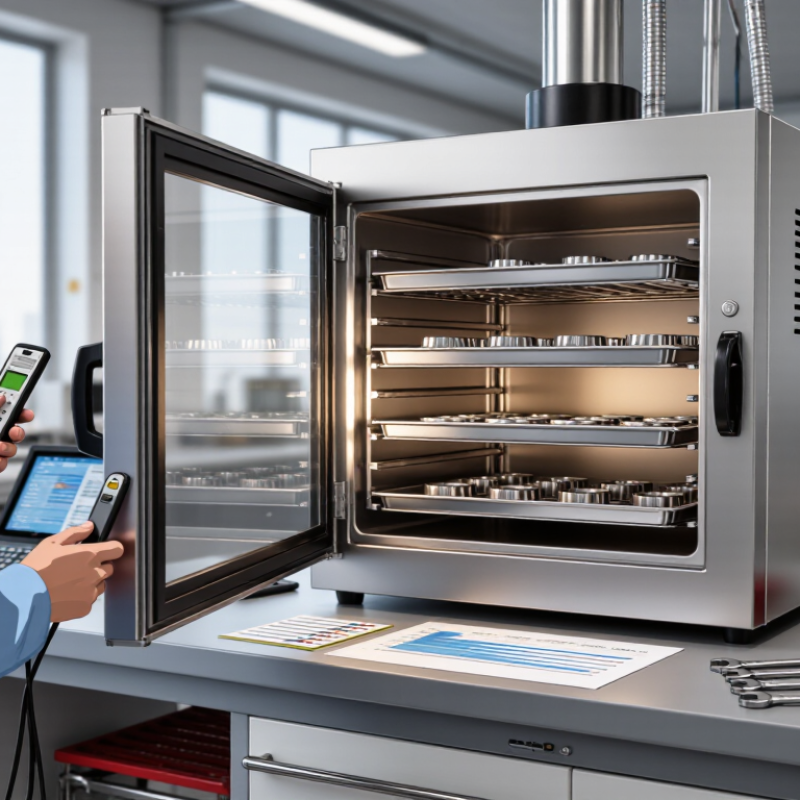
Before comparing drying oven manufacturers, document the real production load. Record tray dimensions, total mass, and how closely items are packed. A chamber may fit every tray yet dry unevenly when airflow is blocked. Leave clear gaps around the load. Extra capacity can help, but an oversized oven may consume space and energy unnecessarily.
Define the moisture target and how you will measure it. “Dry enough” is not a usable specification. Note the material’s starting moisture, required endpoint, and whether results are checked by weight or another method. For example, weigh a representative sample before and after drying. Ask manufacturers to test a realistic load and provide drying data, not just an empty-chamber demonstration. Small details matter.
Specify the operating temperature range, tolerance, ramp time, and hold time. Include recovery expectations after the door opens, especially for frequent loading. Ask where temperature sensors sit and whether performance data comes from a loaded chamber. A polished control screen proves little. I would still question any figure without its test conditions; suppliers sometimes present ideal results. That is easy to overlook. Compare the evidence against your process, not just the quoted maximum temperature.
