
Why Choose Decorative Sconces for Your Home?
Decorative Sconces can change how a room feels without taking up floor or table space. Their light can soften a hallway, frame a bathroom mirror, or bring a warm glow beside a bed. Small fixtures. Noticeable difference. Architect Le Corbusier, whose work explored the relationship between light and space, wrote, “Light creates ambience and feel of a place, as well as the expression of a structure.” That idea helps explain why a sconce is more than a wall decoration: its position and beam shape influence the room around it.
In practice, the best choice depends on the task and the setting. A shaded sconce beside a reading chair can reduce harsh overhead glare, while a pair near a mirror can make daily grooming easier. Check the fixture’s dimensions, bulb compatibility, and recommended mounting height before buying. A beautiful design may still cast awkward shadows. It happens. Finishes matter, too: aged brass can warm a pale wall, while matte black creates a sharper contrast. Photos rarely show exactly how a finish looks under your own bulbs.
There is no single perfect sconce for every home. Consider the room’s existing lighting, the wall material, and whether you need ambient, accent, or task light. Decorative Sconces work best when their style supports a real purpose. Sometimes the practical choice is less dramatic—and better every evening.
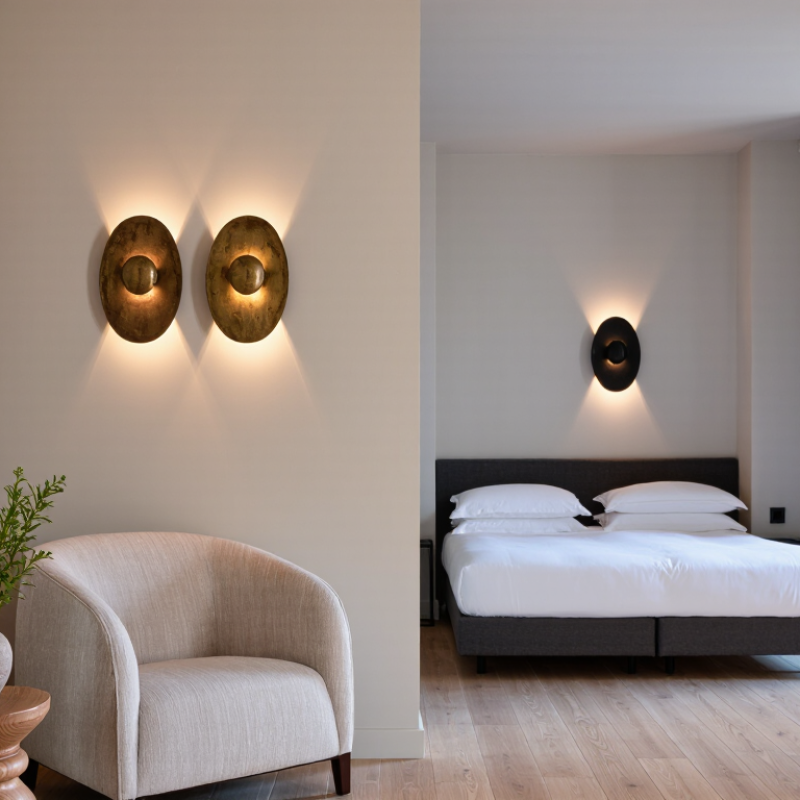
What Decorative Sconces Are and How They Function
Decorative sconces are wall-mounted fixtures that combine illumination with a visible design feature. They may provide ambient light across a room, accent light on a textured wall, or task light beside a reading chair. Their function depends on the shade, bulb, mounting height, and direction of the beam.
That direction matters. An upward-facing shade can wash a ceiling with softer light, while a downward-facing one can brighten a doorway or bedside area. Some sconces distribute light both ways.
A sconce usually complements, rather than replaces, ceiling lighting. Install one near a mirror or artwork, and it can reduce harsh shadows; place it too high, and the glare may be distracting. Details vary, so check the fixture’s light output and whether it is dimmable before choosing a location.
With compatible LED bulbs, the U.S. Department of Energy’s Energy Saver guidance says LEDs use at least 75 percent less energy and last up to 25 times longer than incandescent lighting. That comparison describes the bulbs, not every sconce’s total performance.
One practical detail is easy to overlook: a beautiful fixture can still leave a corner too dim.
