
How to Choose an LED Mood Light Manufacturer in 2026
Choosing an LED Mood Light Manufacturer in 2026 requires more than comparing prices and polished product photos. The market is mature, but product quality still varies. The International Energy Agency’s “Lighting” analysis reports that LEDs represented about 50% of global lighting sales in 2020, up from roughly 5% in 2013. That shift makes careful supplier evaluation more important, not less. A bright sample on a showroom table proves little about color consistency, dimming performance, or reliability after months of use.
Look for documented test results, stable production processes, and clear answers about LED bins, drivers, color rendering, and flicker. Ask for a sample you can test at low brightness, not only at full output. Check whether the manufacturer can explain its warranty, inspection steps, and customization limits in plain language. The U.S. Department of Energy’s lighting research also highlights the value of efficient LED technology; however, efficiency alone does not guarantee a comfortable mood-lighting experience. One detail is easy to overlook: a light may look warm in a product photo yet feel harsh in a dim bedroom.
Lighting researcher Dr. Mariana Figueiro has described light as “the most powerful synchronizer of the circadian system.” Her work is a useful reminder that color and timing matter, alongside appearance. A capable LED Mood Light Manufacturer should discuss these trade-offs without promising that one lamp suits every room or routine. Ask for evidence. Compare the actual samples. And leave room for doubt: supplier claims still need independent checking.
Understanding LED Mood Lights and Your Project Requirements
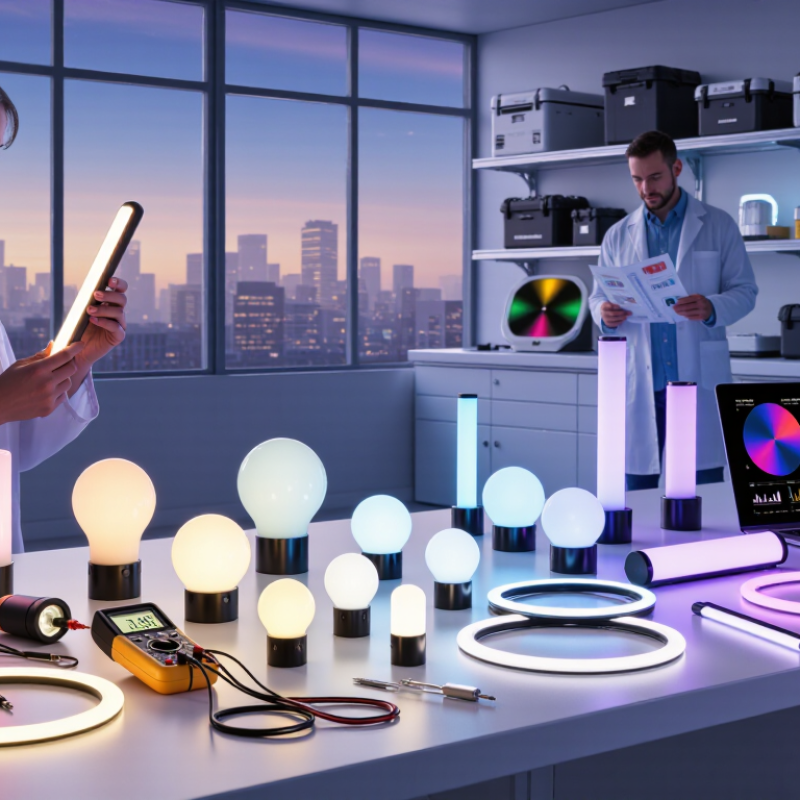
Before choosing an LED mood light manufacturer, define the room, use, and desired atmosphere. A bedside lamp needs gentle, low-level light; a café wall wash may need wider coverage and consistent color. Record mounting distance, beam angle, brightness in lumens, color temperature, dimming range, and control method. These details make “warm and relaxing” testable. Useful, but not glamorous.
The U.S. Department of Energy reports that LEDs use at least 75% less energy and can last up to 25 times longer than incandescent lighting. The International Energy Agency estimates lighting accounts for about 15% of global electricity use. Efficiency matters, but it cannot guarantee good mood lighting. Ask for measured lumen output, color-rendering index (CRI), flicker data, and performance at low dimming levels. Request a sample and test it in the actual room; wall color can shift the effect, and a neat specification sheet may not reveal that.
Tips: Share a simple room sketch and target color range. Ask whether the manufacturer can provide a dimming test and sample. Check the light at night, not only in a bright showroom.
