
How to Choose a Top Roll Crusher Manufacturer in China?
Choosing a top Roll Crusher manufacturer in China requires more than comparing prices or reading a polished brochure. The stakes are real. The U.S. Geological Survey’s Mineral Commodity Summaries 2025 estimates global cement production at about 4.1 billion metric tons in 2024, with China contributing roughly 1.9 billion. These figures point to the scale of material handling behind construction and industrial supply chains; they do not, by themselves, prove that any particular crusher will suit your plant.
A reliable choice starts with the material and operating conditions. Specify feed size, hardness, moisture, target product size, required throughput, and expected hours of operation. Then ask manufacturers for engineering drawings, roll and bearing specifications, wear-part details, and test results for comparable materials. The International Energy Agency’s cement-sector analysis highlights the industry’s continuing focus on process efficiency, making energy use and maintainability useful comparison points. A factory visit or live video inspection can reveal practical details: weld quality, guarding, machining finish, and whether spare rolls are actually available. That sounds simple. It is not.
Check references from operating sites, clarify commissioning support, and confirm how downtime and warranty claims are handled. A low quotation can hide costly wear parts or vague service commitments. No checklist is perfect. Supplier claims still need verification, and one sample test may not represent changing feed conditions. A careful comparison should connect measurable performance with documented service—not promises alone.
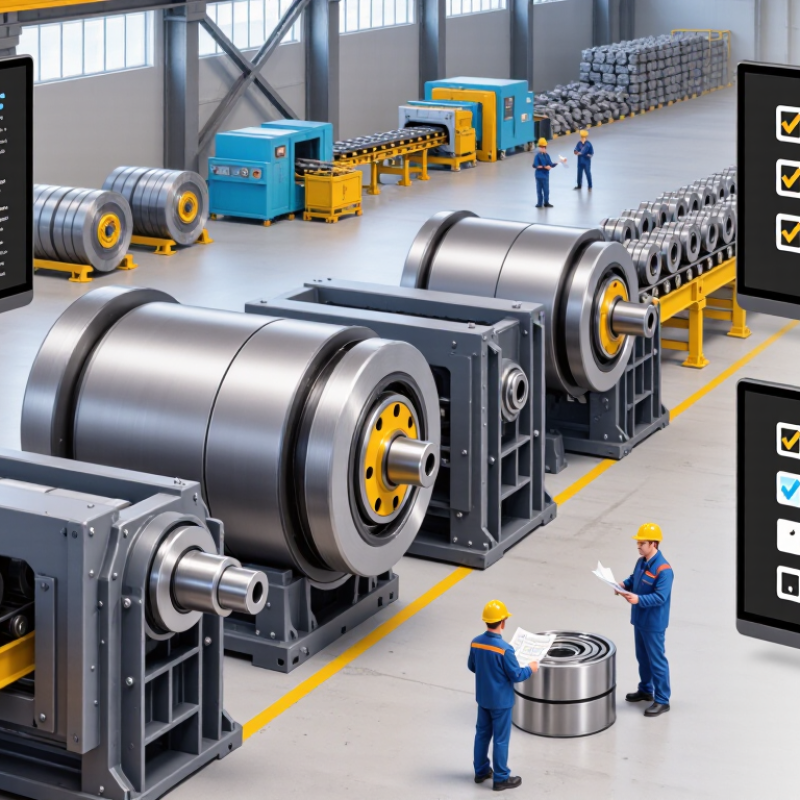
Define Requirements: Feed Size, Material Hardness, Moisture, and Capacity
Choosing a top roll crusher manufacturer in China starts with a precise process brief, not a catalog photo. Record the largest and typical feed sizes, required product range, and hourly capacity. Include the material’s hardness and abrasiveness; these affect roll wear and achievable output. Small details matter. A capacity estimate based only on ideal feed may not match your actual production line.
Moisture deserves equal attention. Damp, clay-rich material can cling to rolls or block the discharge area, while dry, hard feed may increase wear. Share representative samples and ask how the proposed configuration handles them. Request test results or a supervised trial using comparable material. Check what the quoted capacity assumes, including feed size and operating conditions. Specifications can look precise, but real feed varies.
Tips: Send a particle-size range, moisture estimate, and target throughput with your inquiry. Ask about roll material, gap adjustment, wear-part replacement, and routine inspection access. Leave practical capacity margin for feed variation. Test it first. A sample test may still miss seasonal changes, so keep that limitation in your planning.
