
How to Choose a Memory Foam Core Pillow Filling Machine?
Choosing a Memory Foam Core Pillow Filling Machine starts with understanding the material, not comparing headline speeds. Memory foam can cling, compress, and feed unevenly when its particle size or moisture changes. A machine that handles one supplier’s foam smoothly may struggle with another batch. That detail is easy to miss.
Grand View Research’s Memory Foam Market report estimated the global market at about US$5.47 billion in 2022 and forecast continued growth through 2030. This is a market estimate, not a guarantee of demand for any factory. ISPA’s Mattress Industry Trends reporting provides useful bedding-industry context, including shifts in production and shipments. Together, these sources suggest why manufacturers should assess capacity carefully, rather than buying for a forecast alone.
For a practical comparison, check dosing consistency, adjustable filling volume, dust control, cleaning access, and compatibility with your pillow’s inner liner. Ask suppliers for a trial using your actual foam and target pillow size. Measure fill-weight variation, cycle time, and material loss across repeated runs. Watch the operator change settings, too. Small delays add up.
Do not rely on brochure figures alone. They may describe ideal conditions, not a busy production floor. I would verify maintenance needs, spare-part availability, and after-sales support in writing. A faster machine is not always the better choice. The right Memory Foam Core Pillow Filling Machine should match your foam, product range, labor skills, and realistic daily output—with room for honest questions before purchase.
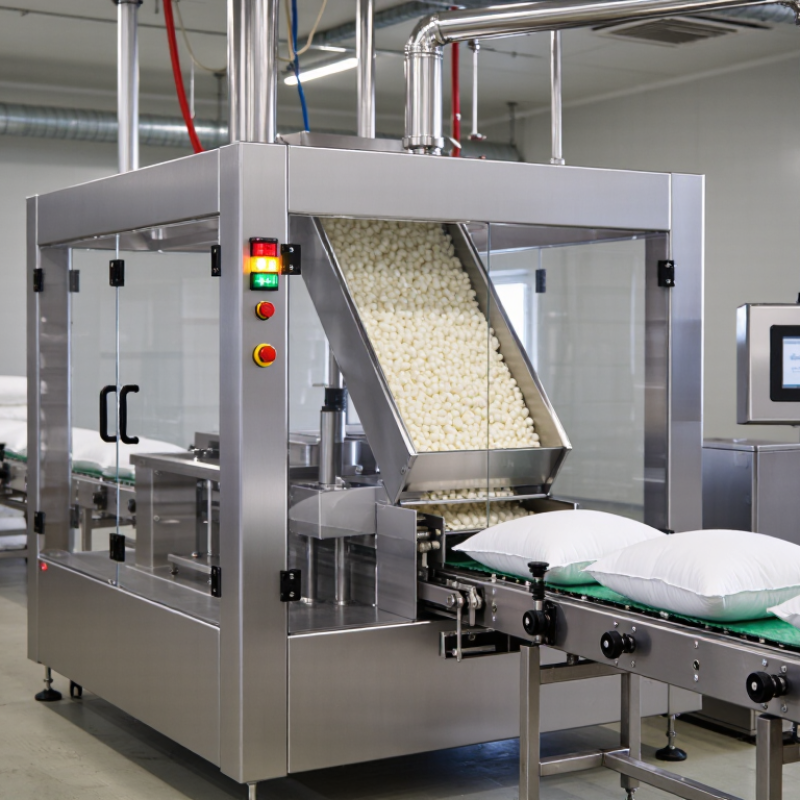
Define Your Memory Foam Core Pillow Production Requirements
Start with the pillow you intend to make, not a machine brochure. Record its finished dimensions, target weight, firmness, and filling type. Will the core use shredded foam, small foam pieces, or layered inserts? These choices affect hopper capacity, feeding method, and fill-volume control. Write down daily output and shift length. Be realistic. A high production target can leave operators rushing around a dusty work area.
Measure the smallest and largest foam pieces you expect to process. Light, irregular scraps may bridge in a hopper, while dense pieces can feed unevenly. Ask for a trial with your actual foam and pillow cover. Record fill time, weight variation, and rejected units. Check how operators load covers, clear jams, and clean the hopper between material changes. Confirm that controls allow practical adjustments to fill weight and cycle speed. Consider the space around the machine, too; workers need room to handle covers and finished pillows safely. Your estimates may change after testing, and that is worth allowing for. A setup that performs well with one foam batch may behave differently with another.
How to Choose a Memory Foam Core Pillow Filling Machine? - Define Your Memory Foam Core Pillow Production Requirements
| Requirement | Information to Define | Example Specification or Measurement | Why It Matters When Selecting a Machine |
|---|---|---|---|
| Pillow construction | Decide whether the product uses shredded memory foam, a single molded core, or a cut foam block. | Example: shredded foam pieces are blown or conveyed into a pillow cover; a solid core is generally produced by molding or cutting rather than loose-fill equipment. | Filling machines are designed for loose materials. A solid foam core may require different upstream equipment and handling. |
| Finished pillow dimensions | List the cover’s filled dimensions and the range of sizes that must run on the line. | Record each product size in the approved specification, for example, width × length in centimetres or inches. | Cover opening, filling nozzle, fixture, and changeover needs depend on pillow size and shape. |
| Fill material | Specify foam type, piece-size distribution, moisture condition, and any blend of materials. | Provide representative samples of the actual production material and document how it is prepared and stored. | Piece size, softness, and static or dust levels can affect conveying, feed consistency, and material loss. |
| Target fill weight | Set a target weight and acceptable tolerance for every pillow size and fill recipe. | Use the approved product specification; verify sample pillows on a calibrated scale during trials. | The required dosing method and weighing controls depend on the target weight and allowed variation. |
| Production output | Define the required finished pillows per hour or shift, including product mix and planned operating time. | Calculate demand from good units required and available production time; include time for loading, inspection, and changeovers. | A stated machine cycle rate may not equal sustained line output when manual handling or downstream operations are included. |
| Loading and cover handling | Determine whether operators load covers manually or whether the line needs fixtures, clamps, or automated handling. | Describe the cover opening, closure method, loading position, and the number of operators planned per shift. | Cover handling can limit output even when the filling unit has sufficient capacity. |
| Recipe and changeover needs | List the number of sizes, fill weights, and material recipes to be run, plus how often production changes. | Prepare a product matrix showing each SKU, target weight, material, and expected production frequency. | Repeatable settings and accessible adjustments help reduce setup time and prevent recipe errors. |
| Dust control and housekeeping | Assess dust generation, cleaning frequency, collection arrangements, and workplace ventilation needs. | Review the process with a representative material sample and check applicable local occupational-safety requirements. | Foam handling can create loose particles; collection and cleaning provisions should suit the material and facility. |
| Factory utilities and layout | Confirm available electrical supply, compressed-air capacity if required, floor space, access, and material-storage locations. | Compare the facility’s measured utility capacity and layout with the machine’s documented installation requirements. | Utility or space limitations can affect installation, operation, and the flow of material through the line. |
| Quality checks | Define checks for weight, fill distribution, cover condition, and finished dimensions. | Set inspection frequency and acceptance criteria in the product quality plan; retain trial results by product type. | Clear acceptance criteria make machine trials and ongoing production control more reliable. |
| Machine trial and acceptance | Agree on the materials, product sizes, target weights, test duration, and acceptance measures for a production trial. | Test the actual foam and covers, record output and weight variation, and inspect finished pillows against the approved specification. | A representative trial helps confirm that the machine suits the real product and operating conditions. |
