
How to Choose a High Torque Brushless DC Motor
A High Torque Brushless Dc Motor can move a demanding load, but the largest torque figure on a product page rarely tells the whole story. The International Energy Agency’s report, Energy-Efficiency Policy Opportunities for Electric Motor-Driven Systems, estimates that electric motor-driven systems use about 45% of global electricity. That figure reflects a broad range of equipment, not brushless DC motors alone. Still, it shows why choosing the right motor and drive matters for energy use and reliable operation.
Start with the load. A conveyor moving heavy cartons, for example, may need strong starting torque, steady speed, and repeated starts throughout a shift. Check continuous and peak torque separately, then compare them with the motor’s speed range, voltage, current, and duty cycle. Heat matters. So does the controller: poor matching can limit performance even when the motor appears powerful on paper. Consider the available space, mounting method, ambient temperature, and expected service life, too.
Specifications can mislead. Peak torque is not a promise of continuous output. A motor that works well on a test bench may struggle inside a warm, enclosed machine. This guide explains how to compare motor ratings, assess the load, and verify motor-driver compatibility before choosing a model. The right choice depends on the full operating profile, not one impressive number. An honest review of your assumptions can prevent an expensive mismatch.
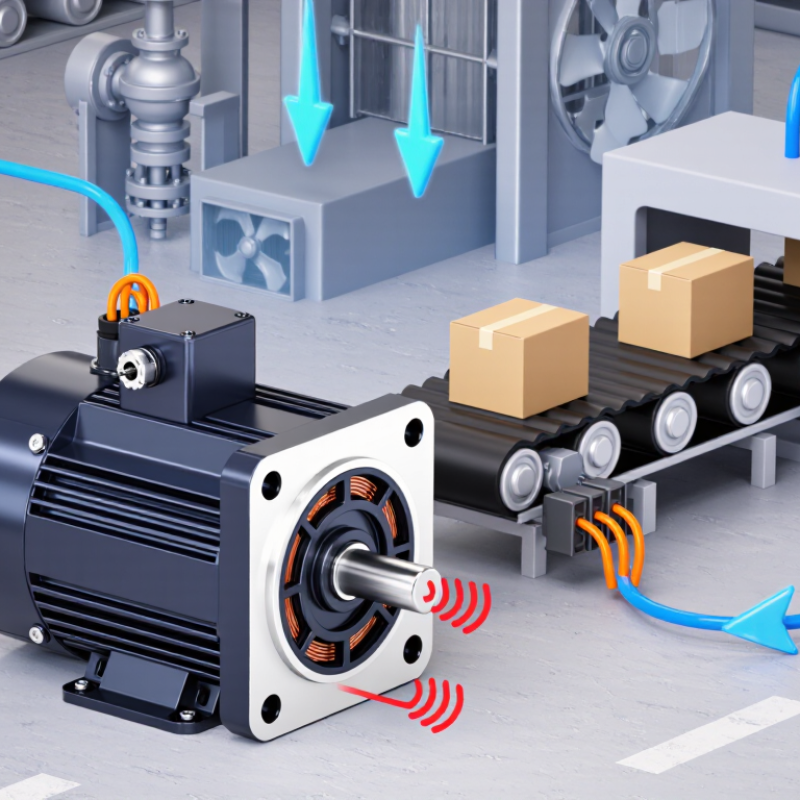
Determine the Application’s Torque, Speed, and Duty-Cycle Requirements
Choosing a high-torque brushless DC motor starts with the real load, not a catalog’s peak-torque figure. Record shaft speed and torque during startup, steady running, and any jam or incline condition. The IEA’s 2011 report, Energy-Efficiency Policy Opportunities for Electric Motor-Driven Systems, estimates that motor-driven systems use about 45% of global electricity. That scale makes accurate sizing worthwhile. Measure it under load.
Separate continuous torque from short bursts. A conveyor may need a brief surge to start a full belt, then much less torque to keep it moving. Check the motor’s torque-speed curve at your actual supply voltage; torque generally falls as speed rises. Include acceleration: rotating inertia adds demand beyond the steady load. A guessed value is tempting, but it is not a measurement.
Duty cycle determines whether heat can escape between runs. IEC 60034-1 defines duty types, including S1 continuous duty and S3 intermittent periodic duty. Log each run’s duration, rest period, and starts per hour, then compare that pattern with the motor and drive’s thermal limits. A hot enclosure or frequent starts can change the choice. Heat changes everything. I would keep early estimates provisional, especially when friction or payload varies.
