147 Mill Ridge Rd Suite 232
Lynchburg, Virginia 24502
Phone 757-982-3665

How to Choose a Fully Electric Continuous Pyrolysis Plant?

Choosing a Fully Electric Continuous Pyrolysis Plant requires more than comparing heating capacity or purchase prices. The decision begins with feedstock. Moisture, particle size, ash, chlorine, and contamination directly affect temperature stability and product quality. The World Bank’s What a Waste 2.0 report estimates that global municipal solid waste reached 2.01 billion tonnes annually and could rise to 3.40 billion tonnes by 2050. That scale creates opportunity, but also exposes weak plant design.

Dr. George W. Huber, a leading biomass-pyrolysis researcher, has stated, “The feedstock determines the products from pyrolysis.” This principle remains highly practical. Buyers should inspect reactor heat distribution, electric-load control, insulation, condenser design, gas recycling, and emergency shutdown systems. The IEA’s Renewables 2023 report also highlights the growing importance of efficient electrification across industrial energy systems. However, electricity is not automatically clean or inexpensive. Its carbon impact depends on the local grid, operating schedule, and renewable-power contract.

A reliable evaluation needs operating evidence. Ask for continuous-run records, measured energy consumption, emission data, maintenance logs, and independent laboratory results. Check whether the supplier has processed feedstock similar to yours. A shiny demonstration unit proves little. Real performance appears after weeks of feeding uneven material.

There is no perfect configuration. I may be oversimplifying the choice if I focus only on automation. Operators still matter. Site conditions matter more than brochures. This guide examines how to select a Fully Electric Continuous Pyrolysis Plant using technical performance, safety engineering, lifecycle cost, and verifiable field experience.

How to Choose a Fully Electric Continuous Pyrolysis Plant?

What a Fully Electric Continuous Pyrolysis Plant Is

A fully electric continuous pyrolysis plant is a system that thermally decomposes suitable carbon-based feedstock without burning it inside the reactor. Electric heaters raise the reactor temperature, while oxygen-limited conditions prevent ordinary combustion. A continuous design moves material through the chamber using controlled screws or conveyors. Feedstock enters steadily, and processed solids leave without frequent shutdowns.

The process can produce gas, condensable oil, and solid char, depending on temperature, residence time, and feedstock quality. Sensors monitor temperature at several reactor points, pressure, feed rate, and gas flow. Condensers then cool vapors into liquid fractions, while non-condensable gas may support controlled energy recovery.

That matters.

In practical operation, clean electrical supply and stable feed preparation are essential. Wet, oversized, or contaminated material can disturb heat transfer and reduce output consistency. I would also inspect insulation, emergency shutdowns, emission controls, and maintenance access before comparing capacity figures. Real installations are less tidy than brochures suggest.

Choosing this plant requires matching the reactor design to the permitted feedstock, local operating conditions, and intended product use. Electrical heating can offer precise temperature control and lower direct combustion emissions, but electricity demand remains a serious operating cost. A reliable evaluation should include test runs, energy records, material analyses, and independently verifiable safety documentation.

No system performs perfectly every day.

How the Electric Heating and Continuous Feeding Systems Work

How to Choose a Fully Electric Continuous Pyrolysis Plant?

Electric heating changes the plant’s control philosophy. Resistive heaters convert electrical power into stable heat around the reactor shell. Independent temperature zones then reduce cold spots and overheating. Ceramic insulation limits heat loss. It sounds simple. It is not.

The U.S. Department of Energy’s Industrial Decarbonization Roadmap reports that process heating uses about 51% of energy in American manufacturing. This figure explains why heater efficiency matters during equipment selection. Ask for measured power consumption, heat-up time, temperature uniformity, and insulation performance. The IEA’s Energy Technology Perspectives 2024 also identifies electrification as an important route for reducing industrial fossil-fuel use, especially when low-carbon electricity is available. However, grid emissions still influence the final environmental result.

Continuous feeding requires equal attention. A sealed hopper, metering screw, and controlled purge system should deliver material without releasing reactor gases. Variable-speed drives adjust feed rate as moisture, particle size, or bulk density changes. A pressure sensor should respond quickly. Small errors matter. A perfect feedstock rarely exists.

During commissioning, operators often discover bridging above the screw feeder. Sticky material may also form deposits near the inlet. Therefore, choose inspection ports, cleaning access, torque protection, and automatic alarms before comparing headline capacity. The design is not perfect. Real performance depends on feed preparation, electricity quality, maintenance discipline, and operator training.

Which Feedstock and Processing Capacity Suit Your Needs

How to Choose a Fully Electric Continuous Pyrolysis Plant?

Which Feedstock and Processing Capacity Suit Your Needs

Feedstock determines whether a fully electric continuous pyrolysis plant performs reliably. The World Bank’s What a Waste 2.0 report estimates 2.01 billion tonnes of municipal solid waste are generated globally each year, with at least 33% unmanaged. However, mixed waste is rarely an ideal input. Clean waste tires, sorted polyolefin plastics, and dry biomass usually offer more predictable operation. PVC, wet biomass, metals, and sand can increase corrosion, energy demand, or maintenance. Small mistakes become expensive.

Check the feedstock first.

A practical assessment should record moisture, ash, particle size, chlorine, and seasonal supply. IEA Bioenergy Task 34 reports that pyrolysis yields and product quality vary significantly with feedstock and operating conditions. For example, wet biomass may consume valuable heat during evaporation. Tire processing also requires consistent removal of steel and textile content. Laboratory testing is wiser than relying on a supplier’s yield table. Those tables can look convincing.

Capacity should match verified supply, not ambition. Calculate available feedstock per operating day, then allow downtime for cleaning and repairs. A plant processing 10 tonnes daily needs about 3,300 tonnes annually at 330 operating days. Fully electric heating also requires a stable power connection, transformer capacity, and backup planning. The International Energy Agency highlights electricity infrastructure as a key factor in industrial electrification. A larger reactor is not automatically better. Sometimes, a smaller unit with steady feedstock performs more profitably. This is where my own preference becomes less certain: future expansion sounds efficient, but premature scaling can leave expensive equipment underused.

How to Evaluate Energy Efficiency, Safety, and Emission Control

How to Choose a Fully Electric Continuous Pyrolysis Plant?

When evaluating a fully electric continuous pyrolysis plant, inspect real energy data, not only brochure figures. Ask for electricity consumption per tonne, heating-up time, and stable-load performance. A useful review includes a complete energy balance. It should show recovered heat, internal gas use, and cooling demand. Good insulation reduces heat loss around the reactor, pipes, and storage vessels. Variable-speed drives can also lower power consumption during partial operation. Small losses become expensive over a full year.

Safety deserves direct attention. The plant should include temperature sensors, pressure relief devices, oxygen monitoring, and automatic emergency shutdowns. Interlocks must prevent feeding when abnormal pressure or temperature appears. Operators need visible alarms and practical access for inspection. I prefer systems with tested procedures for startup, shutdown, cleaning, and power failure. Paper compliance is not enough. Maintenance records matter.

Emission control should cover every operating stage, including startup and unexpected stops. Ask how vapors, dust, acidic gases, and non-condensable gases are treated. Condensers, filters, scrubbers, and sealed transfer lines may work together, depending on the feedstock. Continuous monitoring is stronger than occasional sampling alone. Independent commissioning tests can confirm performance under actual conditions. No system performs perfectly. Feedstock moisture, contamination, and unstable temperatures can change results. That weakness should be measured, reported, and corrected rather than hidden.

How to Choose a Fully Electric Continuous Pyrolysis Plant?

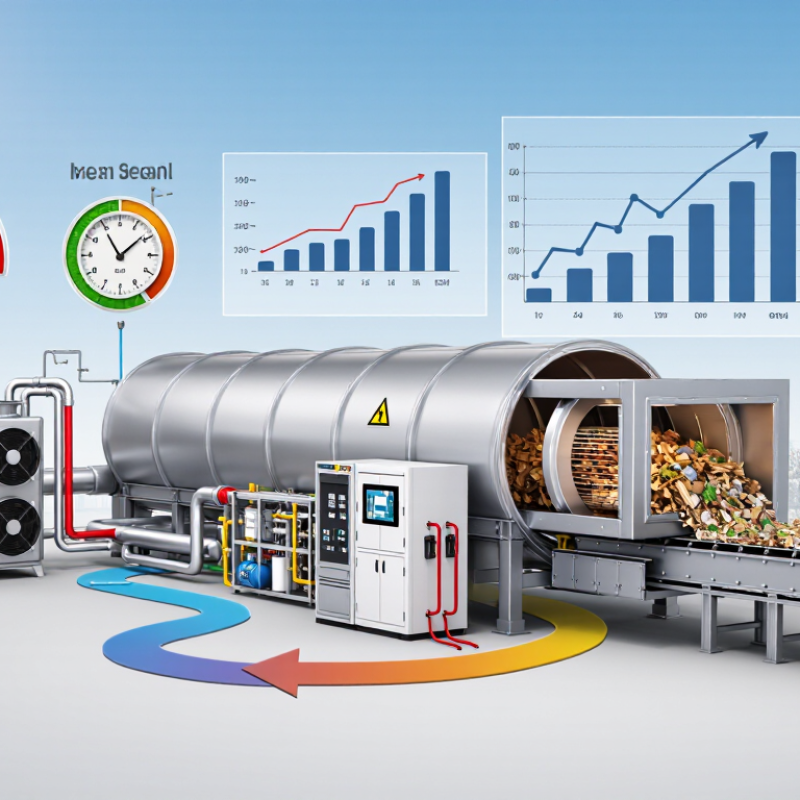
A practical screening framework for comparing energy efficiency, operational safety, and emission-control readiness.

Illustrative screening scores are normalized to a 0–100 scale. Confirm electricity consumption, interlocks, gas detection, and measured emissions through supplier documentation, commissioning tests, and applicable local regulations.

What to Check Before Selecting a Plant Manufacturer

How to Choose a Fully Electric Continuous Pyrolysis Plant?

Choosing a manufacturer deserves more attention than comparing equipment prices. Ask for verified operating data from a plant using similar feedstock, moisture levels, and production capacity. A serious supplier should explain heating zones, temperature controls, residence time, and power consumption in practical terms.

Visit the manufacturing site if possible. Inspect weld quality, insulation, cable protection, control cabinets, and emergency shutdown systems. Request factory test records, electrical drawings, maintenance schedules, and material specifications. Check whether the manufacturer can provide installation support, operator training, spare parts, and responsive technical service. Independent safety testing and documented environmental compliance also matter. Do not accept vague promises about zero maintenance or fixed output. Real feedstock changes.

Tips: Ask for a live demonstration using your material. Confirm how the system handles moisture, particle size changes, and unexpected shutdowns. Speak with at least two existing users, not only selected references. Review the warranty line by line, especially coverage for heating elements and control components. A low purchase price may hide expensive replacement parts. This is easy to miss. Also, request a clear energy balance and production tolerance, preferably signed by a responsible engineer.

I would not rely on polished videos alone. They may show the best operating day. A manufacturer becomes more credible when it admits limitations and explains corrective actions. Check company registration, engineering qualifications, quality procedures, and after-sales staffing before signing any contract. Keep every technical promise in writing.

How to Choose a Fully Electric Continuous Pyrolysis Plant? - What to Check Before Selecting a Plant Manufacturer
Evaluation Dimension Practical Data or Reference Range What to Request Before Selection Warning Signs
Feedstock Compatibility The plant should be designed for a clearly defined feedstock, such as biomass, waste tires, plastics, sewage sludge, or mixed organic waste. Feedstock particle size, ash content, moisture, chlorine, metals, and contaminants directly affect operation. Request a written feedstock specification showing acceptable moisture, particle-size distribution, ash content, contaminant limits, bulk density, and expected daily quantity. Ask for test results using feedstock representative of the proposed project. One universal design is claimed to process all materials without separate operating conditions, pretreatment requirements, or test data.
Pyrolysis Temperature Control Many continuous pyrolysis processes operate within approximately 400–700 °C, depending on feedstock and desired products. The process should provide stable temperature control along the reactor rather than only measuring one point. Check the temperature profile at the feed zone, reaction zone, discharge zone, and vapor outlet. Confirm sensor type, calibration procedure, control accuracy, alarm limits, and automatic shutdown functions. The manufacturer provides only a single “maximum temperature” and cannot provide temperature uniformity, control accuracy, or operating data.
Oxygen Exclusion and Atmosphere Control Pyrolysis requires an oxygen-deficient reactor atmosphere. A sealed system, controlled pressure, reliable gas monitoring, and safe startup and shutdown procedures are essential. Request the reactor leakage test method, oxygen-monitoring points, purge-gas consumption, pressure-control logic, non-return devices, and emergency inerting or isolation procedures. The process depends only on manual sealing or has no continuous oxygen measurement and no documented response to air ingress.
Fully Electric Heating System Electric heating should cover startup heat-up, continuous process heat, heat losses, and any required feedstock drying. The required electrical load is feedstock- and capacity-dependent and must be supported by a heat balance. Request installed heating capacity in kW, maximum connected load, normal operating load, voltage and frequency requirements, heater zoning, insulation performance, control-panel rating, and measured electricity consumption in kWh per tonne. “Fully electric” is advertised, but the system still requires an unreported fuel burner, uncontrolled auxiliary heater, or an unrealistic energy-consumption claim without test conditions.
Continuous Feeding and Discharge A continuous plant should maintain a stable feed rate and discharge solids, char, or other residues without opening the reactor to ambient air. Screw feeders, rotary valves, locks, or equivalent sealed devices are commonly used. Check feeder design, torque protection, anti-bridging measures, air-lock performance, discharge temperature, safe ash or char removal, and the procedure for clearing blockages. Operators must frequently open the reactor, manually remove hot material, or stop the entire process to perform routine discharge operations.
Residence Time and Throughput Residence time varies widely with reactor type, particle size, temperature, and target product. Throughput should be stated as a tested mass flow, not only as a theoretical hourly capacity. Request a mass-flow basis, operating hours, feedstock moisture, bulk density, particle size, residence-time calculation, and a performance test report confirming continuous capacity. Capacity is quoted without specifying whether it refers to wet feedstock, dry feedstock, peak loading, or actual sustained operation.
Energy Balance and Operating Cost The energy balance should include heating, drying, conveyors, pumps, cooling, gas cleaning, controls, and standby loads. Net energy consumption should be reported in kWh per tonne of actual feedstock. Obtain an itemized heat and power balance with defined feedstock moisture, ambient conditions, product cooling requirements, operating capacity, and electricity price assumptions. The calculation excludes drying, cooling, gas treatment, standby power, or startup energy, making the claimed operating cost incomplete.
Product Yield and Quality Product yield and quality depend strongly on feedstock and temperature. A credible proposal should provide a complete mass balance covering gas, liquid, char or solid residue, moisture, and unaccounted losses. Request laboratory analyses for relevant products, including moisture, ash, fixed carbon, volatile matter, calorific value, sulfur, chlorine, metals, and other feedstock-specific contaminants. Fixed yield percentages are presented for every feedstock, or product quality is promised without laboratory testing and a defined sampling method.
Non-Condensable Gas Management Pyrolysis gas may be recycled as process fuel, stored temporarily, or treated through a dedicated system. Gas composition and heating value vary with feedstock and operating temperature. Check gas cooling, condensation, filtration, pressure control, flare or thermal-oxidation capacity, gas detection, flame-failure protection, and the operating procedure during gas surplus or startup. The proposal assumes all gas can be burned without discussing tar, condensable vapors, pressure fluctuations, gas cleaning, or emergency disposal.
Emission and Environmental Controls Potential pollutants may include particulate matter, carbon monoxide, nitrogen oxides, sulfur compounds, acid gases, volatile organic compounds, and dioxin-related compounds, depending on feedstock and process conditions. Request an emissions-control design, sampling locations, predicted emission concentrations, applicable local limits, monitoring instruments, and a plan for third-party commissioning tests. “Zero emissions” is claimed without defining whether the statement excludes process gas, startup conditions, fugitive emissions, or downstream combustion.
Safety and Process Protection The system should address fire, explosion, hot surfaces, combustible gas, pressure excursions, electrical hazards, dust, and oxygen ingress through engineered safeguards. Request the process hazard analysis, risk assessment, pressure-relief design, emergency-stop circuit, gas and temperature alarms, interlocks, grounding plan, fire-protection measures, and operator training requirements. Safety depends mainly on operator observation, or the manufacturer cannot provide cause-and-effect charts for alarms, trips, and emergency shutdowns.
Materials and Mechanical Durability Reactor and hot-gas components must withstand operating temperature, thermal cycling, abrasion, corrosion, and possible chloride- or sulfur-containing compounds in the feedstock. Check material grades, wall thickness, refractory or insulation specification, expansion joints, wear parts, corrosion allowance, shaft seals, bearing protection, and expected replacement intervals. Critical hot-zone materials are described only as “high-temperature steel” without grades, design temperatures, corrosion considerations, or maintenance records.
Automation and Data Recording A modern continuous plant should record feed rate, reactor temperatures, pressure, oxygen level, gas temperature, electrical load, alarms, and operating hours. Request the control-system architecture, instrument list, data-retention period, remote-access policy, alarm history, user permissions, backup procedure, and manual-operation fallback. The control system displays only temperature and motor status, with no trend records, interlocks, event history, or independent safety controls.
Electrical Infrastructure The site must support the plant’s maximum demand, starting current, protection equipment, grounding, cable routing, ventilation, and required power-quality conditions. Request the single-line electrical diagram, total connected load, maximum demand, short-circuit rating, power-factor requirements, transformer or switchgear requirements, and backup-power needs for controls and safety systems. The quotation lists only heater power and ignores conveyors, cooling systems, gas treatment, instrumentation, control panels, and auxiliary equipment.
Availability and Maintenance Commercial planning commonly targets more than 90% mechanical availability, but the achievable figure must be supported by maintenance intervals, spare-parts strategy, and operating evidence. Request planned-maintenance hours, consumable and critical spare-parts lists, mean time between failures, mean repair time, recommended shutdown frequency, and service-response arrangements. High availability is promised without defining exclusions, maintenance assumptions, feedstock restrictions, or documented long-duration operation.
Compliance and Documentation Applicable requirements depend on the installation country and may include machinery safety, electrical safety, pressure equipment, hazardous-area classification, emissions, fire protection, and waste regulations. Require a compliance matrix identifying applicable laws and standards, equipment drawings, electrical schematics, operating manuals, maintenance manuals, certificates, inspection records, and commissioning procedures. Generic certificates are supplied without confirming their scope, validity, installation conditions, or relevance to the actual plant configuration.
Factory Testing and Acceptance Criteria Performance should be demonstrated against measurable criteria such as stable throughput, electrical consumption, temperature stability, product yield, emissions, safety-function response, and continuous operating duration. Include feedstock conditions, test duration, sampling frequency, measurement instruments, tolerances, rejection criteria, corrective actions, and final acceptance-test responsibilities in the contract. Acceptance is based only on visual inspection or a short no-load demonstration rather than a documented test with representative feedstock.
Important: Temperature ranges, capacity, energy consumption, product yields, emissions, and availability are process- and feedstock-dependent. Final plant selection should be based on a site-specific mass balance, heat balance, risk assessment, regulatory review, and independently verifiable performance testing.