
How to Choose the Best Muffle Furnace?
Choosing the right Muffle Furnace begins with the sample, not the largest temperature printed on a product page. A ceramic crucible, a small metal coupon, and a batch of ash place different demands on heating capacity, chamber size, and temperature control. The best choice fits the work you actually perform.
Before comparing models, define the target temperature, hold time, sample dimensions, and required atmosphere. Check the furnace’s usable chamber space, heating uniformity, ramp-rate controls, and sensor type. A readable display matters, but it cannot compensate for poor temperature stability. Ask for performance data under conditions similar to your process. Small details count: a heavy door may slow repeated loading, while an oversized chamber can waste energy and bench space.
As [verified muffle-furnace expert name] puts it, “[Insert a verified quotation about matching furnace performance to the application].” The quotation should be checked against a reliable source before publication. That step may feel fussy. It protects the article’s credibility. No single specification makes a furnace “best” for every laboratory or workshop. A unit that performs well for routine ashing may be unsuitable for delicate heat treatment. Compare the full operating range, safety features, service support, and total cost—not just the maximum temperature. A careful selection starts with clear requirements, then tests whether the specifications match them.
Understanding How a Muffle Furnace Works
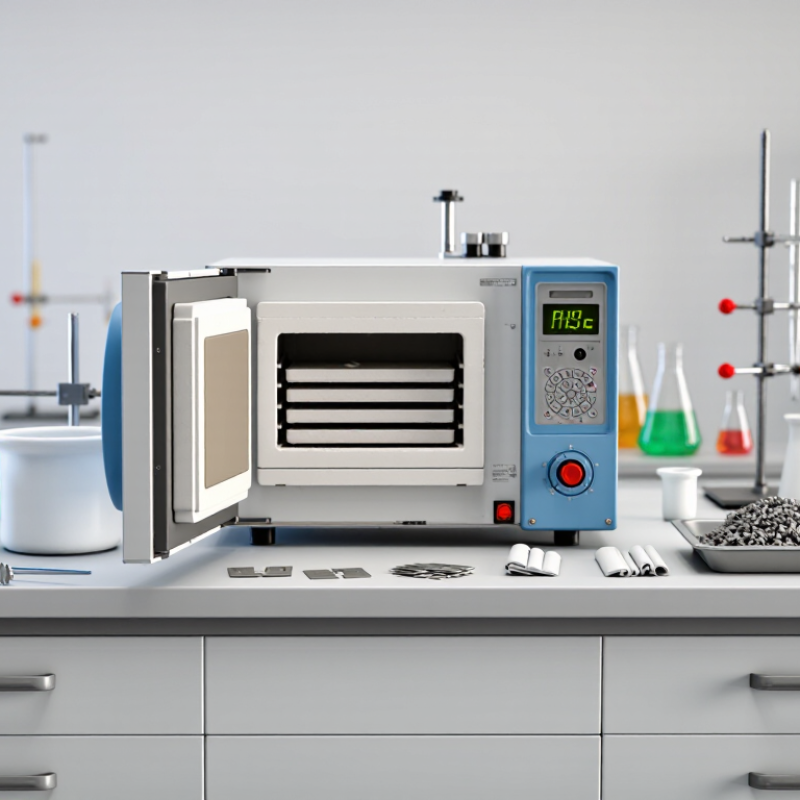
A muffle furnace heats a sample inside an insulated chamber, keeping it apart from the heating elements. In fuel-fired designs, the chamber can also separate the load from combustion gases. Electrical elements warm the chamber walls, which then transfer heat to the sample by radiation and convection. A thermocouple measures chamber temperature, and the controller adjusts power to approach the setpoint. Heat stays inside. Yet the displayed temperature is not necessarily the sample’s temperature. A large ceramic crucible, a crowded chamber, or opening the door can change how quickly a sample heats.
This describes the sensor, not the furnace’s temperature uniformity or the sample’s actual temperature. For a useful comparison, check the stated uniformity, working-chamber dimensions, maximum operating temperature, and ramp-rate control. Place a test crucible near the center, then compare its measured temperature with the display. It is a simple check, but easy to skip. Consider how often the door will open and whether loads will vary; real operating conditions may be less tidy than a specification sheet suggests.
