
Top Lift Stage Manufacturers in China for Global Buyers
A Lift Stage is more than a moving platform. It is a piece of stage machinery that must handle loads, travel smoothly, and fit the venue’s operating routine. Live Nation’s 2024 annual report says the company promoted more than 50,000 concerts and served 151 million fans that year. Those figures describe one major operator, not the entire live-events market, but they show the scale at which reliable production equipment matters. A lift that hesitates, racks unevenly, or lacks clear service records can disrupt a carefully timed changeover. Details matter.
For global buyers, comparing Chinese manufacturers means looking beyond price and catalog photographs. Review rated capacity, platform dimensions, travel speed, control options, safety interlocks, installation support, and access to replacement parts. Ask for drawings, test records, and references for projects with similar use conditions. ESTA’s ANSI E1.42 standard addresses the design, installation, and use of orchestra pit lifts; buyers can use it as a technical reference where relevant, while confirming the requirements for their own project. A low quotation may be attractive. It may also leave important assumptions unstated. Manufacturer claims deserve verification, and even a strong supplier may not suit every venue. This guide examines leading Lift Stage manufacturers in China through product capability, engineering support, documented quality, and export experience, helping buyers ask better questions before requesting a final proposal.
What Lift Stages Are and How They Work
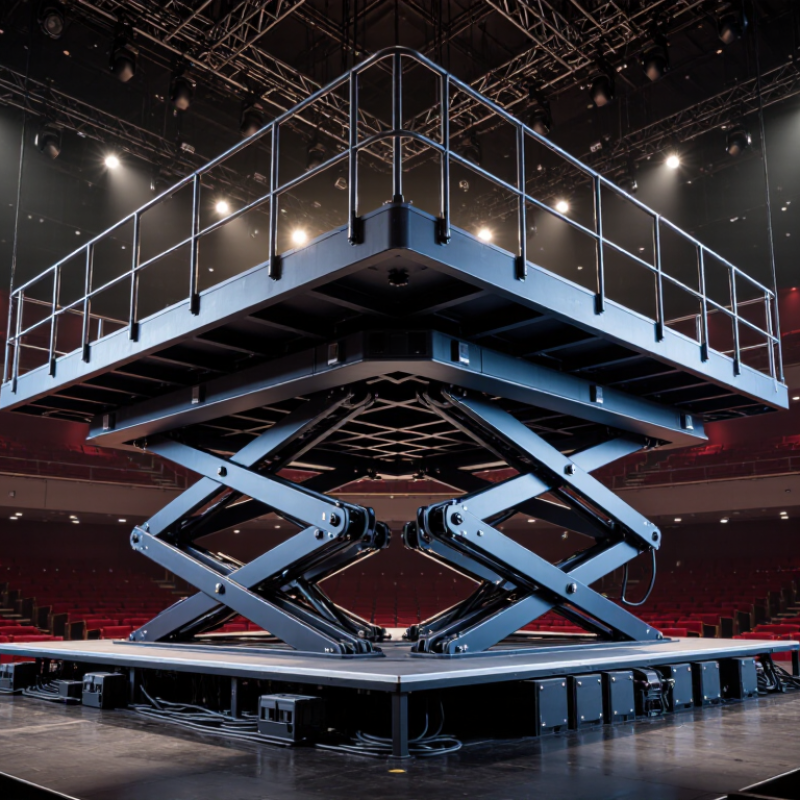
A lift stage is a platform built into a theater floor that moves scenery, performers, or equipment between levels. Most systems use a scissor mechanism, hydraulic cylinders, or electric screw drives. The mechanism raises the platform; guides help keep it level. A control system sets travel limits and may stop movement if a safety edge detects an obstruction. Quiet motion matters. A small jerk can shift a prop or unsettle a performer. Design details vary, so buyers should check rated load, travel distance, speed, platform dimensions, and whether the stage must stop precisely at floor level.
Under the deck, the frame transfers loads into the building structure. Guards, emergency stops, and maintenance access are practical necessities, not decorative extras. The UK Health and Safety Executive’s 2023/24 workplace statistics recorded 138 worker fatalities and an estimated 604,000 non-fatal workplace injuries. These figures cover all industries, not lift stages specifically, but they underline why moving equipment needs controlled operation and inspection. ESTA’s ANSI E1.6-1 standard addresses powered hoist systems used in entertainment settings; it is useful context, though a lift stage may involve additional machinery and site-specific engineering. One detail is easy to miss: uneven loading can affect motion, even when the total weight remains within the stated capacity.
