
China Top 10 Heavy Duty Diesel Engine Welding Machines?
China’s commercial-vehicle sector gives useful context for evaluating heavy-duty engine repair equipment. The China Association of Automobile Manufacturers reported about 3.8 million commercial vehicles produced in 2024. That figure covers multiple powertrains, not diesel engines alone. Still, it points to a large installed base of vehicles whose engine components may require maintenance or repair.
A Heavy Duty Diesel Engine Welding Machine must handle more than a high current rating. In a repair shop, operators may work on thick castings, engine blocks, cylinder heads, or exhaust components. Material type, crack location, preparation, and heat control all affect the result. A powerful machine is not automatically the right one. Process compatibility, stable output, duty cycle, and access to technical support deserve equal attention.
This guide compares ten China-based options through practical purchasing criteria, including welding processes, rated capacity, controls, and service availability. Product specifications should be checked against current manufacturer documentation, since configurations can change. Where public data is limited, comparisons remain provisional. That matters. A ranked list can simplify research, but it cannot replace a qualified technician’s assessment of the component and repair procedure. The CAAM figures describe vehicle production, not welding-machine sales or diesel repair demand. That distinction is easy to overlook.
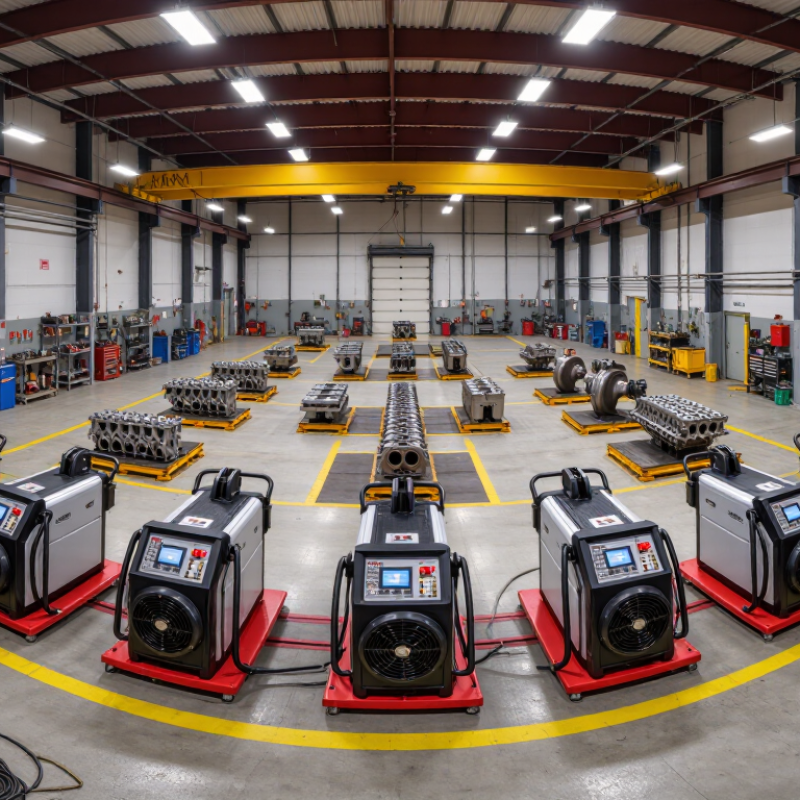
Understanding Heavy-Duty Diesel Engine Welding Machines
Understanding Heavy-Duty Diesel Engine Welding Machines
A heavy-duty diesel engine welding machine combines an engine-driven power source with an arc-welding system. It suits remote repair sites where grid power is unavailable.
Think of a cracked steel bracket beside a stationary engine: the operator needs stable current, suitable leads, and room to ventilate exhaust. Output amperage alone does not define capability. Check the process, voltage range, and whether auxiliary power is available.
Duty cycle matters.
IEC 60974-1 rates duty cycle over a ten-minute period; at 300 amps and 60%, that means six minutes of welding under the stated test conditions. Heat, dust, long cables, and continuous high loads can change real-world performance. Ratings need context.
The American Welding Society has projected that about 360,000 welding professionals would be needed in the United States by 2027. That workforce outlook underscores the value of trained operators, but it does not rank machines.
A practical comparison should record output at the intended current, fuel use under load, noise, service access, and the thickness of materials typically repaired. A bigger rating can mislead. Field conditions are rarely neat, and published specifications cannot replace a job-specific trial.
