
China Top 10 Heavy Duty Cantilever Racking System Suppliers
Choosing a Heavy Duty Cantilever Racking System is not just a matter of comparing prices or counting arms. Long steel tubes, timber boards, and irregular metal sections need stable support, clear load limits, and safe access for forklifts. A poorly matched rack can waste floor space and complicate everyday handling. The details matter.
Warehouse researcher John Bartholdi’s work offers a useful principle, paraphrased here: “Storage design should support the flow of goods, not obstruct it.” That idea is relevant when comparing China’s top suppliers. Buyers should examine engineering documentation, stated capacity, material quality, manufacturing consistency, and after-sales support. Ask how the supplier accounts for load distribution, rack height, base design, and site conditions. A polished catalog is not proof of a suitable system.
This guide introduces ten Chinese suppliers and the factors that can help distinguish them. Company claims should be checked against project references, technical drawings, and the requirements of the intended installation. A real warehouse is less tidy than a product photo: bundles vary in length, aisles get busy, and operators need room to retrieve stock. There is no perfect supplier for every operation. Even a well-designed rack depends on correct loading, installation, and inspection. That deserves honest attention.
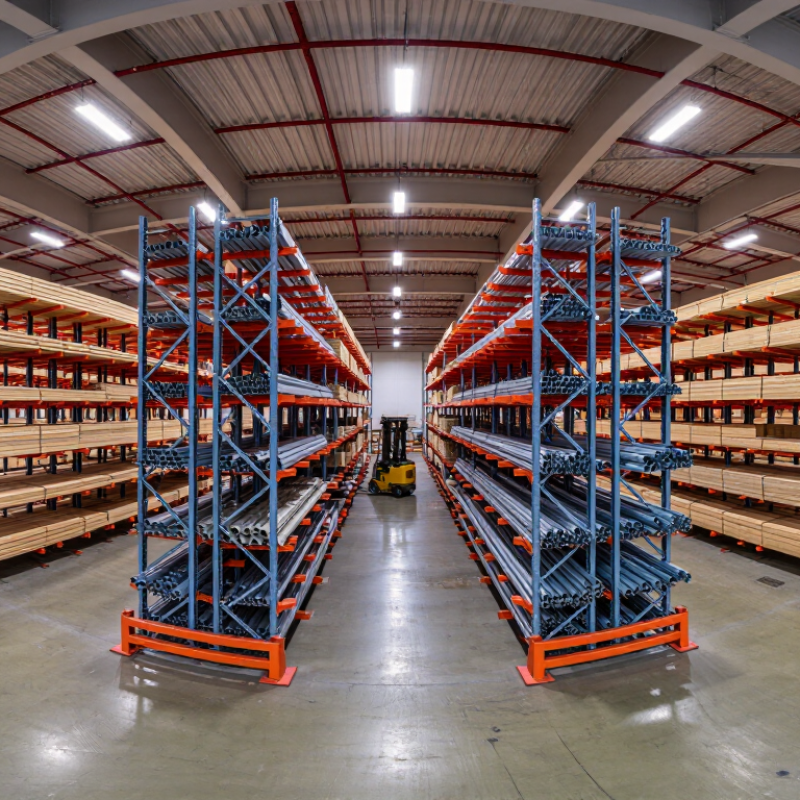
What Heavy-Duty Cantilever Racking Systems Are
Heavy-duty cantilever racking is a storage structure for long, bulky items that do not fit neatly on standard shelves. It uses vertical steel columns, projecting arms, base supports, and bracing to hold materials such as timber, steel sections, pipes, or large panels. With no front posts, forklifts can approach from the aisle and load goods along the rack’s full length.
The details matter. Arm length, column spacing, steel thickness, and rack height should match the goods’ size and weight. Loads are usually placed on both sides where the layout allows, helping balance the structure.
Still, uneven loading can create problems. A rack may look solid but be poorly suited to a particular bundle of steel. Not a small issue.
Before use, check the rated capacity, anchoring, floor condition, and any impact protection needed for the site. Keep heavier goods lower, and avoid placing loads beyond the arms’ limits.
That sounds straightforward. In practice, product dimensions vary, and real storage habits may not follow the original plan.
Regular inspections help identify bent arms, loose connections, or damaged bracing before they affect safe operation.
