
China Top 10 AI Floor Cleaner Manufacturers
China’s AI Floor Cleaner industry brings together robotics, sensors, software, and practical home-care design. Manufacturers compete on more than suction power. Buyers also compare obstacle recognition, mapping accuracy, edge cleaning, noise, maintenance, and after-sales support. A unit that avoids a chair leg but misses dust along a wall still has work to do. Small details matter.
AI researcher Andrew Ng has described AI as “the new electricity.” His remark concerns artificial intelligence broadly, not floor-cleaning products specifically. Still, it offers a useful lens for this market: intelligent features matter when they solve everyday problems reliably. For an AI Floor Cleaner, that may mean recognizing a charging cable, adapting its route around a table, or returning to its dock without repeated guidance. The technology sounds impressive. Its performance needs testing.
This overview introduces ten Chinese manufacturers and the factors that help distinguish them. It considers product focus, engineering capabilities, manufacturing experience, and evidence behind each company’s claims. Rankings can simplify a crowded market, but they cannot capture every buyer’s needs. Some specifications also look better on paper than they feel in a real home. That deserves a closer look. Readers should verify current models, certifications, service coverage, and warranty terms before making decisions. The goal is a grounded starting point, not a promise that one brand fits every floor.
Overview of China’s AI Floor Cleaning Industry
China’s AI floor-cleaning industry draws on a broad robotics and electronics supply chain. Sensors, motors, batteries, mapping software, and compact computing systems all shape a cleaner’s performance. IFR’s World Robotics 2024 report recorded 276,288 industrial robot installations in China in 2023, representing 51% of global installations. This signals strong automation capacity, but it does not directly measure household floor-cleaner production. The distinction matters.
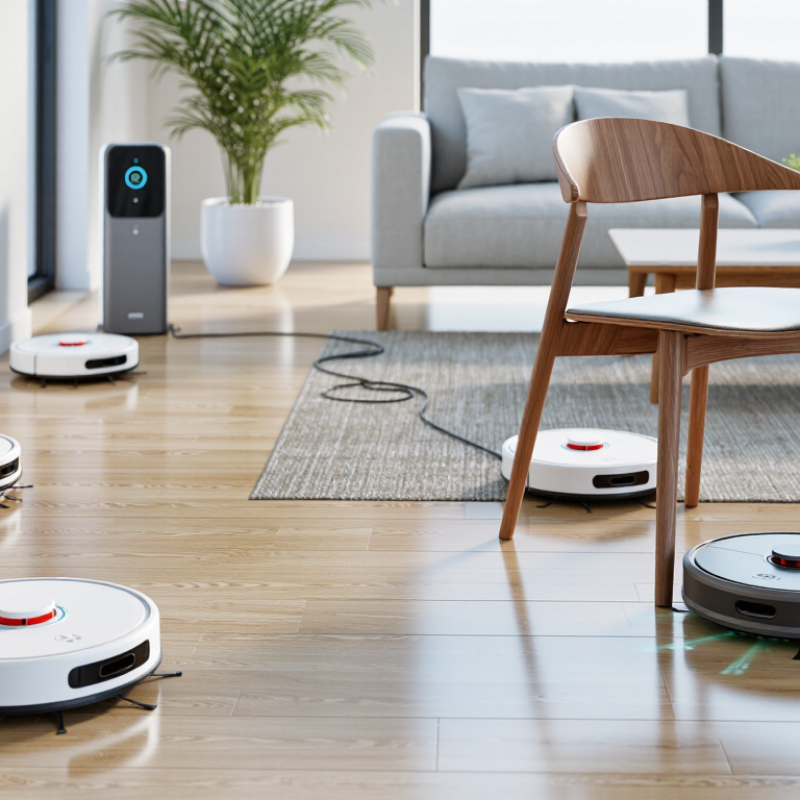
Competition increasingly centers on practical tasks: avoiding chair legs, mapping room edges, adjusting suction, and returning to a dock without help. In real homes, cables and dark floor patterns can still confuse sensors. AI claims therefore need testing against repeatable conditions, not just polished demonstrations. Manufacturers also face pressure to balance navigation accuracy, battery life, noise, and repairability. Progress is clear, but the picture is not perfectly neat.
Tips: Compare obstacle tests, cleaning coverage, and replacement-part access. Ask whether performance figures come from controlled tests or ordinary homes. Small details matter. A strong specification sheet helps, but consistent results across mixed flooring are more useful.
