
Best Portable Fire Monitor Suppliers in China?
Choosing a Portable Fire Monitor supplier in China is more than comparing prices. A suitable unit should deliver a steady stream, move smoothly under pressure, and withstand repeated outdoor use. Small details matter: body material, inlet size, rated flow, working pressure, nozzle pattern, and mounting method. Ask for current drawings and test records, then compare them with your site’s requirements. A polished catalog helps. Still, verify it.
This guide introduces practical ways to assess suppliers, from product range and manufacturing capability to quality checks and after-sales support. Request clear specifications, sample inspection options, spare-parts information, and details about production lead times. Where relevant, confirm that test documents match the exact model being quoted. A supplier’s website alone may not show whether it makes the equipment or sources it elsewhere. That distinction deserves a direct question.
Look for consistent answers, traceable product information, and communication that explains limitations as well as strengths. If a supplier cannot clarify operating pressure or maintenance needs, pause before placing an order. A specification can appear complete and still leave a gap. No checklist removes every risk, and supplier claims should not replace independent verification. Use the comparisons in this article as a starting point, then assess each candidate against your intended application, delivery needs, and support expectations.
What Is a Portable Fire Monitor and How Is It Used?
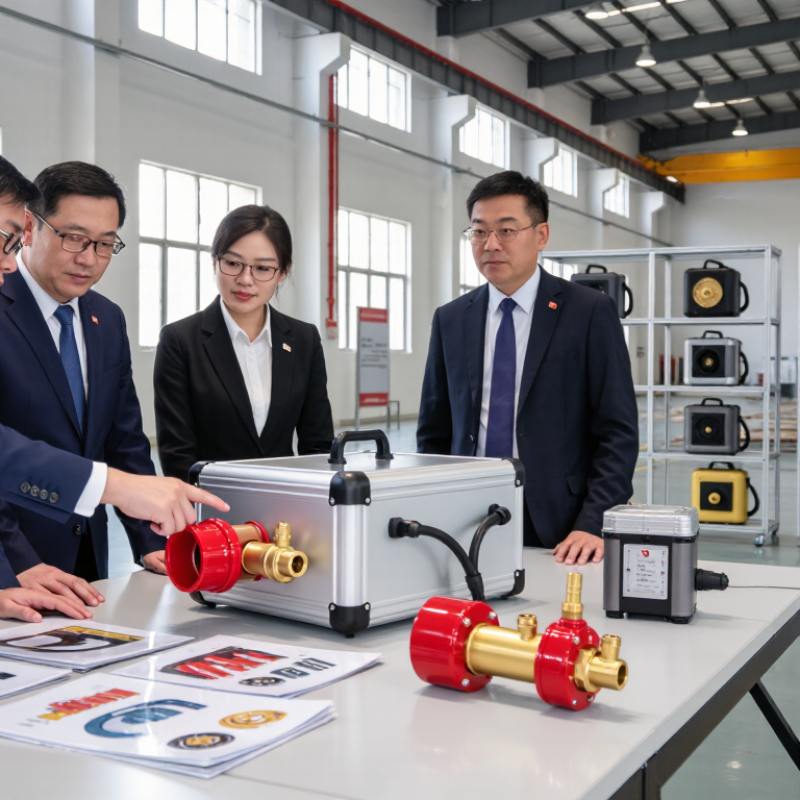
A portable fire monitor is a movable device that directs a high-volume stream of water or a compatible foam solution. Unlike a hand-held hose, it rests on a stable base, often with folding legs or a low frame. An operator can adjust its direction and elevation from a safer position. Not a toy. Its reach and flow depend on the water supply, hose size, nozzle, and rated operating pressure. Those details matter more than appearance when comparing equipment.
In use, trained responders position the monitor on firm, level ground and secure its legs before connecting the supply hose. They check couplings, clear the discharge path, and open the water supply gradually, following the equipment instructions. The stream can then be aimed toward a fire from a distance, helping limit direct exposure to heat. That matters. Operators should watch for movement, reaction force, and changing ground conditions, and wear appropriate protective equipment. A portable monitor is not a substitute for a response plan. Setups vary, and the practical details can be less tidy than a product diagram suggests. Verify the monitor’s flow and pressure limits against the intended water source before deployment.
