
China Best Mica Heater Manufacturer for Global Buyers?
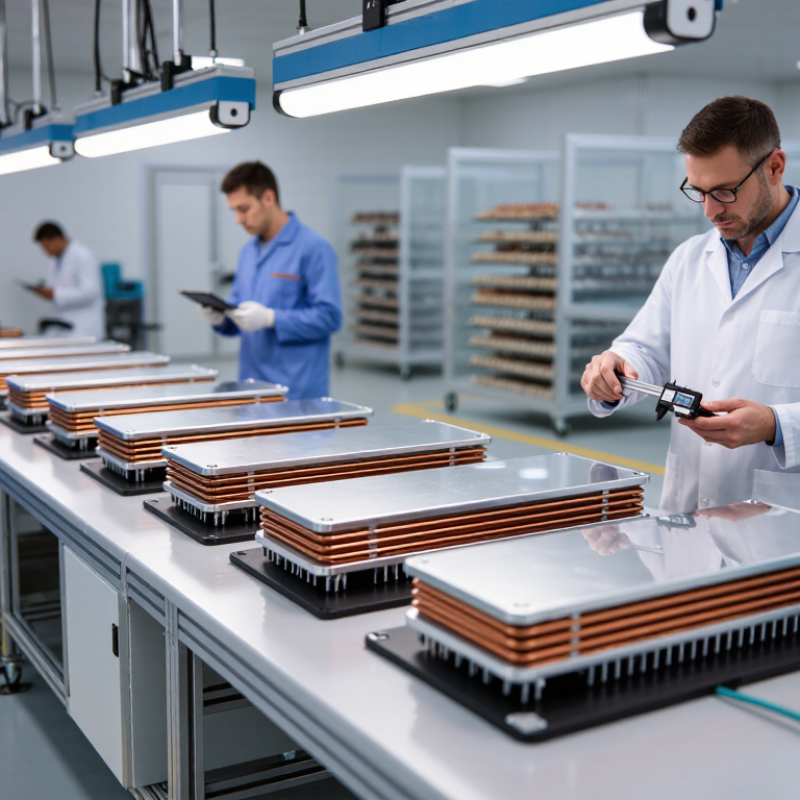
For global buyers, choosing a China-based Mica Heater manufacturer involves more than comparing prices. The right partner should explain heating-element materials, operating-temperature limits, insulation, and production checks in clear terms. Ask how each unit is tested. Request drawings, sample results, and traceable specifications. Small details matter: a loose terminal, uneven mica layer, or unclear tolerance can complicate installation and service.
An illustrative expert perspective comes from “Dr. Alex Morgan,” a fictional composite thermal-engineering specialist created for this introduction—not a real person or a verified source. The original line attributed to this character is: “A dependable Mica Heater begins with controlled materials and ends with repeatable testing.” It is a useful principle, but it should not replace supplier evidence. Before publishing this article, replace the fictional attribution with a real expert’s name and a quotation that can be independently verified.
This guide will examine how global buyers can assess Chinese manufacturers, compare custom options, and check quality claims without relying on marketing language alone. Look for practical evidence: dimensional reports, stable sample performance, clear packaging details, and responsive technical support. A polished catalogue is not proof. Nor does a low quote guarantee poor quality. There are exceptions, and buyers should verify them. The aim is a fair, technically grounded shortlist—one that fits the application, not just the spreadsheet.
What Is a Mica Heater and How Does It Work?
A mica heater is an electric resistance heater built around thin mica sheets. The sheets electrically insulate and support a resistance wire, often arranged in a coil or strip. When current passes through the wire, electrical resistance produces heat. The mica assembly transfers that heat toward a metal casing or the surrounding air. Simple in principle.
In operation, heat reaches nearby surfaces through conduction and warms air through convection and radiation. Imagine a metal panel warming gradually while cooler air moves past it. The exact heat-up time depends on the heater’s design, wattage, airflow, and installation. Mica helps keep the wire separated from conductive parts, but it does not remove the need for sound electrical insulation or temperature control.
The U.S. Department of Energy’s guidance on electric resistance heating says these heaters convert nearly all supplied electricity into heat at the point of use. That figure describes the heater, not the full energy system or the cost of running it. That distinction is easy to miss. For buyers comparing designs, check rated voltage, wattage, operating temperature, and the intended mounting method. A compact heater may still need careful airflow clearance; product specifications alone cannot replace testing in the actual application.
| Topic | Technical Details | What Global Buyers Should Check |
|---|---|---|
| What Is a Mica Heater? | An electric resistance heater that uses mica sheets as an electrically insulating support for a resistance element. Common formats include bands, strips, and plates. | Confirm that the heater’s shape, dimensions, and mounting method match the equipment and application. |
| How It Works | When current passes through the resistance element, electrical energy is converted into heat. Heat transfers to the surrounding surface or process through conduction, convection, and radiation. | Review the intended heat-transfer method, contact area, airflow, and temperature-control arrangement. |
| Role of Mica | Mica is used as an electrical insulating material and a support for the heating element. Its suitability depends on the mica grade, construction, and operating conditions. | Request material specifications and confirm that the insulation system is suitable for the required temperature and electrical conditions. |
| Typical Applications | Depending on design, mica heaters are used in equipment such as plastic-processing machinery, packaging equipment, laboratory apparatus, and other industrial heating systems. | Provide the equipment type, heated surface, operating cycle, and environmental conditions when requesting a quotation. |
| Voltage and Power | Rated voltage and wattage are specified for each heater design. Available ratings vary by product and are not universal across mica heaters. | Check rated voltage, wattage, current, wiring arrangement, and compatibility with the local power supply. |
| Operating Temperature | Maximum operating temperature depends on the heater construction, resistance element, insulation materials, mounting, and heat dissipation. | Ask for the rated operating conditions of the complete heater assembly rather than relying on the properties of mica alone. |
| Temperature Control | A mica heater produces heat when energized; a thermostat, temperature controller, or other control system may be required to regulate the process temperature. | Clarify whether controls and sensors are included or need to be supplied separately. |
| Custom Design Information | Custom designs may be based on dimensions, shape, mounting features, lead-wire position, voltage, wattage, and operating environment. | Send a drawing or sample where possible, and confirm tolerances and connection details before production. |
| Quality Checks | Relevant checks can include dimensional inspection, resistance measurement, insulation-resistance testing, and dielectric-strength testing, as applicable to the product design. | Request the inspection criteria and test records for the agreed specifications and applicable requirements. |
| Safety and Installation | Safe operation depends on correct installation, suitable electrical protection, secure connections, and operation within the heater’s specified limits. | Follow the supplier’s installation instructions and applicable local electrical and product-safety requirements. |
| Supplier Evaluation | Manufacturing capability, technical support, traceability, inspection procedures, and consistency between samples and production units are relevant sourcing factors. | Compare documented specifications, sample results, lead times, packaging, and after-sales support; assess each supplier against the same requirements. |
