
Best Fuse Terminal Block Manufacturers in China
Choosing a Fuse Terminal Block manufacturer in China calls for more than comparing prices. These components connect protection devices to electrical circuits, so small design details matter. A terminal’s rated current, voltage, wire range, and fuse size should match the application. Check the housing material, contact finish, mounting style, and stated operating temperature, too. Details count.
This guide introduces Chinese manufacturers and the questions buyers can ask before requesting a quotation. Look for clear datasheets, consistent product identification, and traceable quality records. Ask whether sample units are available for fit and assembly checks. Confirm dimensions, wire-entry space, screw torque guidance, and the documents supplied with an order. These checks help reduce surprises when a part moves from a catalog page to a control panel.
A polished datasheet is useful, but it cannot prove every production detail. That takes verification. Manufacturer claims should be checked against relevant test reports and product documentation, with requirements confirmed for the intended market and installation. The best supplier on paper may not be the best fit for a specific project. Lead times, customization limits, communication, and after-sales support deserve attention as well. This comparison is a starting point, not a substitute for engineering review. Some details are easy to overlook. Even experienced buyers can miss a mismatch between a fuse format and a block designed for another size. A careful shortlist helps, but the final choice still deserves a second look.
What Is a Fuse Terminal Block?
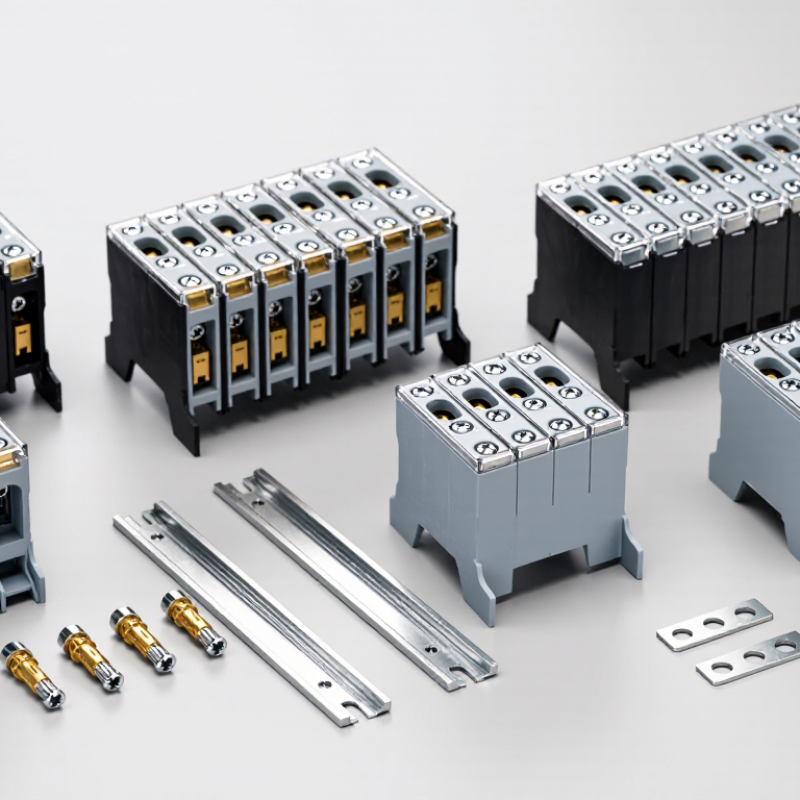
A fuse terminal block combines a wire connection point with a holder for a replaceable fuse. It mounts on a control-panel rail, keeping conductors organized while placing overcurrent protection close to the circuit. If excessive current flows, the fuse element melts and interrupts the circuit.
Small component. Yet access matters: a technician may need to isolate the circuit and replace the fuse without disturbing nearby wiring. Some models include a blown-fuse indicator or a hinged carrier, but these features do not replace checking the circuit rating. IEC 60947-7-3:2020 covers fuse terminal blocks and specifies a scope extending to 1,000 V AC or 1,500 V DC.
Their role is easy to overlook in automated equipment cabinets. The International Federation of Robotics’ World Robotics 2024 report recorded 541,302 industrial robot installations worldwide in 2023. That figure does not measure fuse-block demand, but it reflects the scale of systems that rely on orderly control wiring and circuit protection.
When selecting a block, engineers match the fuse type, current rating, conductor size, and available panel space. Heat, vibration, and frequent maintenance also matter. A compact block may fit neatly, but cramped access can make later replacement awkward; that trade-off deserves a second look.
