
China Best 22kW Car Charger for Global Buyers?
A 22kw Car Charger can look like an easy upgrade on a product sheet. In practice, global buyers need to check more than its rated output. The vehicle’s onboard AC charger may accept less power. Site supply, cable reach, connector compatibility, and installation conditions also shape daily performance. Small details matter. A cable that barely reaches the parking bay can turn a promising specification into a frustration.
EV charging journalist Tom Moloughney offers a useful expert perspective on evaluating charging equipment. A concise summary of that perspective is: “Match the charger’s output to the vehicle’s onboard AC limit.” This is a paraphrase, not a verified verbatim quotation. Exact expert wording should be checked against a reliable source before publication. That distinction matters. Trust should not be built on invented quotes.
This guide examines what buyers should compare when choosing a 22 kW unit, including rated power, build quality, user controls, and support. It also considers how installation needs can differ across homes, workplaces, and commercial sites. A charger’s label is not the whole story. Ask how it performs in the intended setting, what documentation the supplier provides, and how warranty claims are handled. One caution remains: a higher rating does not guarantee faster charging for every car. That is easy to overlook. A careful comparison can help buyers choose equipment that fits their vehicles, sites, and budgets.
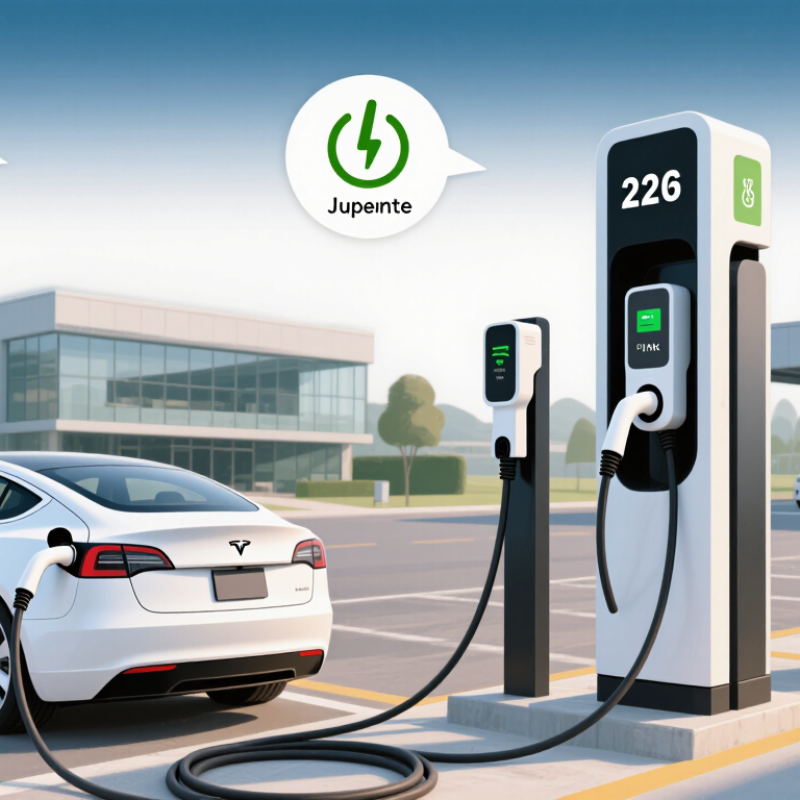
Understanding 22 kW AC Car Chargers and Their Charging Requirements
A 22 kW AC car charger can deliver fast home or workplace charging, but the rating alone does not guarantee 22 kW at the vehicle. The installation typically needs a three-phase supply, with around 32 amps available per phase at 400 volts. The car’s onboard charger must also accept that power. If it supports only 11 kW, charging will stay near that limit. Check both specifications before choosing equipment.
Tips: Confirm the vehicle’s AC charging limit and supply type. Ask a qualified electrician to assess the circuit, protective devices, and available capacity. Keep the cable route in mind, too; a charger beside the driveway may not reach a second parking space.
For scale, a 60 kWh battery would take about 2.7 hours at a steady 22 kW, before charging losses and any power reduction near full capacity. Real sessions can take longer. Household loads may also affect available power, so load management can help prevent the charger from exceeding the site’s capacity. One detail is easy to overlook: plug compatibility varies by vehicle and region. Check the connector and cable rating, rather than assuming every 22 kW unit fits every car.
China Best 22kW Car Charger for Global Buyers? - Understanding 22 kW AC Car Chargers and Their Charging Requirements
| Topic | Typical specification or example | What buyers should check |
|---|---|---|
| Rated AC output | Up to 22 kW, commonly supplied by a three-phase 400 V AC circuit at 32 A per phase. Using the three-phase power formula, √3 × 400 V × 32 A is approximately 22.2 kW. | Confirm the local grid voltage, available phases, current capacity, and whether the charger can be configured for the installation. |
| Single-phase supply | At 230 V and 32 A, single-phase input provides about 7.4 kW, not 22 kW. | A 22 kW unit connected to a single-phase supply will deliver less power if it supports that connection; check its wiring and configuration requirements. |
| Vehicle charging limit | The vehicle’s onboard AC charger sets the maximum AC charging rate. A vehicle limited to 11 kW AC will not charge at 22 kW from a 22 kW AC unit. | Check the vehicle specifications for its AC charging limit, supported phase count, and connector type. |
| Illustrative charging time | For a vehicle accepting 22 kW AC, a 60 kWh battery would take about 2.7 hours at the ideal rated power. Actual time is longer due to charging losses, vehicle limits, and charging behaviour. | Estimate time using the energy to be added and the vehicle’s actual charging rate; do not assume the charger’s rating is always achieved. |
| Charging-time estimate | Approximate time (hours) = energy added (kWh) ÷ effective charging power (kW). For example, adding 40 kWh at an effective 11 kW takes about 3.6 hours before allowing for variations and losses. | Use the energy required to reach the target state of charge, not necessarily the battery’s full capacity. |
| Connector compatibility | Connector and inlet requirements vary by market and vehicle. Type 2 is commonly used for AC charging in Europe; other regions may use different standards. | Verify the connector standard, cable or socket arrangement, and vehicle compatibility for the destination country. |
| Electrical installation | A 22 kW installation typically requires a suitable three-phase circuit, correctly sized conductors and protective devices, and installation in accordance with local electrical regulations. | Have a qualified local electrician assess the supply, cable run, earthing, protection, and any required permits before installation. |
| Electrical protection | Required residual-current and overcurrent protection depends on the charger design and local rules. Some units include DC residual-current detection; installation requirements still vary. | Check the product documentation and applicable local code to determine the correct external protection and installation method. |
| Standards and market fit | AC conductive charging equipment is covered by IEC 61851 requirements, alongside relevant regional electrical and product-safety rules. | Confirm applicable certifications, documentation, operating conditions, and compliance requirements for the country of installation. |
| Load management | Dynamic load management can adjust charging current to help keep total site demand within a configured limit, where the equipment and system support it. | Consider available grid capacity, other large electrical loads, and whether load management is needed at the property. |
| Best-fit use case | A 22 kW AC charger can suit locations with three-phase power and vehicles capable of accepting high-power AC charging, such as some homes, workplaces, and fleet sites. | Compare the vehicle’s AC limit and the site’s electrical supply before choosing a 22 kW rating; a lower-rated unit may be more appropriate where either is limiting. |
