
China Top Package Dyeing Machine Manufacturers and Suppliers
China’s textile sector serves a vast global market, making reliable yarn-processing equipment an important sourcing consideration. Textile Exchange’s Materials Market Report 2024 estimates that global fiber production reached 124 million tonnes in 2023. That scale matters. Yet fiber output alone does not measure demand for dyeing machinery, and buyers should treat it as industry context, not a sales forecast.
A Package Dyeing Machine dyes yarn wound onto perforated tubes by circulating liquor through the packages. In practice, winding density, circulation, temperature control, and loading consistency can all affect shade uniformity. Small process differences matter. A supplier’s published capacity is useful, but it cannot replace checks on sample results, operating conditions, and after-sales support. Buyers should also clarify compatible yarn types, automation level, energy and water use, installation scope, and spare-parts availability before comparing quotations.
This guide examines China-based manufacturers and suppliers through practical criteria, including machine configuration, customization, quality documentation, and export service. Ask for technical specifications and references for comparable applications. Where possible, review a trial dyeing record rather than relying only on brochure claims. There is no single best machine for every mill; production scale and yarn characteristics change the decision. The market data provides useful perspective, but supplier claims still require independent verification.
What Is a Package Dyeing Machine?
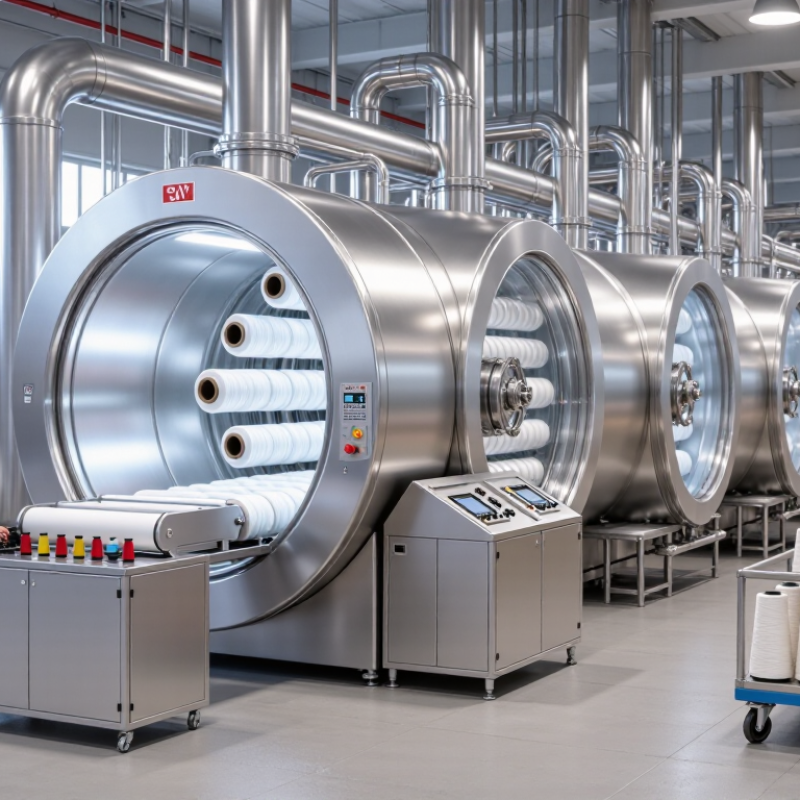
A package dyeing machine colors yarn wound onto perforated tubes, often called packages. These tubes sit on a spindle or carrier inside a closed dye vessel. Heated dye liquor moves through the yarn layers, rather than simply soaking the outside. The flow can travel inward or outward, helping color reach the package core. It is not magic.
The machine controls key conditions such as temperature, circulation, and dyeing time. Operators load packages at a consistent density, then follow a recipe suited to the fiber and shade. Picture rows of yarn tubes held in place while warm liquor passes through them. If winding is too tight, flow may be restricted; if it is too loose, packages can deform. Small details matter.
This method is commonly used for yarns that need uniform color before knitting or weaving. It can handle multiple packages in one batch, but results still depend on preparation and process control. A pale outer layer with a darker center can signal uneven liquor flow or inconsistent winding. The equipment helps manage these variables, though it cannot correct every upstream problem. Even experienced teams may need trials when yarn construction or shade requirements change.
