
What Is a Car Garage Lift and What Types Are Available?
A Car Garage Lift raises a vehicle off the floor, creating access for maintenance, inspections, or extra storage. It uses a hydraulic, electric, or mechanical system to support the vehicle at a chosen height. The right setup can make routine tasks easier, but the lift must match the vehicle, garage, and intended work. Space matters. Ceiling height, floor condition, and available width can all affect which models are practical.
Common options include two-post lifts, four-post lifts, scissor lifts, and portable lifts. Two-post models leave much of the underside accessible, making them popular for repair work. Four-post lifts support the vehicle at its wheels and can suit storage or servicing. Scissor lifts rise from beneath the vehicle, though their shape may limit access to some areas. Portable models offer flexibility, but their lifting capacity and stability still need careful attention. Not every lift fits.
Before choosing, check the manufacturer’s rated capacity, installation requirements, and maintenance guidance. A vehicle’s weight is only one consideration; its lifting points and balance also matter. Professional installation and regular inspection can help identify problems such as damaged cables, leaks, or worn locking parts. A lift may look straightforward in a showroom, yet feel very different in a low, crowded garage. This guide explains how car garage lifts work and compares the main types, so you can assess the trade-offs before investing.
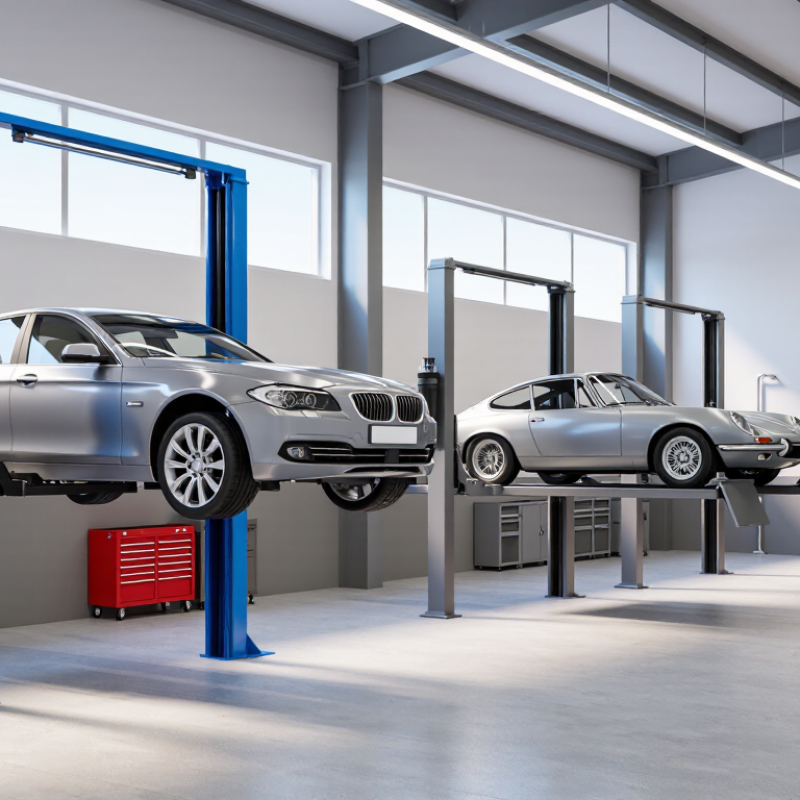
What a Car Garage Lift Is and What It Is Designed to Do
A car garage lift is a mechanical system that raises a vehicle and holds it above the floor, creating access to the tires, brakes, suspension, and underside. Its purpose is practical: give a technician room to inspect, repair, and maintain areas that are difficult to reach from ground level. Some lifts raise the vehicle by its frame; others support its wheels. The exact contact points matter. A misplaced arm or pad can damage a vehicle or make it unstable. That sounds simple. It isn’t.
A lift must suit the vehicle’s weight, wheelbase, clearance, and the available garage space. The U.S. Environmental Protection Agency’s Automotive Trends Report found that the average new vehicle weighed 4,329 pounds in model year 2022, a useful reminder that “car” covers a wide range of loads. S&P Global Mobility reported that the average age of U.S. light vehicles reached 12.6 years in 2024, supporting steady demand for inspection and repair access. Older vehicles may also have worn or corroded lifting points, so rated capacity alone is not enough. Check the lift’s instructions, vehicle support locations, floor condition, and locking mechanisms before use. Terminology can vary, and that can be confusing; verify what a particular lift supports rather than relying on its name alone.
