
Top 10 Boat Ratchet Straps for Safe Boat Transport?
Safe boat transport depends on more than choosing the strongest strap. Fit, working load limit, anchor points, and proper tension all matter. A strap that looks sturdy may still be unsuitable for a particular boat or trailer. Check its stated rating and the manufacturer’s guidance before loading.
This guide compares ten Boat Ratchet Straps for common transport needs, from small fishing boats to heavier hulls. It considers webbing width, hook style, ratchet operation, corrosion resistance, adjustment, and rated capacity. Numbers matter. So does fit. Choose straps that lie flat over the hull, avoid sharp edges, and connect to sound tie-down points. Use bow and stern restraints when recommended. Follow the boat and trailer makers’ instructions. Recheck the straps after a short drive; webbing can settle, and looseness is easy to miss.
No strap can correct a poor setup. Replace webbing that is cut, frayed, heat-damaged, or weakened by sun exposure. Retire hardware that bends or fails to lock. The best choice is not always the most expensive or the one with the highest rating. It should match your load, attachment points, and routine, with a suitable safety margin. One detail is easy to overlook: excessive tension may stress the boat or its fittings. Tighten steadily, inspect the setup, and take one final walk-around before departure.
What Boat Ratchet Straps Are and How They Work
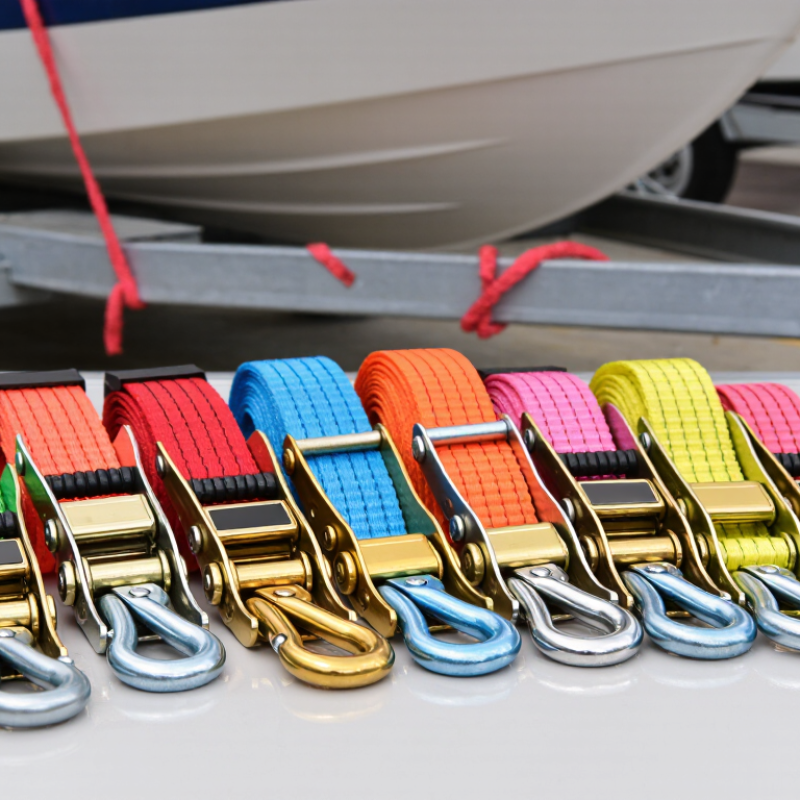
Boat ratchet straps are woven webbing restraints used to hold a boat firmly against its trailer during transport. A typical strap has a hook at each end and a ratchet assembly with a handle, spool, and release lever. The webbing passes through the spool; pumping the handle winds it tighter and reduces slack. The ratchet’s teeth help keep the spool from turning backward under tension.
In use, a strap usually crosses the boat and attaches to secure points on the trailer. The exact route depends on the hull and trailer, so follow their instructions rather than guessing. Keep the webbing flat, clear of sharp edges, and away from hot exhaust parts. A soft protective pad can help prevent rubbing on a gelcoat surface. Snug, not crushed. Excessive tension can stress fittings or damage the boat.
Check each strap for fraying, cuts, rust, or a sticky release before loading. After tightening, tug the boat gently and make sure the hooks cannot slip free. Recheck tension after a short stretch of driving, since webbing can settle and loosen. I would not assume a strap is sound just because its ratchet clicks; that sound tells little about hidden wear. Replace damaged gear, and use straps rated for the load and intended tie-down points.
