
What Is the Best Vehicle Fire Suppression System in 2026?
Choosing the best Vehicle Fire Suppression System in 2026 is not a matter of picking the largest cylinder or the newest control panel. The right choice depends on the vehicle, its fire risks, and how quickly a system can detect and suppress a fire. A compact engine bay, dusty worksite, or battery enclosure each presents different challenges. Small details matter.
This comparison will examine detection speed, agent suitability, installation needs, maintenance, and system performance under realistic conditions. It will also distinguish between systems designed for engine compartments and those intended for other vehicle zones. Product claims deserve careful checking. A fast discharge is useful, but only when the system is properly selected, installed, and maintained.
No source articles or verified expert quotation were provided, so I won’t invent an industry expert’s name or words. A credible introduction should include a quotation that can be traced to a real vehicle fire-suppression specialist. That gap matters: authority should come from verifiable experience, not a convincing-sounding attribution. The comparison ahead can still help readers ask better questions, compare evidence, and identify where a system’s limits deserve closer attention. There is no universal winner.
Understanding Vehicle Fire Suppression Systems
What Is the Best Vehicle Fire Suppression System in 2026?
Understanding Vehicle Fire Suppression Systems
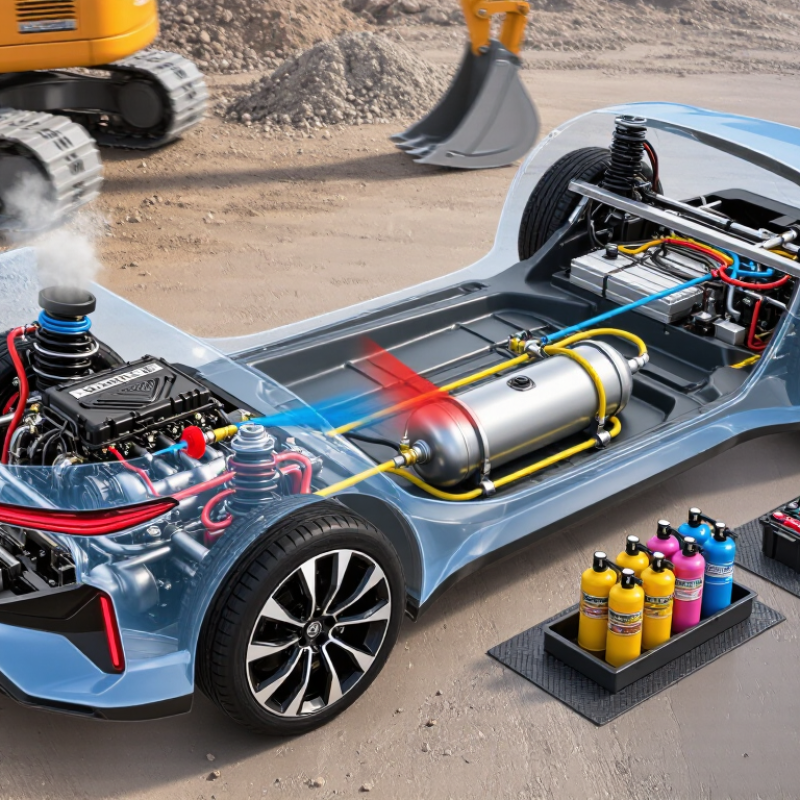
A vehicle fire suppression system detects heat or flame and releases an extinguishing agent into selected areas. Typical protected zones include engine compartments, auxiliary power units, and battery enclosures. The system may activate automatically, manually, or through both methods. That distinction matters. A dashboard warning alone does not put out a fire.
NFPA’s report on 2018–2022 estimates that U.S. fire departments responded to 117,400 highway-vehicle fires annually. Those fires caused an average of 520 civilian deaths and 1,100 injuries each year. The figures describe the scale of the hazard, not the performance of any specific system. A suitable design depends on the vehicle’s layout, fuel or energy source, operating conditions, and likely fire locations.
For example, a delivery truck idling for long periods may need protection focused on its engine bay, while an electric vehicle requires careful consideration of battery-related risks. No single arrangement fits every vehicle. Ask a qualified installer to confirm coverage, agent suitability, alarm functions, and service intervals. Check that nozzles remain aimed at vulnerable areas and are not blocked by later modifications. Small details matter. Even a well-designed system can disappoint if it is poorly maintained.
| System Type | How It Works | Potential Vehicle Applications | Main Advantages | Important Limitations | Best Suited To |
|---|---|---|---|---|---|
| Dry chemical | Discharges powder that interrupts combustion reactions and can help suppress flammable-liquid fires. | Engine compartments, machinery spaces, and other protected vehicle enclosures when the system is specifically designed for that space. | Rapid knockdown; can address several common fire hazards when the agent and system are appropriately selected. | Powder can reduce visibility and leave residue that may require extensive cleanup. A fire can reignite if hot surfaces remain or fuel continues to escape. | Vehicles needing fast suppression in a defined engine or equipment compartment, with a plan for inspection and post-discharge cleanup. |
| Clean-agent gas | Releases a gaseous extinguishing agent that suppresses fire, generally without leaving powder or liquid residue. | Enclosed electrical, electronics, or equipment compartments where the enclosure can retain an effective agent concentration. | Minimal residue; may reduce damage to sensitive equipment compared with powder-based agents. | Effectiveness depends on enclosure integrity and correct system design. Ventilation or leakage can reduce performance, and hot materials may reignite. Occupant safety and agent-specific requirements must be assessed. | Protected compartments with sensitive equipment and suitable enclosure conditions—not as a universal whole-vehicle solution. |
| Water mist | Discharges fine water droplets that absorb heat and help cool burning materials. | Selected vehicle compartments or enclosed spaces where a system has been engineered and tested for the specific hazards and installation. | Cooling can help limit heat transfer and reduce the amount of water used compared with some conventional water applications. | Performance depends on droplet characteristics, ventilation, geometry, and fire conditions. Electrical suitability must be confirmed for the specific system; it should not be assumed for every energized component. | Applications where cooling is a priority and the system’s suitability for the compartment, fuels, and electrical hazards has been verified. |
| Condensed aerosol | Produces fine aerosol particles that inhibit combustion chemistry within a protected volume. | Compact, enclosed machinery or electrical spaces when an appropriately designed system is available for the application. | Can be installed in compact spaces and may require less distribution piping than some alternatives. | Residue, visibility, ventilation, enclosure conditions, and occupant exposure need to be considered. Suitability depends on the specific system and hazard. | Small, defined compartments where the installation has been evaluated for the vehicle environment and the people who may be present. |
| Manual portable extinguisher | A trained person operates a portable extinguisher to apply an agent directly to a fire. | Vehicle cab, accessible storage location, or roadside response, subject to applicable requirements and safe access. | Provides a flexible first-response option without requiring a fixed automatic installation. | Requires a person to detect the fire, reach the extinguisher, and use it safely. It may be ineffective if the fire is inaccessible, spreading rapidly, or beyond the extinguisher’s capacity. | Supplementary first response; it does not replace a fixed system where one is required or warranted by the risk. |
| Battery-specific protection and response provisions | Uses measures selected for the battery design, such as early detection, isolation or shutdown functions, and a fire-response plan; suppression approach varies by vehicle and battery system. | Electric and hybrid vehicles, battery enclosures, charging areas, or other locations identified by a hazard assessment. | Can address the distinct detection, electrical, and thermal hazards associated with rechargeable batteries as part of an integrated safety strategy. | Battery thermal runaway can generate heat and gases, propagate between cells, and potentially reignite. A suppression system should not be assumed to stop propagation or eliminate the need for emergency procedures. | Vehicles with high-voltage batteries, using vehicle-specific guidance and a coordinated emergency-response plan. |
| Selection guidance: There is no single best vehicle fire suppression system for every vehicle. Selection should be based on the vehicle’s fuel and electrical hazards, protected-compartment design, likely fire scenarios, occupant exposure, environmental conditions, maintenance needs, and applicable local requirements. Confirm that the complete system—including detection, agent quantity, distribution, controls, installation, and servicing—is suitable for the specific vehicle. No suppression system guarantees prevention of fire spread or reignition. | |||||
