
What Is the Best Street Outdoor Light in China?
Choosing the best Street Outdoor Light in China is not a matter of picking the brightest fixture. It means matching optics, output, durability, and controls to the road. A narrow residential lane needs a different distribution pattern from a broad arterial. Look for photometric test data, clear warranty terms, surge protection, and reliable thermal management. These details matter on wet nights, under summer heat, and after years of continuous operation.
The International Energy Agency reports that lighting uses roughly 15% of global electricity. That figure covers lighting broadly, not streetlights alone. U.S. Department of Energy evaluations also show that LED streetlight upgrades can reduce energy use substantially, though actual savings depend on the old system, fixture design, and controls. Lighting researcher Dr. Mark Rea’s work offers a useful principle: good visibility is not achieved by brightness alone; it depends on light, the viewing task, and the person seeing it. That distinction is easy to miss.
A careful comparison should therefore consider uniformity, glare, color quality, and maintenance access—not just watts or price. Ask suppliers for test reports and installation references, then compare equivalent designs. A neat “best” ranking is tempting. It can also mislead. The strongest choice for one Chinese city may be poorly suited to another, especially where road width, weather, and operating schedules differ.
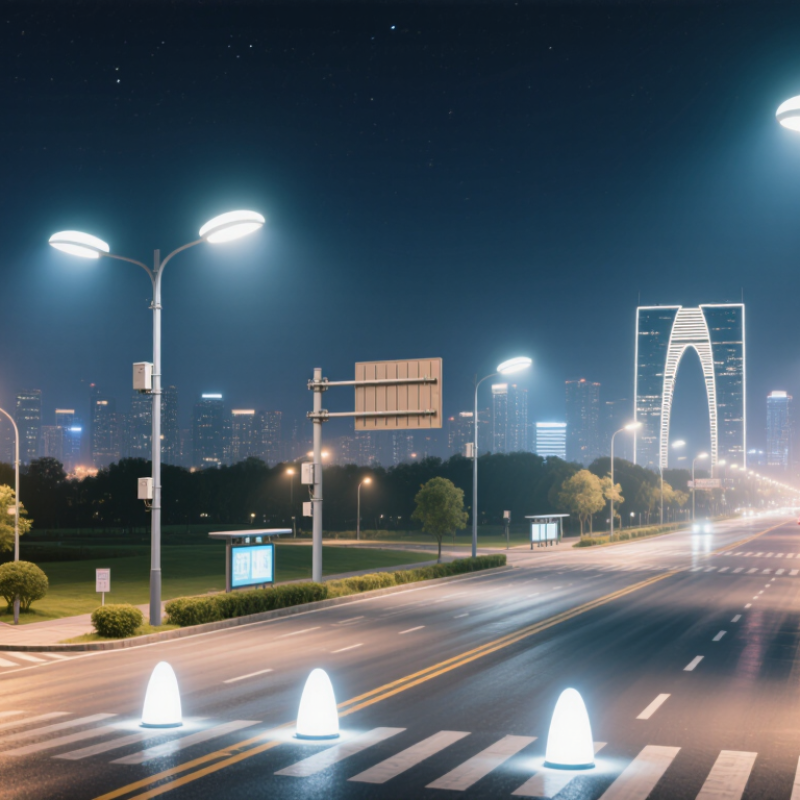
Defining the Best Street Outdoor Light for Chinese Conditions
What Is the Best Street Outdoor Light in China?
Defining the Best Street Outdoor Light for Chinese Conditions
The best street light for China is not simply the brightest or most powerful. It must deliver even illumination, limit glare, and withstand local weather. Rain changes everything. In humid coastal cities, sealed housings and corrosion-resistant finishes help protect electrical parts. In northern regions, fixtures must also cope with freezing temperatures and snow. Roadside trees matter, too: summer foliage can block light and create uneven patches on the pavement.
The World Bank’s World Development Indicators put China’s urban population at roughly 66% in 2023, meaning street lighting serves dense, varied environments, from busy junctions to quiet residential roads. China’s CJJ 45-2015 road-lighting standard provides a useful basis for matching lighting levels to road type and use. A practical assessment should also check uniformity and glare, not just average brightness. More light is not always safer.
Energy use deserves scrutiny. The U.S. Department of Energy’s 2017 Energy Savings Forecast for Solid-State Lighting estimated that wider LED adoption could significantly reduce lighting electricity demand. That is a broad forecast, not a guarantee for every street project. I would compare measured power, optical distribution, maintenance access, and performance after rain before choosing. One detail is easy to miss: a technically efficient fixture can still leave dark gaps if its optics do not suit the road.
