
What Is the Best Smart WiFi Circuit Breaker in 2026?
Choosing the best Smart Wifi Circuit Breaker in 2026 means looking beyond app features. The right device must fit the electrical panel, support the circuit’s rated load, and provide dependable local protection. Remote switching and energy monitoring can add convenience, but they do not replace correctly selected overcurrent protection or qualified installation. Small details matter. Check the breaker’s listed panel compatibility, Wi-Fi requirements, app support, and whether energy readings are available for each circuit.
The International Energy Agency’s Electricity 2024 report recorded 2.2% growth in global electricity demand in 2023 and projected average annual growth of 3.4% for 2024–2026. That trend makes circuit-level visibility increasingly useful, especially when a homeowner wants to identify a heavy load or review usage patterns. The figures describe electricity demand overall; they do not prove that a smart breaker will reduce an individual household’s bill. That distinction is easy to miss.
The IEA’s Energy Efficiency 2024 report also highlights the continuing challenge of improving how energy is used. For buyers, the practical question is whether a breaker’s monitoring data is clear, consistent, and useful—not merely impressive in a product demo. This guide compares safety listings, panel fit, app reliability, connectivity, monitoring, and support. Some models may look similar online, yet differ in compatibility or installation requirements. No single model is best for every home. A careful comparison should start with the panel label and the manufacturer’s documentation, then weigh convenience against cost and long-term support.
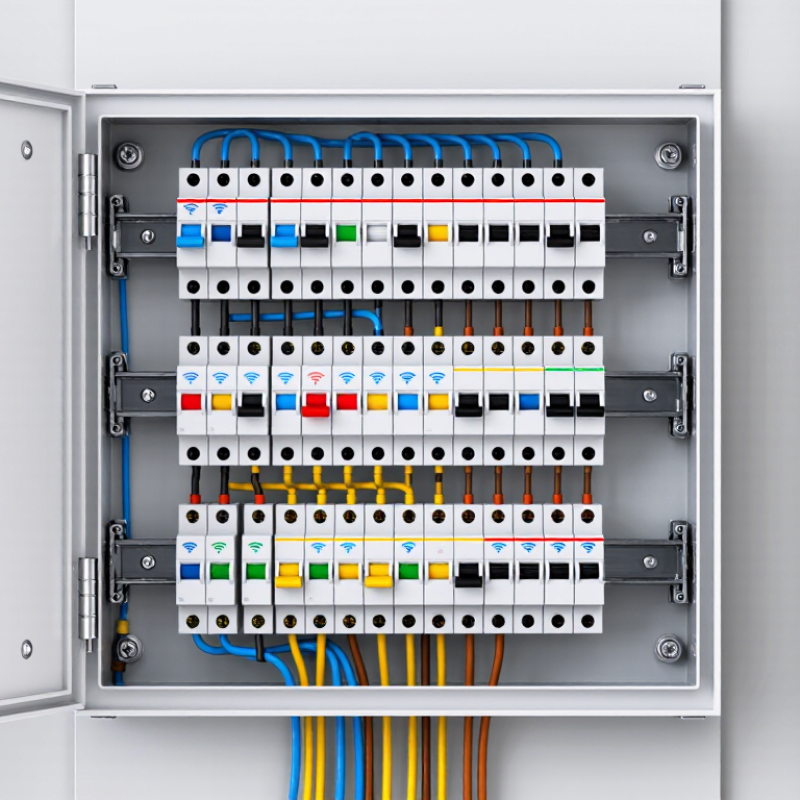
How UL 489 and the 2023 NEC Establish Smart Breaker Safety Benchmarks
What Is the Best Smart WiFi Circuit Breaker in 2026?
A smart WiFi breaker should meet electrical safety requirements before its app features matter. UL 489 covers circuit breakers used in many residential and commercial panels. Its evaluation includes performance under overload and short-circuit conditions. A WiFi connection cannot replace those protections. Check the exact breaker model’s certification, voltage, ampere rating, and interrupting rating—not just the product category.
The 2023 National Electrical Code sets installation benchmarks. Section 110.3(B) requires listed equipment to be installed and used according to its listing and instructions. Article 240 addresses overcurrent protection. Together, these requirements make panel compatibility and installation details essential. A breaker that fits physically may still be unsuitable for a particular panel. Small detail. Big consequence.
The risk is not abstract. NFPA’s Home Electrical Fires report estimates that U.S. fire departments responded to about 24,200 home electrical fires each year from 2015 to 2019. These fires caused an estimated 295 civilian deaths and $1.2 billion in annual direct property damage. A connected breaker may add monitoring or remote control, but those features do not prove safer fault interruption. Ask for verifiable listing information and clear installation instructions. I would also check what happens when WiFi drops; that detail is easy to overlook, and it deserves scrutiny.
