
7 Best Sewer Line Cleaning Machines for Professionals
Choosing a Sewer Line Cleaning Machine is not just a matter of buying the largest motor or longest cable. The right machine must suit the pipe diameter, access point, blockage, and crew’s experience. A compact drum machine can be easier to position in a narrow basement. A sectional machine may offer more control on longer runs, while a water jetter can help remove grease and loose debris. Each has limits. That matters in the field.
Licensed plumber and plumbing educator Roger Wakefield often stresses that the job should guide the tool choice. A practical summary of that advice is: “Match the equipment to the line, the obstruction, and the access point.” This is a working principle, not a substitute for inspecting the pipe or following the machine maker’s instructions.
This guide compares seven professional options by capacity, cable or hose design, portability, controls, and serviceability. It also considers details crews notice quickly: whether a machine fits through a doorway, how steadily it feeds cable, and how easy it is to clean after a messy call. Small things count. Still, specifications do not tell the whole story. A powerful unit may be awkward in tight spaces, and a lighter one may struggle with demanding work. The comparisons are a starting point, not a promise that any model suits every job. Verify ratings and compatibility before purchase, and reflect on what your crew actually handles each week.
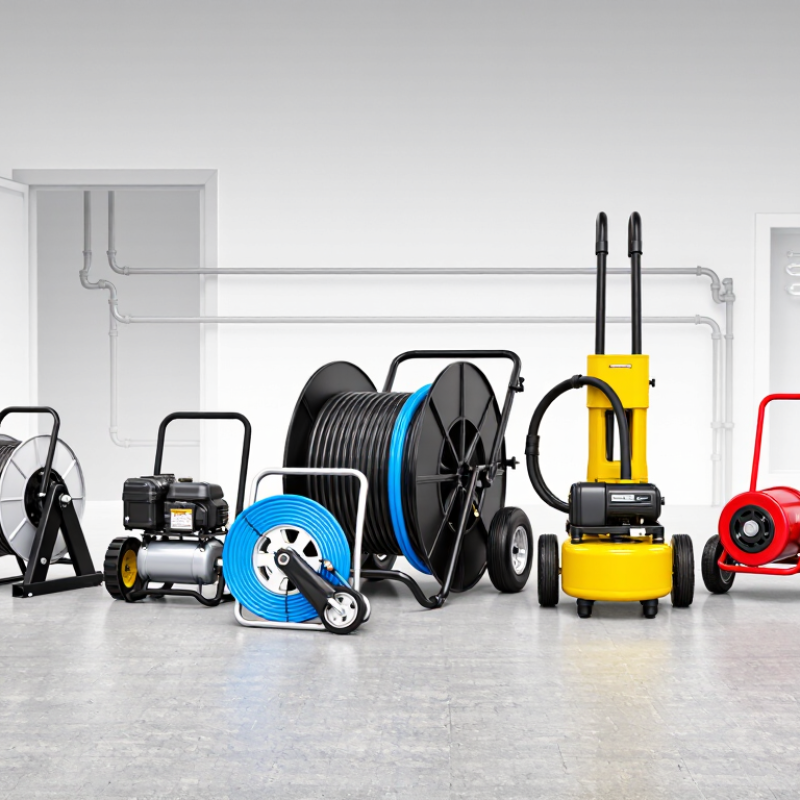
Professional Sewer Cleaning Machine Types and Their 2–10-Inch Pipe Applications
Professional sewer-cleaning machines suit different pipe diameters, blockage types, and access conditions. For 2–4-inch lines, compact sectional machines offer cable control in tight indoor spaces. Drum machines are often practical for 3–6-inch drains, where grease, roots, or soft obstructions need a rotating cable. They can be heavy to move. That matters on stairs.
For 4–10-inch pipes, larger cable machines or sectional systems can provide the reach and torque needed for tougher deposits. Choose cutters carefully: an aggressive head may damage fragile or already compromised pipe. Water jetters can also serve many 2–10-inch applications when matched with suitable nozzles and flow settings. Pipe material, bends, and the blockage itself should guide selection—not diameter alone. A cleanout is not a diagnosis.
The U.S. Environmental Protection Agency’s 2004 Report to Congress estimated 23,000–75,000 sanitary sewer overflows occur annually in the United States. That figure underscores the value of routine maintenance, but cleaning equipment cannot confirm pipe condition by itself. After clearing a stubborn blockage, a camera inspection can reveal remaining roots, cracks, or displaced joints. Sometimes the first pass misses something. Operators should verify flow and document what they find, especially before choosing a more aggressive tool.
