
What Is the Best Roller Table Conveyor for 2026?
What is the best Roller Table Conveyor for 2026? There is no single model that suits every operation. The right choice depends on the products being moved, the available floor space, and the pace of work. A light carton line has different needs from a station handling heavy, rigid pallets. Small details matter.
This guide compares the features that shape a practical purchase: load capacity, roller diameter and spacing, conveyor width, frame strength, and drive options. It also considers accumulation, operator access, maintenance, and the conditions around the line. Picture a box catching at a transfer point or a pallet leaving too little clearance for a worker. Those moments reveal whether a design fits real production, not just a specification sheet. Check the manufacturer’s load ratings and installation guidance, then test the proposed layout with representative products where possible.
A lower purchase price may not mean a lower operating cost. Spare parts, cleaning access, noise, and downtime deserve a place in the comparison. So does future flexibility. Still, it is easy to overestimate how much capacity a line will need; forecasts can miss the mark. Use measured throughput and actual product dimensions rather than assumptions. The best choice for 2026 is the conveyor that handles today’s work reliably and can adapt sensibly as requirements change.
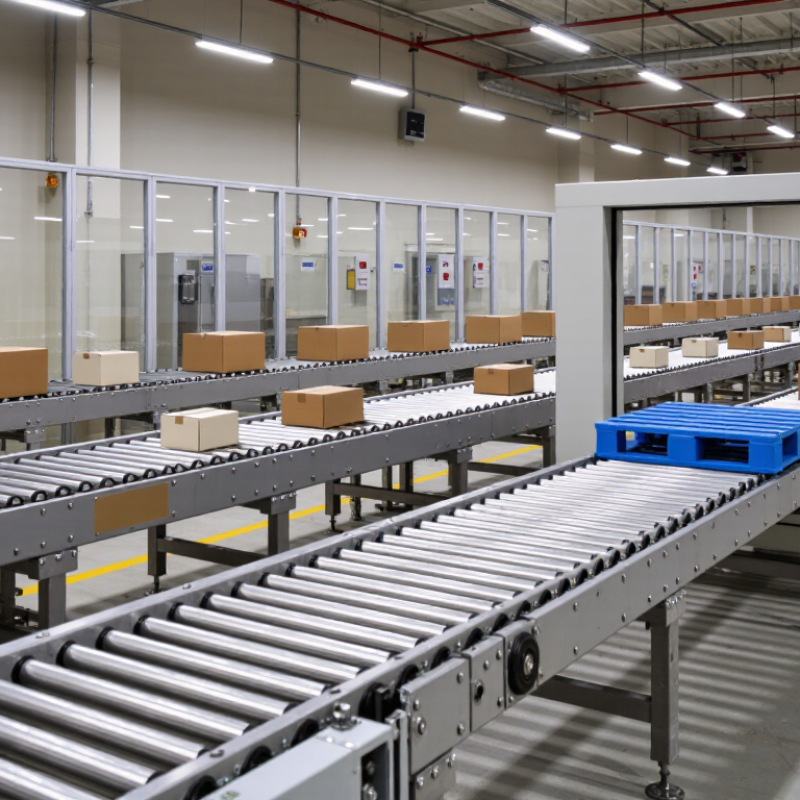
Define Roller Table Conveyors and Their Main 2026 Applications
A roller table conveyor moves cartons, totes, or other stable loads across a row of rotating rollers. Each roller supports the load while allowing it to travel forward. Gravity models use a slight incline; powered models use motors to control movement and spacing. They are simple. Yet roller diameter, spacing, and load weight all affect smooth travel.
In 2026, these conveyors remain useful in packing areas, warehouses, assembly lines, and shipping zones. Workers can move cartons between inspection, labeling, and dispatch stations without carrying every item by hand. Powered sections can help regulate flow where several workstations share a line. Gravity sections suit short transfers when loads roll freely. Not every load rolls. Soft packages, unstable items, or products with uneven bases may catch between rollers, so another conveyor type could work better.
Tips: Check the smallest package, not just the average one. Its base should span enough rollers to stay supported. Measure the actual load weight, including packaging, and consider dust or moisture around the line. A conveyor that looks efficient on a drawing may create awkward reaches or bottlenecks in daily use; test the route with real loads before fixing the layout.
