
147 Mill Ridge Rd Suite 232
Lynchburg, Virginia 24502
Phone 757-982-3665

What Is the Best Rescue Drone to Buy in 2026?

In 2026, choosing the best Rescue Drone is less about finding the most impressive specification sheet and more about matching equipment to real search conditions. A coastal team may need thermal imaging and reliable video transmission, while a volunteer group searching wooded trails may value compact folding arms and quick battery swaps. The right choice depends on who will fly, where the aircraft will operate, and what information rescuers need. That sounds obvious. It is often overlooked.

This guide compares the features that matter most: usable flight time, camera performance, wind resistance, obstacle sensing, payload capacity, control range, and after-sales support. Manufacturer figures deserve a careful reading. Advertised flight times may assume mild weather and a light payload, conditions that do not always reflect a cold, windy search. A bright screen and clear controls matter, too, especially when crews are tired or wearing gloves. Small details count.

No single model is best for every mission, and a higher price does not guarantee better field performance. We will look at practical strengths and limitations, including battery availability, training needs, durability, and the cost of replacing parts. We will also note where published information is incomplete, since honest uncertainty is more useful than confident guesswork. Before buying, teams should check current local aviation and privacy requirements and assess their own operating procedures. The aim is a grounded shortlist—not a promise that any drone can solve every emergency.
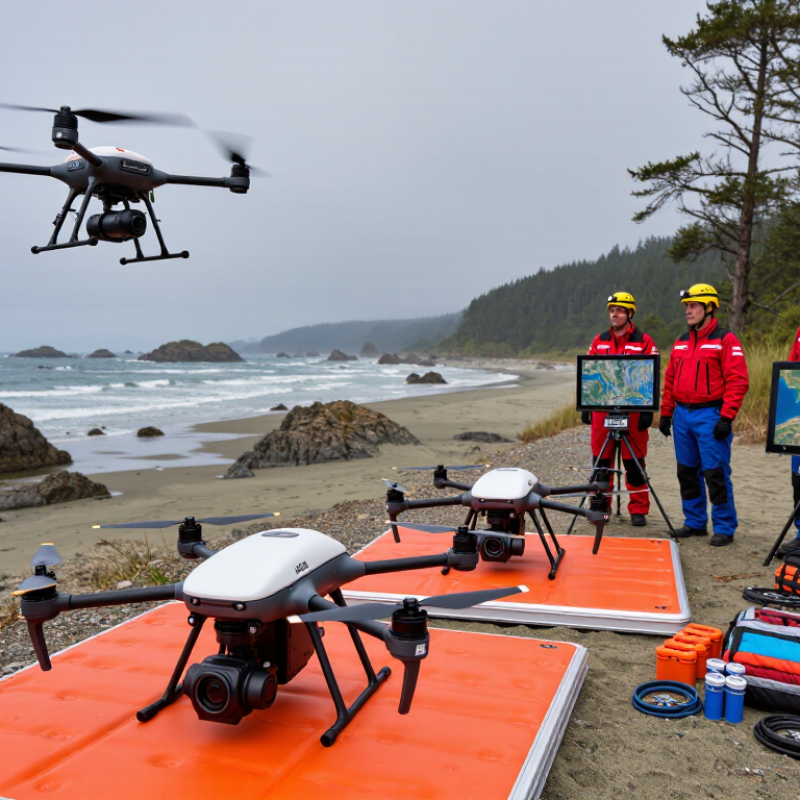
What Is the Best Rescue Drone to Buy in 2026?

What Rescue Drones Are Designed to Do in 2026

What Is the Best Rescue Drone to Buy in 2026?

What Rescue Drones Are Designed to Do in 2026

In 2026, rescue drones are designed to give response teams a quicker view of difficult terrain. They can scan shorelines, flooded streets, forests, and damaged roads from above. Thermal cameras may help locate a person after dark, while zoom cameras show details from a safer distance. But rain, wet clothing, and warm rooftops can confuse thermal images. Useful, not magic.

A capable rescue drone can mark coordinates, stream video to a field team, and carry a small emergency payload, such as a radio or medical supplies. Some models use loudspeakers to share instructions with people who are stranded. Flight time matters: a battery that looks adequate on paper may leave little reserve in cold wind. Check how quickly batteries can be changed, too.

For buyers, the best choice depends on the actual rescue task, not the longest feature list. Search teams may value thermal imaging and stable flight; flood response teams may need reliable links and clear mapping. Cameras cannot replace trained searchers, and a drone is only useful when someone can interpret its feed. Practice in realistic conditions. That part is easy to underestimate.

What Is the Best Rescue Drone to Buy in 2026?

What Rescue Drones Are Designed to Do in 2026

Altitude ceiling

Maximum groundspeed

Aircraft weight limit

These are U.S. FAA Part 107 operating limits, not promises of a drone’s flight performance: 400 ft above ground level in most cases, 100 mph maximum groundspeed, and less than 55 lb total weight including payload. For rescue work, choose equipment around the mission—such as thermal imaging for locating people, suitable payload capacity, reliable communications, and weather tolerance. Operations beyond standard rules may require authorization.

Which Features Matter Most in Search and Rescue

What Is the Best Rescue Drone to Buy in 2026? The answer depends on the terrain, weather, and team. For search and rescue, prioritize a stable live video feed, thermal imaging, reliable positioning, and enough flight time to complete a planned search with reserve battery. A thermal hotspot is not proof of a person; sun-warmed rocks can mislead. Seconds matter. The Cospas-Sarsat programme reports that its satellite distress-alert system has helped save more than 50,000 lives since 1982. That figure is a reminder that finding and communicating a reliable location matters as much as carrying a capable camera.

Look for clear mapping tools, low-light performance, weather resistance, and batteries that can be changed quickly with cold hands. Check how the aircraft handles signal loss and whether the control screen remains readable in bright sun. NIST’s response-robot test methods assess practical capabilities such as mobility, sensing, and endurance. Use comparable tests when evaluating aircraft, rather than relying on advertised maximum range. A longer flight is not automatically a safer search.

Tips: Test the drone over a marked field, then repeat in wind and poor light. Record battery use and radio gaps. Ask rescuers to operate it with gloves. If thermal imagery is difficult to interpret, train before an emergency—not during one.

How Leading Rescue Drone Types Compare

Rescue drone types serve different search conditions. Multirotor aircraft can hover beside a cliff face or hold position above a flooded road. Their close control helps crews inspect small areas, but batteries limit time aloft. That matters. Fixed-wing drones cover larger areas efficiently, making them useful for searching long coastlines or open terrain. They need room to launch and recover, and they cannot hover over a specific person. Hybrid vertical-takeoff models combine hovering with forward flight, though their added capability can mean greater cost and maintenance.

A tethered drone can remain airborne for extended observation near an incident command post. Its cable, however, restricts where it can operate. Thermal cameras may help locate people at night or through light vegetation, but they do not see through walls or dense cover. Check sensor performance in realistic conditions. Wind, rain, cold temperatures, and radio range can reduce usable flight time or image quality. A clear display in a showroom proves little.

For a purchase, match the aircraft to the terrain, typical search area, and crew’s training. Compare total operating costs, spare batteries, repair support, and ease of deployment—not just advertised flight time. Then run supervised practice flights with realistic payloads and weather limits. It can feel tedious. Yet a drone that crews can launch reliably is often more useful than a technically impressive aircraft that stays in its case.

How to Match a Drone to Your Mission and Environment

The best rescue drone in 2026 depends less on a long feature list than on the place and task. A shoreline search needs different tools from a night search in wooded terrain. For broad, open areas, prioritize stable flight, useful zoom, and enough battery reserve to return safely. Thermal imaging can help locate warm bodies in darkness, but it is not a substitute for clear visual checks.

Weather changes everything. In wind, a compact aircraft may struggle to hold position, while a larger model can be harder to carry and launch quickly. For forests or rubble, obstacle sensing and a responsive camera can help pilots inspect narrow gaps. Yet sensors have limits: branches, wires, smoke, and poor light can confuse them. Keep the pilot’s view and visibility in mind.

Match payload capacity to the actual mission, not a hopeful future one. A loudspeaker or small medical load may be useful, but added weight reduces flight time. Check how the drone performs in cold, rain, and gusts, and test the full route with its intended payload. Small details matter. A model with impressive range on paper may offer less usable time after wind, hovering, and return travel. I would not treat any single specification as decisive; a simple, dependable setup may be the better choice for a trained team.

What to Check Before Buying a Rescue Drone in 2026

A rescue drone should fit the response team’s actual work, not just look impressive on a specification sheet. Check the complete takeoff weight, including the camera, lights, and any search equipment. Confirm that the aircraft can carry this load without sharply reducing its practical flight time. Ask for test results in wind, cold, and light rain, rather than relying only on ideal-condition figures. A neat lab number can be misleading.

Look closely at the camera and navigation systems. Thermal imaging may help locate a person through darkness or light cover, but it cannot replace careful visual assessment. Check image clarity, zoom, obstacle detection, and how reliably the live video reaches the controller. Test the controls while wearing gloves. Test it wet. Battery swaps should be quick and simple, especially when several flights may be needed. Ask how spare batteries are stored, charged, and checked for wear.

Plan for failures, not only successful demonstrations. Confirm what the drone does when its signal weakens, a battery runs low, or satellite positioning becomes unreliable. Review repair options, software support, training needs, and the time required to prepare each flight. Run a realistic practice drill with the people who will operate and interpret the footage. Notice where communication gets confusing. That matters. I would also question any purchase chosen mainly for its longest advertised range; teams often need dependable control, clear images, and equipment they can maintain.

What Is the Best Rescue Drone to Buy in 2026? — What to Check Before Buying a Rescue Drone in 2026

Compare aircraft against the mission, local regulations, and operating conditions. Flight-time figures below are practical planning targets, not guaranteed specifications; wind, temperature, payload, battery age, and flight style can reduce endurance.

Buying Dimension What to Check Practical Target or Comparison Why It Matters How to Verify
Mission and aircraft type Match the aircraft to the search area, terrain, and rescue task. Multirotors suit hovering, close inspection, and precise delivery. Fixed-wing or VTOL designs can suit broad-area searches, but generally need more space and planning. A drone optimized for long-distance coverage may be less useful when rescuers need a stable hover or a controlled payload drop. Run a representative mission test, including launch, search, return, and landing.
Useful flight endurance Compare expected mission time with advertised maximum flight time. For many multirotor missions, plan around roughly 20–35 minutes of usable flight, then retain a battery reserve. Longer-endurance aircraft may be appropriate for larger search areas. Maximum figures are commonly measured in favorable conditions and may not include time needed to return safely. Ask for flight logs or test the aircraft with its intended camera and payload in representative weather.
Thermal and daylight imaging Check thermal resolution, image clarity, zoom, low-light performance, and whether video can be shared with ground teams. Thermal imaging can help locate heat signatures; a daylight camera with useful optical zoom can help operators inspect them. Neither guarantees detection in every environment. Vegetation, terrain, weather, distance, and target temperature can affect whether a person is visible. Test against realistic targets and backgrounds at expected search distances; review live-feed quality on the actual control display.
Payload capacity and release Confirm rated payload, attachment method, release reliability, and how carrying a payload affects flight time. Small emergency supplies may require only a light payload. Do not assume a drone can lift or safely deliver a person; payload limits are aircraft-specific. Excess weight can reduce endurance and handling performance. An unreliable release can delay delivery or create a hazard. Conduct repeated release tests with a representative load and check the aircraft’s documented payload limits.
Weather and environmental protection Check the published operating limits for wind, rain, temperature, and dust. Look for a stated ingress-protection rating where relevant. Choose limits that cover the conditions expected at the response site. A rating, when provided, applies only to its stated test conditions and does not make every component waterproof. Wind and precipitation can reduce control margin, visibility, and battery performance; cold can reduce available battery capacity. Review the operating manual and test within safe, permitted limits. Confirm protection for the complete aircraft and payload setup.
Control link and positioning Assess link reliability, operating range claims, obstacle awareness, return-to-home behavior, and performance when positioning signals are weak. Prioritize a stable control link and predictable recovery behavior over headline range figures. Buildings, terrain, interference, and local restrictions can limit practical range and affect navigation. Test in the intended operating environment and confirm what happens after loss of link or positioning data.
Battery and field readiness Check battery availability, charging time, health monitoring, cold-weather procedures, and the number of batteries required per shift. Plan spare batteries and a safe charging workflow based on the expected mission schedule; do not plan continuous operation around one battery. Battery turnaround can become the limiting factor during extended searches. Time a full field cycle, including battery changes, charging, inspections, and data transfer.
Safety, training, and maintenance Review fail-safe settings, propeller and battery inspection procedures, operator training, repair support, and replacement-part availability. Require documented pre-flight checks, recurring training, and a maintenance plan appropriate to the expected flight hours. Reliable equipment still depends on trained operators and consistent maintenance. Request manuals, training materials, maintenance schedules, and a practical demonstration of emergency procedures.
Rules and privacy Check current aviation rules for registration, pilot qualifications, operating limits, night flights, flights over people, and required permissions. Review privacy and data-retention rules. Requirements vary by country and may differ for public-safety agencies, commercial operators, and recreational pilots. A technically capable drone may not be legally deployable for a particular mission or location. Confirm requirements with the relevant aviation and privacy authorities before purchase and operation.
Overall buying decision Compare total readiness, not just aircraft price: cameras, batteries, training, maintenance, software, and support. The best choice is the system that meets the mission requirements, can be operated legally, and can be kept flight-ready by the response team. Accessories, training, and ongoing upkeep affect real-world capability and total cost. Use a scored evaluation based on a representative rescue exercise before committing to a purchase.