
7 Best Multi Stage Cylinders for Industrial Buyers
Choosing a cylinder for an industrial system involves more than comparing bore size or price. A Multi Stage Cylinder can deliver a long extension from a compact retracted length, which is useful in lifting platforms, dump bodies, and material-handling equipment. But the right model depends on the job. Load, stroke, operating pressure, mounting space, and duty cycle all affect performance.
This guide reviews seven options for industrial buyers, with attention to practical specifications and application fit. A cylinder that works well in a clean factory may struggle in a dusty yard or under frequent side loading. Look closely at materials, seals, stage sequence, port placement, and available service support. Small details matter.
There is no universal winner. Some buyers need maximum reach; others value a compact installation, predictable motion, or easier maintenance. Product data should be checked against the actual system design, and critical selections should be confirmed with the manufacturer or a qualified engineer. Catalog figures do not tell the whole story. Installation quality and operating conditions can change real-world results, too. This comparison aims to make those trade-offs easier to see, while recognizing that specifications and availability may change. A careful shortlist is a useful start, not a substitute for verifying fit before purchase.
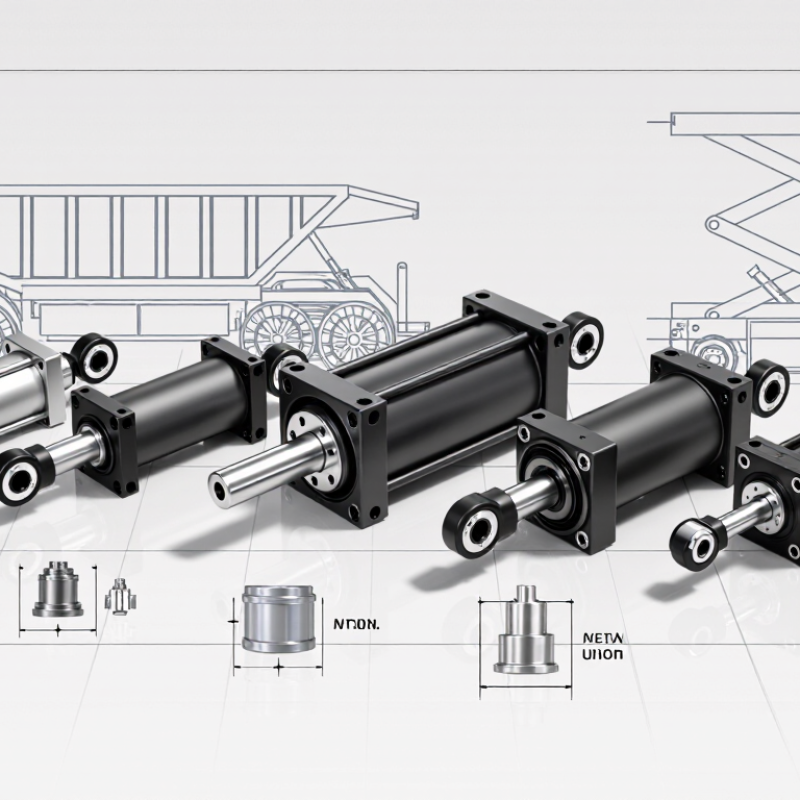
Understanding Multi-Stage Cylinders and Their Industrial Role
Multi-stage, or telescopic, cylinders create a long working stroke from a short retracted package. Nested steel sleeves extend one after another, making them useful where frame space is tight: dump bodies, lifting platforms, and mobile equipment. The trade-off is visible in operation. Smaller stages generally provide less force, while seals and sliding surfaces add friction. Not magic.
Grand View Research’s hydraulic-cylinder market report estimated a global market value of USD 14.4 billion in 2023 and forecast USD 21.4 billion by 2030. That figure covers hydraulic cylinders broadly, not telescopic units alone; it signals industrial demand, not a product-performance guarantee.
For buyers, the working load, stroke, mounting angle, oil pressure, and available retraction space matter more than market growth. Check the load through the full stroke, especially near maximum extension, when side loading can damage guides and seals. A clean spreadsheet can still hide a bad side-load assumption. Also confirm whether gravity can retract a single-acting design, or whether the machine needs powered retraction. Measure the actual space around the cylinder, not just the drawing’s nominal envelope.
