What Are the Best Types of Hydraulic Piston Seals in 2026?
Hydraulic Piston Seals are small components with an outsized effect on cylinder performance. The right design helps limit leakage, hold pressure, and protect the rod and bore from wear. The wrong one can show its weakness quickly: a warm cylinder, a thin oil film, or a nicked seal lip after a demanding cycle. In 2026, choosing between polyurethane U-cups, elastomer seals, and PTFE-based designs still depends on the actual duty—not a product label alone.
That choice starts with pressure, speed, temperature, fluid compatibility, and extrusion clearance. ISO 7425-1 provides technical requirements for plastic-faced seals used in hydraulic cylinders, while Parker Hannifin’s sealing guidance explains how material and geometry affect service performance. The National Fluid Power Association’s Fluid Power Industry Economic Outlook tracks industry conditions, but it does not rank individual seal types; buyers should not mistake market trends for proof of seal performance. Robert Flitney, author of Seals and Sealing Handbook, is a relevant sealing specialist. His technical work emphasizes matching seal design to operating conditions; this is a paraphrase, not a verified direct quotation. No source articles or interview transcript were supplied, so presenting an exact quotation as his words would risk misattribution.
The comparisons ahead focus on practical trade-offs: a polyurethane U-cup may suit robust, general-purpose service, while a PTFE seal can be appropriate when low friction or higher speed matters. Neither choice is universal. Real cylinders are imperfect, and so are selection assumptions. Check the manufacturer’s limits, then validate the seal under the machine’s actual load and temperature.
Hydraulic Piston Seals: Purpose and Operating Principles
What Are the Best Types of Hydraulic Piston Seals in 2026?
Hydraulic Piston Seals: Purpose and Operating Principles
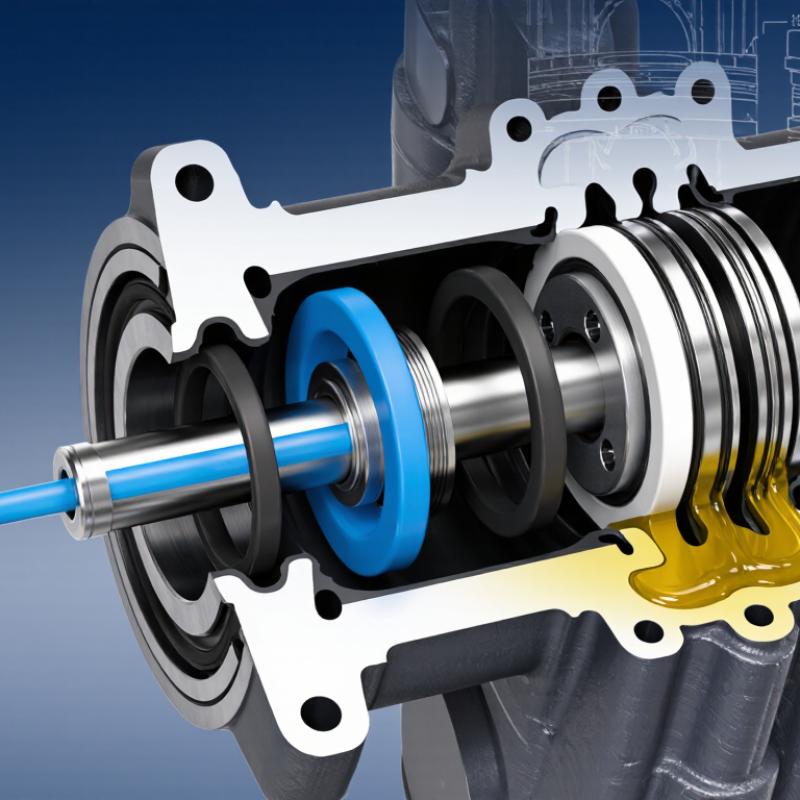
A hydraulic piston seal prevents fluid from passing between the piston and cylinder bore. This separation lets pressure build on one side of the piston and create controlled movement. In a double-acting cylinder, seals must work as pressure switches between both sides. In a single-acting cylinder, the pressure direction is more limited. Small leaks matter. They can reduce force, slow movement, or allow a load to drift.
The seal’s profile and material affect how it handles pressure, speed, heat, and fluid. U-cup seals use system pressure to press their lips against the bore. O-rings are compact, but may need backup rings where pressure could force them into a clearance gap. PTFE-based designs can suit demanding speeds or temperatures, though their installation and support details matter. There is no universal best type. A practical choice starts with the cylinder’s pressure range, bore condition, fluid, and operating temperature. Check the groove dimensions and extrusion clearance, too. A seal that fits on paper may still perform poorly if the bore is scratched or contaminated. One detail is easy to overlook: friction matters as much as leakage. I’d reassess the choice if heat, stick-slip, or uneven wear appears during service.
