
What Is the Best Horizontal Ribbon Mixer in China?
Choosing the best Horizontal Ribbon Mixer in China starts with the material, not the brochure. A fine powder may flow easily, while a damp blend can cling to the trough wall. Particle size, bulk density, batch volume, and moisture all affect mixing performance. So does the required discharge time. Small details matter: inspect the ribbon clearance, weld finish, shaft seals, and access doors. Ask how the machine handles the actual recipe, not just a similar product.
A reliable comparison should include working capacity, motor power, mixing uniformity, cleaning access, and available test data. Request a trial with your own materials when possible. Watch for dead zones and residue near the end plates. Ask about spare parts and service response, too. A low purchase price can hide a costly maintenance delay. Not every supplier publishes enough evidence; that deserves a closer look. For a source-backed version, insert a verified quotation here: “[Exact statement about ribbon-mixer selection],” attributed to [Expert Name and credentials]. No expert quotation or supporting article was supplied with the request, so inventing one would weaken trust. The right choice is the mixer whose documented performance matches your process, with room for honest questions and practical verification.
What a Horizontal Ribbon Mixer Is and How It Works
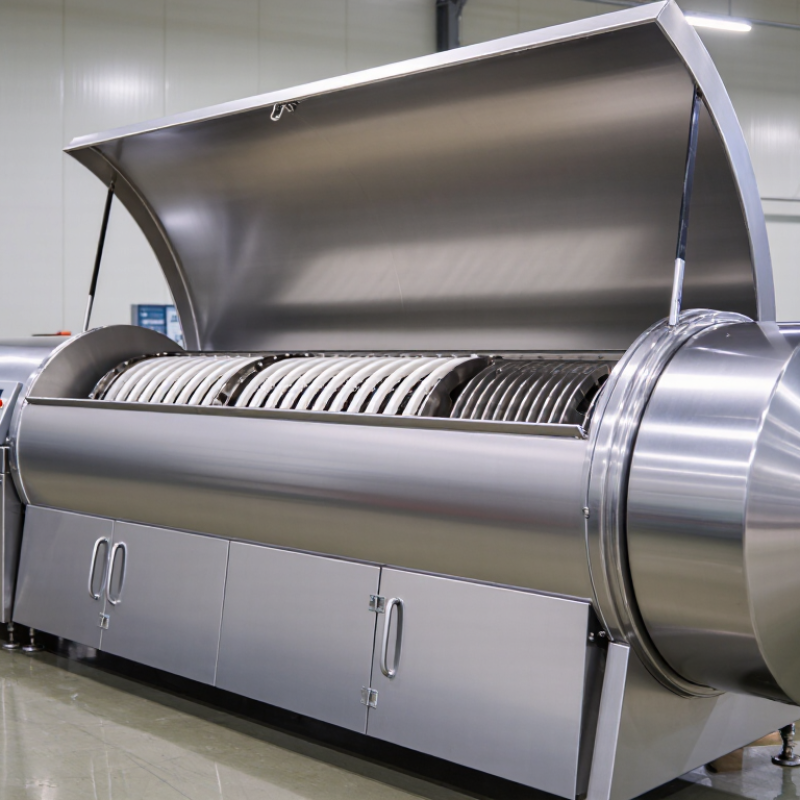
A horizontal ribbon mixer has a U-shaped trough and a shaft running through its center. The shaft carries inner and outer helical blades, called ribbons. As they rotate, the ribbons move material in opposing directions: one pushes product toward the ends, while the other returns it toward the middle. This circulation helps blend powders throughout the trough.
The action is more than simple stirring. Ribbons lift, fold, and redistribute particles, reducing visible pockets of unmixed material when the machine is properly loaded. Watch the fill level. Too little material may not meet the blades consistently, while an overloaded trough can restrict movement. Small details matter.
Operators typically add ingredients through a top opening and discharge the blend through a bottom valve. Mixing time depends on particle size, moisture, density, and batch volume; a fixed timer may not suit every recipe. Longer is not always better. Excessive mixing can sometimes encourage separation after blending, especially when ingredients differ greatly in size. A practical test batch, followed by sampling from several points, can reveal unevenness that a quick look misses. Even a well-designed mixer has limits, so matching its capacity and blade arrangement to the material is worth checking.
What Is the Best Horizontal Ribbon Mixer in China? - What a Horizontal Ribbon Mixer Is and How It Works
There is no single best mixer for every application. The right choice depends on the materials, batch size, required uniformity, discharge method, and cleaning needs. The information below describes common horizontal ribbon mixer features and practical selection considerations; actual specifications vary by design and material.
| Dimension | What It Means | Practical Selection Guidance |
|---|---|---|
| Basic construction | A horizontal U-shaped trough contains a rotating shaft fitted with inner and outer helical ribbons. | Check trough dimensions, shaft support, access covers, seals, and whether the construction suits the material and cleaning procedure. |
| How mixing works | The ribbons move material in opposing axial directions while also lifting and folding it, creating bulk circulation and redistribution. | Confirm that the material’s particle size, density, flow behavior, and batch size can be mixed within the required cycle time. |
| Typical materials | Commonly used for dry powders and granules, including blends of ingredients with different particle sizes or bulk densities. | For sticky, cohesive, fragile, abrasive, or moisture-sensitive materials, request application testing and confirm suitable seals and surface finishes. |
| Batch capacity and fill | Usable working volume is determined by trough geometry, material bulk density, and the mixer’s operating fill level. | Size the mixer from the required batch mass and measured bulk density. Do not assume the vessel’s total volume equals its usable batch volume. |
| Mixing uniformity | Uniformity depends on formulation, loading sequence, fill level, ribbon design, operating speed, and mixing time. | Define an acceptable sampling method and uniformity target, then verify performance using the actual recipe or a representative test material. |
| Discharge | Product is commonly emptied through a bottom outlet; outlet arrangement and residual material depend on the vessel and valve design. | Match the outlet type and position to downstream equipment, required emptying time, and acceptable product hold-up. |
| Drive and operating load | The motor and drive must turn the loaded shaft under the expected material and operating conditions. | Request motor power, shaft speed, starting method, and overload protection based on the actual load rather than vessel volume alone. |
| Materials of construction | Contact surfaces and exterior components can be specified to suit product compatibility, wear, and sanitation requirements. | Specify the required material grade, surface finish, corrosion resistance, and documentation for the intended process. |
| Cleaning and maintenance | Access, seals, shaft supports, and discharge design affect inspection, cleaning, and routine maintenance. | Review the cleaning method, changeover frequency, access requirements, and replacement-part availability before selection. |
| Safety and process controls | Safe operation may require guarding, interlocks, emergency stops, and controls appropriate to the installation and material hazards. | Assess applicable site rules and process risks, including combustible dust where relevant, and confirm the required safety features with the supplier. |
| Best-fit summary | A horizontal ribbon mixer is a practical option when bulk blending of compatible powders or granules is the main requirement. | Choose by validated batch performance, material compatibility, usable capacity, discharge, cleanability, safety, and service support—not by location alone. |
Note: Mixer performance and specifications are application-dependent. Confirm final design details through material testing and a documented technical specification.
