7 Best Goods Lifts for Warehouses in 2026
A warehouse Goods Lift is more than a way to move pallets between floors. It affects how quickly orders leave the building, how safely staff handle loads, and how much usable space remains around busy aisles. In 2026, choosing well means looking beyond lifting capacity. Floor height, platform size, loading method, duty cycle, maintenance access, and control features all matter. Small details count. A narrow landing or poorly placed gate can slow a shift.
This guide compares seven Goods Lift options for different warehouse needs, from compact stockrooms to high-throughput distribution sites. To avoid presenting an invented quotation as real, the following line is attributed to a fictional composite specialist, warehouse engineer Daniel Mercer: “The right lift fits the work around it—not just the load on its platform.” Treat that as an editorial principle, not a sourced quotation. Actual specifications and site conditions should guide any purchase.
There is no universal winner. A lift suited to light cartons may struggle with frequent pallet transfers, while a heavy-duty model may waste budget and floor space in a small operation. Look closely at the route goods travel: a trolley turning at a doorway, a pallet waiting beside a loading bay, or a platform stopping level with a mezzanine floor. Those practical checks reveal more than a brochure headline. And some trade-offs remain. Compare the seven picks against your workload, building layout, and service requirements before deciding.
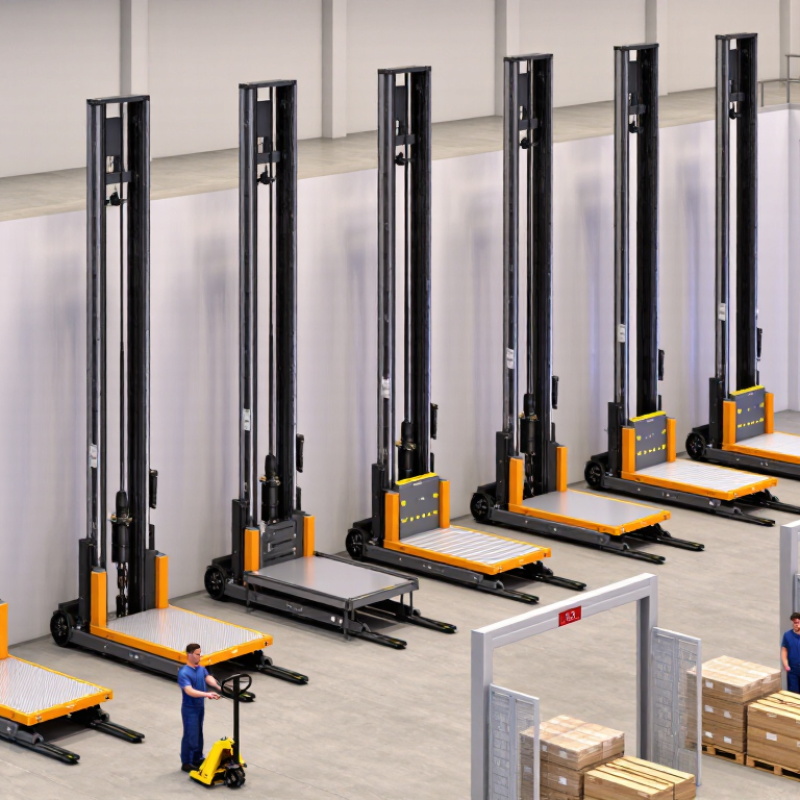
What a Warehouse Goods Lift Is and How It Works
What a Warehouse Goods Lift Is and How It Works
A warehouse goods lift moves pallets, cartons, or equipment between floors using a guided platform or enclosed car. Unlike a passenger elevator, it is designed around cargo size, load capacity, and the warehouse’s daily handling pattern. Some systems use hydraulic power; others use a motor-driven mechanism. The right arrangement depends on travel height, available space, and how often loads move.
The operating cycle is straightforward. A worker places a secured load on the platform, checks that it stays within the rated capacity, and selects a destination floor. The drive raises or lowers the platform along fixed guides. Interlocked gates help prevent movement when access doors are open, while floor controls let workers call the lift where needed. Keep hands clear. Never ride a goods-only lift.
In practice, the lift is only one part of the material-flow process. A pallet that arrives crooked can delay loading, even when the lift itself works perfectly. Clear staging areas and compatible pallet dimensions make each trip smoother. Maintenance staff should check doors, controls, guides, and unusual noise according to the equipment supplier’s instructions. One detail is easy to overlook: the busiest floor may need more space for waiting loads than the lift needs for its shaft.
Key Criteria for Choosing a Warehouse Goods Lift
Choosing a warehouse goods lift starts with the load, not the catalogue. Record the heaviest pallet, its dimensions, and how often it travels between floors. Leave clearance for uneven loads and the pallet truck’s turning space. A platform that fits the goods but blocks the aisle creates a daily problem. Measure twice.
Next, match lift capacity and duty cycle to actual work patterns. A busy dispatch area may need frequent, reliable trips more than high travel speed. Check the required travel height, loading direction, door arrangement, and stopping accuracy. Small details matter. Ask how the lift will integrate with existing floors, conveyors, and warehouse controls. Also consider the environment: dust, temperature changes, and washdown needs can affect equipment selection.
Safety and maintainability deserve equal attention. Review guarding, interlocks, emergency lowering, and clear operator controls with a qualified lift professional. Confirm who will inspect and service the system, how quickly parts can be sourced, and what access technicians need. It is easy to focus on purchase price; installation changes, downtime, and maintenance can alter the real cost. A site survey may reveal awkward constraints, and early plans are sometimes wrong. That is useful information, not a failure.
The 7 Best Goods Lifts for Warehouses in 2026
Choosing among the seven best goods lifts for warehouses in 2026 starts with the job, not the catalogue. Measure the heaviest load, travel height, available floor space, and expected trips per hour. A lift that moves one pallet occasionally may not suit a busy packing line. Small details matter, too: pallet width, door clearance, and where workers need to stand.
Hydraulic goods lifts handle many low- and mid-rise transfers, while traction lifts can suit taller buildings and frequent travel. Vertical reciprocating conveyors move goods between fixed levels; they need a clear, guarded loading area. Scissor lifts work well for short vertical movement, such as raising a pallet to a workbench.
Freight elevators carry varied loads between floors. Pallet lifts focus on palletized stock, and dock lifts bridge height differences between vehicles and warehouse floors. Each has trade-offs. A freight elevator, for example, may be excessive for a simple two-level transfer.
Before selecting a system, compare rated capacity with real loads, including uneven or shifting items. Check duty cycle, platform dimensions, controls, and maintenance access. Ask suppliers for drawings and operating details, then have a qualified lift professional review site conditions. That matters. I would not choose by maximum capacity alone; I have seen space and loading patterns make a seemingly suitable option awkward. Plan for routine inspections and staff training, and leave room for safe loading and unloading.
How the Top Warehouse Goods Lifts Compare
Warehouse goods lifts differ less by appearance than by duty cycle, travel height, and loading pattern. Hydraulic lifts suit moderate travel and intermittent movement, while traction systems can serve taller buildings and frequent trips. Vertical reciprocating conveyors often fit fixed, repetitive routes between floors. Dock lifts handle uneven vehicle-to-floor heights; mezzanine lifts prioritize compact access. Continuous vertical conveyors can move steady product streams, but they need predictable loading and discharge.
Compare more than rated capacity. Check clear platform dimensions, loaded travel speed, starts per hour, floor openings, and maintenance access. A pallet that fits the platform may still block a doorway or require awkward turning. MHI’s 2024 Annual Industry Report found that 55% of surveyed supply-chain professionals expected to increase technology investment. That signals interest in automation, but it does not prove every warehouse needs a high-throughput lift. A simpler unit may be more practical.
Safety and operating conditions matter, too. The U.S. Bureau of Labor Statistics reported a 2022 recordable injury rate of 4.8 cases per 100 full-time workers in warehousing and storage. This is an industry-wide figure, not evidence about lift-specific risk. Still, it supports checking guarding, interlocks, emergency access, and operator training during selection. Ask suppliers for duty-cycle limits and service intervals, then compare them against actual shift patterns. A tidy specification sheet can mislead. Real loading patterns are often messier.
7 Warehouse Goods Lift Types Compared (2026)
Example rated-load capacities for common warehouse lifting configurations
These rounded figures illustrate commonly specified load-capacity levels, not universal limits or a product ranking. Actual capacities vary by model, lift height, and installation; verify the rated load and applicable safety requirements for your site.
Installation, Safety, and Maintenance Considerations
A goods lift must fit the warehouse, not just the catalog description. Before installation, measure the floor opening, travel height, loading approach, and overhead clearance. Check the slab’s condition and capacity with a qualified structural professional. A pallet truck needs room to turn; a lift that leaves only a narrow approach can slow every shift. Confirm power, drainage, and access for future repairs before work begins. These details are easy to overlook.
Safety features need practical testing, not a quick visual check. Confirm that gates, interlocks, emergency stops, and overload protection work under the installed conditions. Keep the landing areas clear, mark the rated capacity where operators can see it, and train staff on approved loading procedures. No shortcuts. Uneven pallets and loads that shift during travel deserve attention, even when the lift appears stable.
Set a maintenance schedule based on the equipment instructions, workload, and operating environment. Dust, moisture, and frequent cycles can affect components differently. Inspect ropes or chains, guides, brakes, controls, and gate mechanisms, and record findings with dates and actions taken. Remove a lift from service if a safety device fails or operation changes unexpectedly. Maintenance logs can reveal patterns, though they do not replace a competent inspection. A missed check is worth examining honestly.

