What Is the Best Embedded PC Manufacturer in China?
Choosing the best Embedded Pc manufacturer in China is not simply a price comparison. Industrial buyers need a system that fits their workload, enclosure, and operating environment. A compact fanless computer beside a production line faces different demands from a unit inside a vehicle or network cabinet. Heat, vibration, dust, and limited space all matter.
Peter Marwedel, an embedded-systems researcher, describes embedded systems as “information processing systems embedded into enclosing products.” That perspective helps frame a practical supplier search: the computer is part of a larger machine, not just a box of components. Look for clear processor and memory specifications, interface options, operating-temperature ratings, and evidence of testing. Ask how the manufacturer handles BIOS customization, sample evaluation, production changes, and technical support. Specific answers are more useful than broad promises.
China has manufacturers with different strengths, from standard industrial PCs to customized designs and OEM services. The “best” choice depends on your application, required service life, delivery expectations, and budget. Request a sample and test it with your own cables, software, and workload. Check the details. A polished datasheet cannot reveal every field issue, and supplier claims deserve verification. Even a careful checklist misses something now and then. That is worth admitting. Compare several candidates, document your requirements, and confirm that the proposed configuration matches the unit you will actually receive.
What Is an Embedded PC? Core Components, Interfaces, and 24/7 Operation
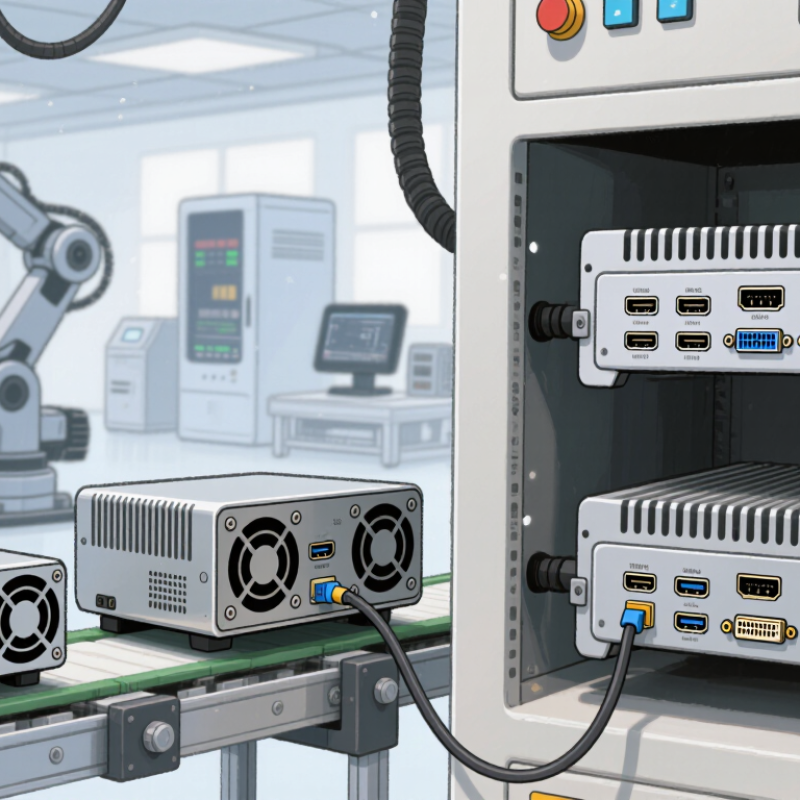
An embedded PC is a compact computer built into a machine or control cabinet, where it handles a defined task continuously. Its processor runs control software; memory holds active data, while an SSD stores the operating system and logs. Small details matter. A fanless aluminum case can shed heat, but only when airflow and cabinet temperature are considered together.
Interfaces connect the computer to sensors, drives, and networks. Common options include Ethernet, USB, serial ports, CAN, GPIO, and PCIe. IDC’s 2024 Worldwide Edge Spending Guide estimated global edge-computing spending at $232 billion that year, reflecting demand for processing near equipment. For 24/7 service, check thermal limits, storage endurance, watchdog recovery, and power-loss behavior—not just processor speed. Uptime Institute’s 2024 outage analysis found that 54% of significant data-center outages cost more than $100,000; it is a useful reminder that downtime has real operational consequences, though those figures are not specific to embedded PCs. Still, no checklist predicts every hot cabinet or loose connector. Test the actual installation under sustained load.
Embedded PC Interfaces: Theoretical Maximum Link Rates
Interface selection affects how an embedded PC connects to storage, peripherals, and networks. These are standard maximum link rates; real-world throughput is typically lower and depends on the hardware configuration and operating conditions.
How Do x86 and Arm Platforms Shape Embedded PC Performance?
An embedded PC’s processor architecture affects software compatibility, heat, and sustained speed. x86 platforms often suit systems built around established desktop operating systems, drivers, and legacy applications. Arm platforms can be attractive for low-power designs, especially fanless units inside sealed cabinets. Neither architecture guarantees better performance. Cooling, memory bandwidth, storage, and firmware matter just as much.
Benchmark data needs context. SPEC CPU 2017 publishes SPECspeed and SPECrate results, measuring single-task speed and throughput separately. EEMBC’s CoreMark-Pro benchmark also tests areas such as integer processing, floating-point work, and memory access. These industry benchmarks help compare specific configurations, not every x86 or Arm processor as a group. A high score on one workload may not predict how quickly a machine processes camera images or reads sensor data.
Look at the actual task. A control PC beside a warm motor may need predictable thermal behavior more than peak benchmark speed. A compact gateway running several software services may benefit from stronger multitasking and ample memory. Check performance under the intended operating system, ambient temperature, and continuous load. I would still treat short laboratory tests cautiously; real installations can behave differently. Benchmarks are useful, but they are not the whole story.
Which EMC Tests Matter? IEC 61000-4-2 Includes 8 kV Contact Discharge
IEC 61000-4-2 sets the test method for electrostatic discharge immunity. Its contact-discharge levels are 2, 4, 6, and 8 kV; 8 kV is Level 4. The standard’s air-discharge Level 4 is 15 kV. These values are test conditions, not guarantees that every installation will behave identically.
For an embedded PC, ask whether testing covered the finished enclosure, exposed connectors, and the actual grounding arrangement. A metal case can redirect a discharge toward a USB port or reset line. Small details matter.
Test records should identify discharge points, polarity, performance criteria, and whether the unit rebooted or lost data. A pass at one location does not prove immunity everywhere.
When comparing manufacturers in China, request reports aligned with IEC 61000-4-2, including the test setup and observed results—not just a certificate. The IEC standard provides the technical levels; product requirements determine which criteria apply.
An 8 kV result is useful, but it can be misleading without configuration details. That part deserves scrutiny.
Real installations add cables, chassis variations, and grounding differences, so qualification testing should reflect the intended system.
How to Compare Chinese Manufacturers: ISO 9001:2015, MTBF, and Warranty
What Is the Best Embedded PC Manufacturer in China?
When comparing Chinese embedded PC manufacturers, treat ISO 9001:2015 as evidence of a documented quality system, not a guarantee that every unit will perform well. Check that the certificate is current, covers the relevant manufacturing site, and includes activities related to your product. Then ask how incoming components, assembly changes, and final inspections are recorded. Specific answers matter. A polished certificate alone tells you little about how a failed batch is handled.
MTBF figures can help compare designs, but only when the assumptions are clear. Ask for the calculation method, operating temperature, component data, and test conditions. A high number does not mean one PC will run for that many hours before failing. It is a statistical estimate. If the supplier cannot explain its basis, treat the figure cautiously; this is an easy detail to overlook.
Warranty terms reveal how support works after shipment. Confirm the coverage period, what counts as a covered failure, who pays freight, and where repairs take place. Ask for a realistic repair or replacement turnaround, not just “fast service.” A small pilot order can also expose unclear documentation or slow communication. It adds time and cost, admittedly, but those may be easier to manage before a full deployment.

