
7 Best Diesel Fuel Generators for Reliable Power
A dependable Diesel Fuel Generator is more than a large engine in a steel frame. It is a practical choice for keeping lights, pumps, refrigeration, or essential tools running when utility power fails. The right model depends on the load, runtime, noise tolerance, and maintenance support—not just the advertised wattage. A refrigerator starting with a brief surge can demand more than its running rating suggests. That detail is easy to miss.
Diesel engine inventor Rudolf Diesel wrote, “The use of vegetable oils for engine fuels may seem insignificant today. But such oils may become in course of time as important as petroleum and coal-tar products of the present time.” His historical observation concerned fuel possibilities, not today’s generator specifications. Still, it points to a useful lesson: fuel choice matters, and operators should follow each manufacturer’s approved fuel guidance. No shortcuts there.
This guide compares seven diesel generators through practical details: rated and surge output, fuel capacity, estimated runtime, outlets, portability, and service access. Some units suit backup power at home; others make more sense on a worksite or remote property. We also consider real-world trade-offs, including weight, operating noise, and the space needed for safe placement. Numbers can look reassuring on a product page. Conditions in the field are less tidy. Use the comparisons to narrow your options, then check the manual and calculate your actual load before buying.
How Diesel Fuel Generators Produce Reliable Power
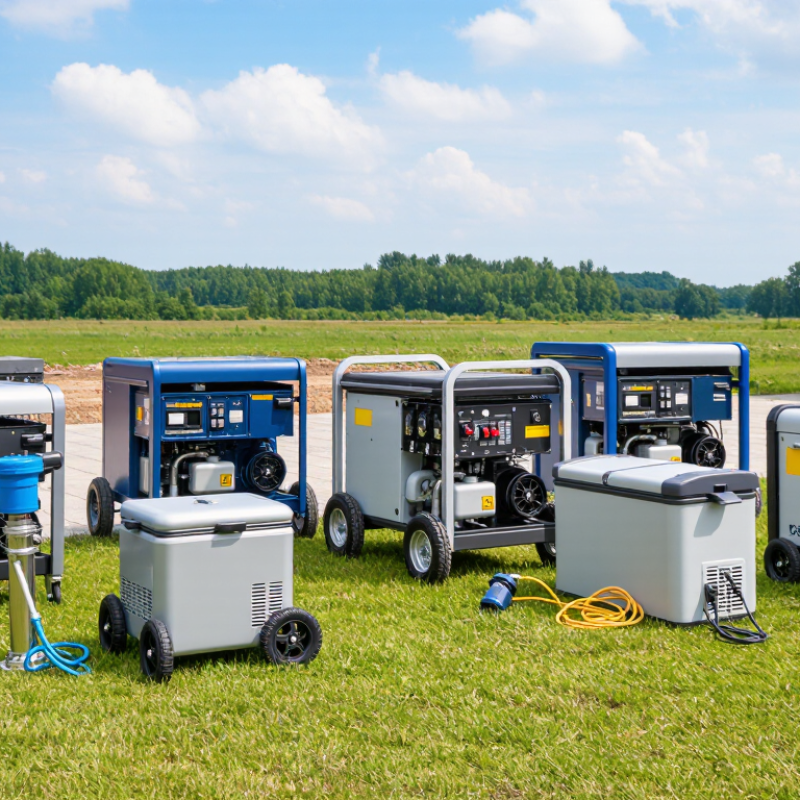
A diesel generator turns fuel energy into electricity through a compact chain of mechanical steps. Injected diesel ignites under compression, pushing the pistons and turning the crankshaft. The shaft spins an alternator, where a magnetic field induces electrical current. It is a direct process, but stable output depends on control systems. A governor adjusts engine speed as loads change, while a voltage regulator helps keep output steady. Small fluctuations can still occur when motors start.
Fuel density supports long run times between refills. The U.S. Energy Information Administration’s Monthly Energy Review puts distillate fuel oil near 5.8 million Btu per barrel. That equals roughly 138,000 Btu per gallon. But efficiency is not guaranteed. A generator running far below its rated load may use fuel poorly and accumulate deposits. Correct sizing matters. So does maintenance: clean fuel filters, charged starting batteries, and clear airflow can prevent avoidable interruptions. In practice, I would test the unit under realistic loads, not just let it idle. A quiet idle proves little. That check is easy to overlook.
