What Is the Best Construction Equipment Battery in 2026?
In 2026, the best Construction Equipment Battery is not automatically the newest or most powerful option. It is the one matched to a machine’s duty cycle, climate, charging access, and maintenance plan. A loader starting repeatedly on cold mornings needs different performance from an excavator running long shifts with an electric drivetrain. Small details matter: vibration, terminal corrosion, charging time, and whether a technician can replace the battery quickly. There is no universal winner.
Industry data helps explain why battery choice is changing. The International Energy Agency’s Global EV Outlook 2024 reported that electric-vehicle battery demand exceeded 750 GWh in 2023, about 40% higher than in 2022. BloombergNEF reported an average lithium-ion pack price of $139 per kilowatt-hour in 2023, down 14% year over year. These figures describe broader battery markets, not construction equipment alone. Still, they show the scale and cost trends shaping electrification. Battery analyst James Frith, formerly BloombergNEF’s head of energy storage, has emphasized that falling battery costs help make wider adoption commercially viable. That is useful context, not a buying rule.
For construction fleets, the “best” choice may still be a dependable lead-acid starter battery—or a lithium-ion pack designed for traction and demanding duty cycles. The right answer depends on the machine, not a headline specification. This guide compares battery types, key performance measures, and real-world operating needs. It also flags a limitation: published performance claims can look impressive, yet say little about service life on a dusty, vibrating jobsite.
What Construction Equipment Batteries Need to Deliver in 2026
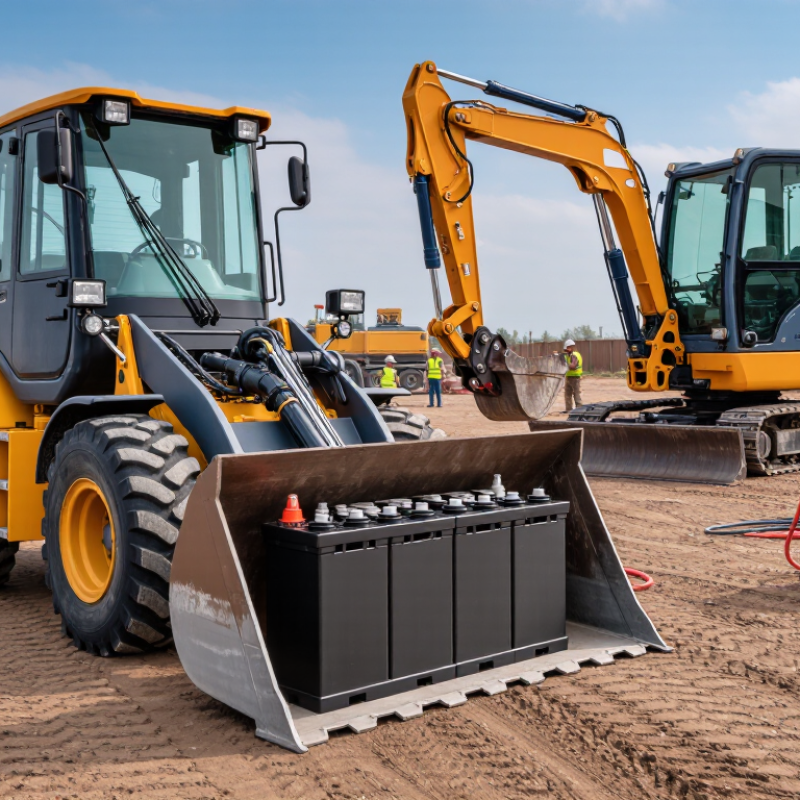
In 2026, a construction equipment battery must do more than turn an engine over. Excavators, loaders, and compactors face vibration, dust, long idle periods, and abrupt temperature changes. Those conditions expose weak terminals and batteries with too little reserve capacity. Cold mornings matter. A dependable battery should crank the engine after an overnight shutdown and support lights, displays, and controls during delays. Match its capacity to the machine’s actual duty cycle, not just its engine size. That distinction is easy to miss.
Charging behavior matters too. Machines running short shifts may not recharge fully between starts, so charge acceptance and alternator compatibility deserve attention. Vibration-resistant construction, secure hold-downs, and protected connections can help prevent avoidable downtime. Routine checks still count. Inspect cables for corrosion, confirm the battery is firmly mounted, and test it before demanding seasonal work. A loose ground cable can mimic a failing battery.
No chemistry fits every machine. Lead-acid batteries may suit familiar service routines, while lithium designs can offer lower weight or different cycling performance when the equipment supports them. Ask for documented cranking and reserve ratings, warranty terms, and clear installation guidance. Then compare those details with actual site conditions. Specifications help, but they do not capture every rough start, cold morning, or missed maintenance check.
How Battery Chemistry Affects Power, Runtime, and Durability
For construction equipment, battery chemistry shapes more than the machine’s runtime. It influences weight, charging needs, heat management, and how well cells tolerate repeated hard work. The International Energy Agency’s Global EV Outlook 2024 reports that lithium iron phosphate batteries reached about 40% of global electric-car sales in 2023. That scale shows the chemistry is well established, but it does not prove it is best for every jobsite.
Lithium iron phosphate, or LFP, generally offers long cycle life and strong thermal stability. Its lower energy density can mean a larger, heavier pack for the same stored energy. Nickel-rich chemistries, such as NMC, can fit more energy into less space, which may help compact machines work longer between charges. Yet chemistry alone cannot predict peak power: cell design, cooling, battery controls, and temperature matter too. A cold morning can expose weaknesses that a warm showroom test never shows.
For a loader making frequent short moves, durability and predictable charging may matter more than maximum energy per kilogram. For a machine working far from a charger, pack capacity and weight may carry greater value. Compare usable kilowatt-hours, continuous power, cycle-life test conditions, and warranty terms—not just cell chemistry. One awkward gap remains: published cycle-life figures often use controlled tests, not dusty sites, steep ramps, and hurried charging breaks. Those details deserve scrutiny.
How Lead-Acid, AGM, and Lithium-Ion Batteries Compare
What Is the Best Construction Equipment Battery in 2026?
How Lead-Acid, AGM, and Lithium-Ion Batteries Compare
Lead-acid batteries remain a practical choice for machines with modest electrical loads and predictable charging. They cost less upfront, but their weight and slower recharge can matter when equipment runs through long shifts. AGM batteries are sealed lead-acid batteries; they resist spills and vibration better, yet still need careful charging and can lose capacity in heat. Fit matters. Check the machine manual, terminal layout, and required cold-start rating before comparing prices.
Lithium-ion batteries typically weigh less and accept faster charging, which can help equipment facing frequent starts or tight downtime windows. They also require a battery management system, and some chemistries need protection from charging in very cold conditions. The awkward part: lithium-ion is not automatically the best upgrade. Confirm charger compatibility, operating temperature, and service support. The International Energy Agency’s Global EV Outlook 2024 reported a 14% drop in lithium-ion battery pack prices during 2023, but that market figure is not a quote for construction equipment.
End-of-life handling also deserves attention. Battery Council International reports a U.S. lead-battery recycling rate above 99%, a useful benchmark when planning replacements. That does not make lead-acid the right choice for every machine, but it shows an established recovery pathway. For a lightly used loader, lower purchase cost may outweigh weight savings; for equipment charging between shifts, lithium-ion may earn its premium. I would still check real duty-cycle data before deciding. Half a day of idling can change the answer.
How to Evaluate Battery Cost, Safety, and Service Life
The best construction equipment battery is not always the one with the lowest purchase price. Compare total cost over the machine’s expected work hours: battery, charger, installation, energy use, and eventual replacement. The IEA’s Global EV Outlook 2024 reported an average lithium-ion pack price of $139 per kilowatt-hour in 2023, down 14% from 2022. That is a broad market benchmark, not a quote for a ruggedized construction pack. Ask suppliers for a site-specific price and warranty conditions. A low-cost pack may look attractive until cold mornings, fast charging, or long shifts expose its limits.
Safety and service life depend on how the battery meets real jobsite conditions. Check test documentation, enclosure protection, thermal monitoring, and clear isolation procedures for maintenance. Then compare usable capacity, cycle-life terms, and how the warranty handles high temperatures or frequent partial charging. NREL battery-aging research identifies temperature and charge-discharge patterns as important influences on degradation. In practice, a pack parked beside a hot excavator engine may age differently from one stored in a shaded, ventilated area. Small detail. Track charging habits and battery temperature during a pilot period, not just in a sales demonstration. No estimate will be perfect; duty cycles vary, and that uncertainty deserves a place in the cost calculation.

