
7 Best Agricultural Bearings for Farm Equipment Buyers
Farm equipment works through dust, vibration, moisture, changing loads, and long hours in the field. A bearing may be small, but its failure can stop a planter during a narrow planting window or leave a combine idle at harvest. Small parts matter.
The OECD-FAO Agricultural Outlook 2024–2033 projects global agricultural and fish production to grow by 1.1% annually over the coming decade. That outlook is not a bearing-market forecast, but it underscores the continuing need for productive, dependable equipment. For buyers, choosing an Agricultural Bearing means looking beyond price and dimensions. Radial and axial loads, operating speed, shaft fit, lubrication, sealing, and exposure to grit or wash water all affect service life. A bearing suited to a dry gearbox may struggle near a muddy wheel hub.
This guide compares seven bearing options commonly considered for farm equipment buyers, from deep-groove ball bearings to tapered roller and mounted units. It focuses on practical fit, strengths, and trade-offs rather than claiming one design works everywhere. Manufacturer load ratings and maintenance instructions should guide final selection; operating conditions still matter. A clean specification sheet cannot capture every season. Even a well-matched bearing can wear early when seals are damaged, alignment is poor, or lubrication is neglected. That is worth remembering.
What Agricultural Bearings Do in Farm Equipment
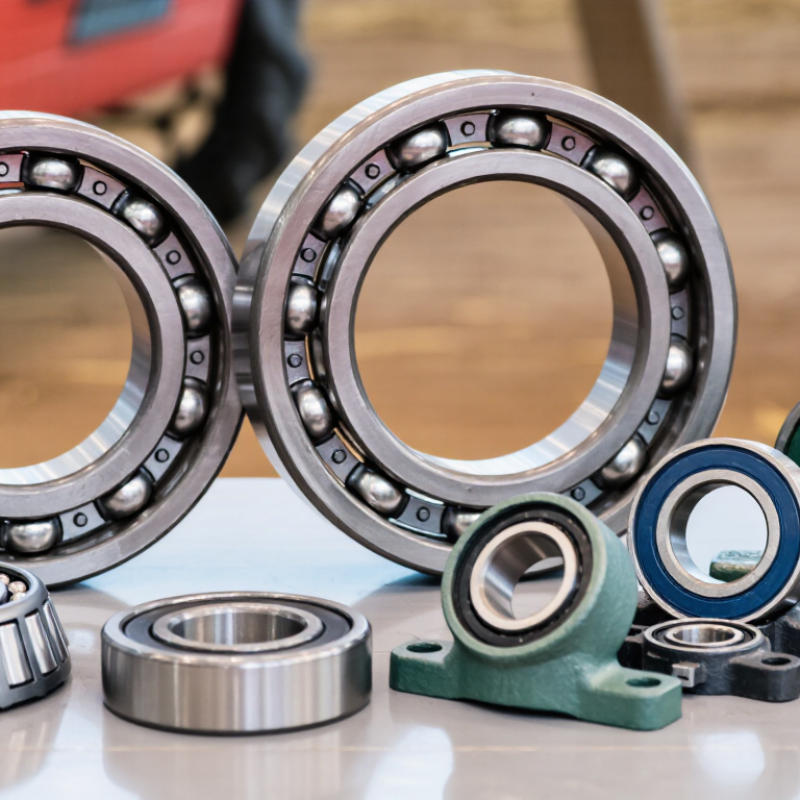
Agricultural bearings keep rotating parts moving smoothly under heavy, changing loads. They support shafts in wheel hubs, gearboxes, pumps, and harvesting equipment. By reducing friction and keeping components aligned, they help machinery transfer power without excessive heat or wear. A bearing in an auger, for example, must handle rotation while crop material and dust collect nearby. A wheel bearing faces road shock, mud, and uneven ground.
Conditions are rarely clean. Dust can work past damaged seals, while water may wash away lubricant or encourage corrosion. Good sealing and correct lubrication matter as much as bearing type. During routine checks, look for unusual noise, heat, looseness, or grease that appears dirty. Small clues. A bearing that runs hot after a short field pass deserves attention, though heat alone does not identify the cause. Load direction, shaft size, operating speed, and mounting space all affect selection. Match these details to equipment specifications, and check installation practices before replacing a part. No agricultural bearing is maintenance-proof; even a suitable unit can fail early if alignment is poor or lubrication is neglected. There is a practical trade-off here: stronger protection may help in dusty work, but inspection still matters.
7 Best Agricultural Bearings for Farm Equipment Buyers – What Agricultural Bearings Do in Farm Equipment
| Bearing type | Common farm equipment uses | What it does | Key selection considerations | Typical advantages and limitations |
|---|---|---|---|---|
| Sealed deep-groove ball bearing | Electric motors, fans, small pumps, and light-duty implement shafts | Supports radial loads and moderate axial loads while allowing high-speed rotation. | Check bore and outside dimensions, speed, load, sealing, and whether the bearing can be relubricated. | Compact, widely used, and suitable for higher speeds; less appropriate for heavy shock loads or substantial shaft misalignment. |
| Spherical roller bearing | Heavy-duty gearboxes, large conveyors, and machinery shafts exposed to vibration | Carries high radial loads and some axial load in both directions; its self-aligning design accommodates limited shaft or housing misalignment. | Consider load and shock levels, operating speed, internal clearance, lubrication, and alignment conditions. | Handles heavy loads and misalignment well; generally larger and more demanding of correct lubrication than simpler bearing types. |
| Tapered roller bearing | Wheel hubs, trailer axles, and other rotating assemblies with combined loads | Supports combined radial and axial loads. In many arrangements, two bearings are mounted in opposing directions. | Match the bearing set and mounting arrangement; follow the specified endplay or preload and lubrication requirements. | Suitable for substantial combined loads; correct adjustment and installation are important to prevent excess heat and premature wear. |
| Cylindrical roller bearing | Gearboxes, transmission shafts, and other assemblies with high radial loads | Carries high radial loads through line contact between rollers and raceways; axial-load capacity depends on the bearing design. | Check the bearing configuration, axial-load requirements, fit, operating speed, and lubrication method. | Offers high radial load capacity and stiffness; many designs provide limited axial guidance, so the arrangement must suit the application. |
| Needle roller bearing | Compact gearboxes, linkages, pivots, and implement mechanisms with limited installation space | Supports radial loads using long, slender rollers in a small cross-section. | Verify shaft and housing surface requirements, available space, alignment, lubrication, and whether axial support is needed separately. | Provides useful radial capacity in a compact space; typically requires suitable hardened raceways and does not inherently handle significant axial loads. |
| Mounted insert bearing | Harrows, conveyors, rotary equipment, and implement shafts supported by housings | Combines an insert bearing with a housing; a spherical outer surface in many designs helps accommodate modest mounting misalignment. | Match shaft diameter, housing style and bolt spacing, locking method, sealing, and exposure to dust or washdown. | Convenient to mount and replace as an assembly; shaft-locking methods and load capacity vary by design. |
| Thrust ball bearing | Vertical shafts and mechanisms where the main load acts along the shaft axis | Carries axial load in one direction in single-direction designs; it is not intended to carry substantial radial load. | Confirm load direction, speed, alignment, and whether radial support is provided by another bearing. | Provides axial support in a compact arrangement; unsuitable where heavy radial loads or significant misalignment dominate. |
Selection note: Actual load, speed, fit, sealing, lubrication, and service-life limits depend on the specific bearing and operating conditions. Confirm dimensions and requirements against the equipment service information before replacement.
