Why is the Aeration Process Crucial in Wastewater Treatment?
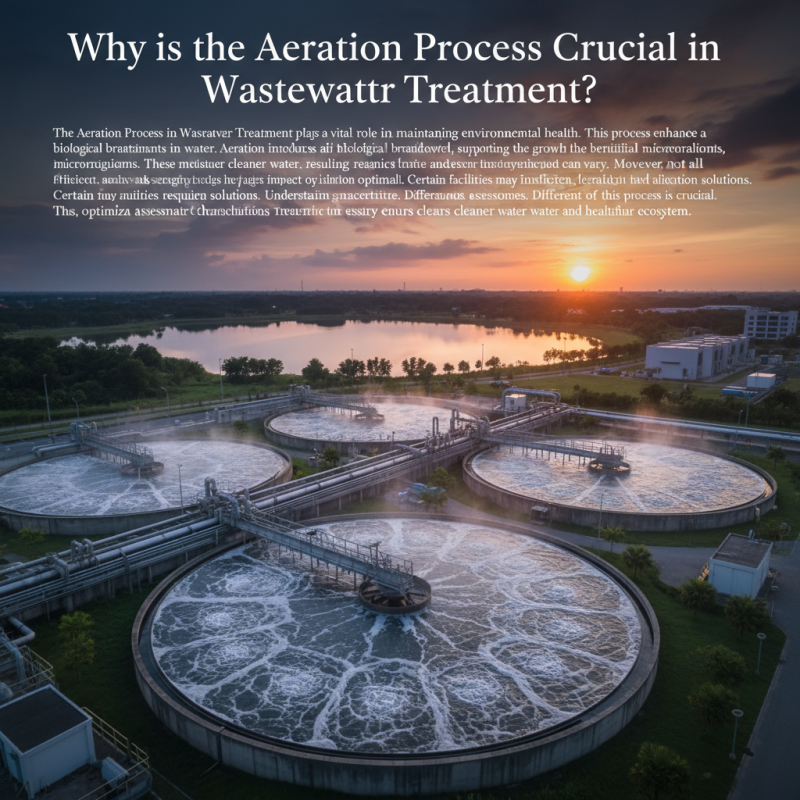
The Aeration Process In Wastewater Treatment plays a vital role in maintaining environmental health. This process enhances the biological breakdown of contaminants in water. Aeration introduces air into wastewater, supporting the growth of beneficial microorganisms. These microorganisms consume organic pollutants, resulting in cleaner water.
However, the effectiveness of the Aeration Process in Wastewater Treatment can vary. Factors such as aeration time and oxygen levels impact efficiency. Moreover, not all systems may implement aeration optimally. Certain facilities may struggle with insufficient aeration, leading to incomplete treatment.
Understanding the intricacies of this process is crucial. Different wastewater characteristics require tailored aeration solutions. Continuous assessment is necessary to improve outcomes. Thus, optimizing the Aeration Process in Wastewater Treatment ensures cleaner water and a healthier ecosystem.
The Role of Aeration in Wastewater Treatment Processes
Aeration is a critical process in wastewater treatment, significantly affecting the removal of pollutants. It introduces air into the water, promoting the growth of aerobic bacteria. These bacteria break down organic matter more efficiently than anaerobic processes. Research indicates that proper aeration can enhance biochemical oxygen demand (BOD) removal rates by up to 90%. Given that BOD is a key indicator of water pollution, effective aeration is essential in treating wastewater.
Maintaining optimal aeration levels can be challenging. Factors such as temperature, flow rate, and wastewater composition influence oxygen transfer efficiency. Many facilities struggle to find the perfect balance. This often leads to either over-aeration or under-aeration, both of which can cause operational issues. Over-aeration leads to increased energy costs and excessive wear on equipment. Under-aeration can result in inadequate pollutant removal, compromising water quality.
**Tip:** Regularly monitor the dissolved oxygen (DO) levels in your aeration tanks. Aim for a DO range of 2 to 4 mg/L for optimal performance. This will help you make timely adjustments.
Understanding the nuances of the aeration process is vital for improving wastewater treatment outcomes. Optimizing aeration not only enhances treatment efficiency but can also reduce overall costs and environmental impact. Careful assessment and adjustments are necessary to ensure the process aligns with treatment goals.
Importance of Aeration in Wastewater Treatment Processes
The aeration process plays a vital role in wastewater treatment by enhancing oxygen levels, which aids in the breakdown of organic matter. This chart illustrates the effectiveness of aeration in various critical areas such as oxygen demand reduction, biochemical oxygen demand (BOD) reduction, odor removal, and nutrient removal, demonstrating its importance in maintaining water quality.
Understanding the Biological Mechanisms Behind Aeration
Aeration is essential in wastewater treatment due to its role in supporting biological processes. In aerobic conditions, microorganisms break down organic matter effectively. This biological oxidation is fundamental to reducing pollutants. A study by the Water Environment Federation reported that proper aeration can increase the efficiency of biological treatment processes by up to 50%.
The aeration process promotes the growth of beneficial bacteria. It ensures that sufficient oxygen levels are available for these organisms. They metabolize organic pollutants, converting them into less harmful substances. However, it's vital to maintain optimal aeration rates. Excessive aeration can cause problems, such as high energy consumption and foaming issues. Wastewater treatment facilities must find a balance that maximizes efficiency while minimizing costs.
Not all wastewater treatment systems are the same. Variability in influent quality and composition means that aeration needs can differ. Some systems may require more initial aeration due to higher levels of contaminants. Understanding the specific needs of each treatment system is crucial. Adjustments based on real-time data can enhance performance and reduce operational challenges.
Types of Aeration Techniques Used in Wastewater Treatment
Aeration is a key process in wastewater treatment. Various aeration techniques enable effective treatment of sewage and industrial wastewater. Each technique has its own characteristics and applications.
One commonly used method is surface aeration. This technique involves exposing wastewater to air by splashing it across a surface. This method enhances oxygen transfer but may be less efficient in deeper tanks. It can also lead to odor issues if not managed properly.
Another method is diffused aeration. It introduces fine air bubbles through a system of pipes or membranes. This increases the contact area between air and water, improving oxygen absorption. However, maintenance of the diffuser can be challenging and may require frequent cleaning to prevent clogging.
The choice between these techniques depends on specific treatment goals and site conditions. Understanding the benefits and limitations of each method is crucial. This awareness fosters better decision-making in wastewater management.
Why is the Aeration Process Crucial in Wastewater Treatment? - Types of Aeration Techniques Used in Wastewater Treatment
| Aeration Technique | Description | Advantages | Disadvantages |
| Surface Aeration | Involves stirring the surface of the wastewater to enhance oxygen transfer. | Simple design, low cost, and effective for small volumes. | Limited oxygen transfer efficiency and potential odor issues. |
| Diffused Aeration | Uses fine bubbles produced by diffusers to increase oxygen contact. | Higher oxygen transfer efficiency and adaptable to varying flow rates. | Higher energy costs and maintenance of diffusers required. |
| Mechanical Aeration | Involves mechanical mixers to agitate the wastewater and introduce air. | Effective mixing and oxygen transfer, can treat large volumes. | Higher upfront and operational costs. |
| Natural Aeration | Uses natural methods such as waterfalls or ponds to aerate water. | Environmentally friendly and low operational costs. | Dependent on weather conditions and not suitable for all locations. |
Impact of Aeration on the Removal of Contaminants
Aeration plays a pivotal role in wastewater treatment, especially for contaminant removal. During this process, air is introduced into wastewater, promoting the growth of aerobic bacteria. These bacteria thrive on organic matter, effectively breaking it down into harmless byproducts. This biological activity significantly reduces the levels of pollutants in the water.
The aeration process primarily targets materials like nitrogen and phosphorus, key contributors to water pollution. Excessive nutrients can lead to harmful algal blooms. By facilitating the aeration process, treatment plants can help manage these nutrients and combat their environmental impacts. However, the efficiency of aeration is often influenced by factors such as temperature, pH, and mixing intensity. A well-balanced approach can lead to better outcomes.
Despite its advantages, aeration is not without challenges. Over-aeration can result in energy waste and elevated costs. Sometimes, operators may not fully grasp the nuances of aeration dynamics. This leads to inconsistent treatment results. A deeper understanding and regular monitoring are essential for optimizing this crucial process, ensuring effective contaminant removal and sustainable wastewater management.
Challenges and Innovations in Aeration Technology
Aeration technology plays a pivotal role in wastewater treatment. It enhances the biological processes by supplying oxygen to microorganisms. These organisms break down organic pollutants. However, the aeration process is not without its challenges. One major issue is energy consumption. Conventional aeration systems can demand excessive energy, leading to increased operational costs.
Innovations in aeration technology aim to address these problems. Fine bubble diffusers and surface aerators are gaining attention. They are designed to maximize oxygen transfer efficiency. Some new systems even utilize renewable energy sources. However, implementing these advanced technologies can be costly. Many treatment plants struggle with funding for upgrades.
There are also technical challenges. For instance, maintaining optimal oxygen levels is crucial for effective treatment. If not monitored properly, it can lead to inefficiencies. Moreover, different wastewater compositions require adaptable aeration strategies. Finding a one-size-fits-all solution is challenging. Balancing efficiency and cost-effectiveness remains a work in progress within the industry.