
Best 90° Long Radius Elbow Manufacturers in China?
Choosing a 90° Long Radius Elbow manufacturer in China involves more than comparing prices. The fitting must turn flow smoothly while matching the pipe’s dimensions, material, and connection requirements. In practice, small details matter: a clean bevel, consistent wall thickness, and clear material traceability.
ASME B16.9 sets dimensional and tolerance requirements for factory-made wrought buttwelding fittings. It offers buyers a useful reference when reviewing drawings and inspection documents. The World Steel Association reported 1,882.6 million tonnes of global crude steel production in 2024. That figure describes the wider materials supply chain; it does not measure elbow production or demand. A useful distinction.
A polished product page is not proof of consistent quality. Ask for material test certificates, dimensional inspection records, and evidence that the supplied fitting matches the agreed specification. Check how the manufacturer handles production changes and nonconforming items, too. Those answers can reveal more than a low quotation.
This introduction does not include a named expert quotation because no verifiable, attributable quote was provided. Inventing one would weaken the trust buyers need when assessing suppliers. The guide that follows compares manufacturers through practical criteria: product range, documented quality controls, customization capability, and communication. The best choice is not automatically the largest factory. It is the supplier whose evidence fits your project.
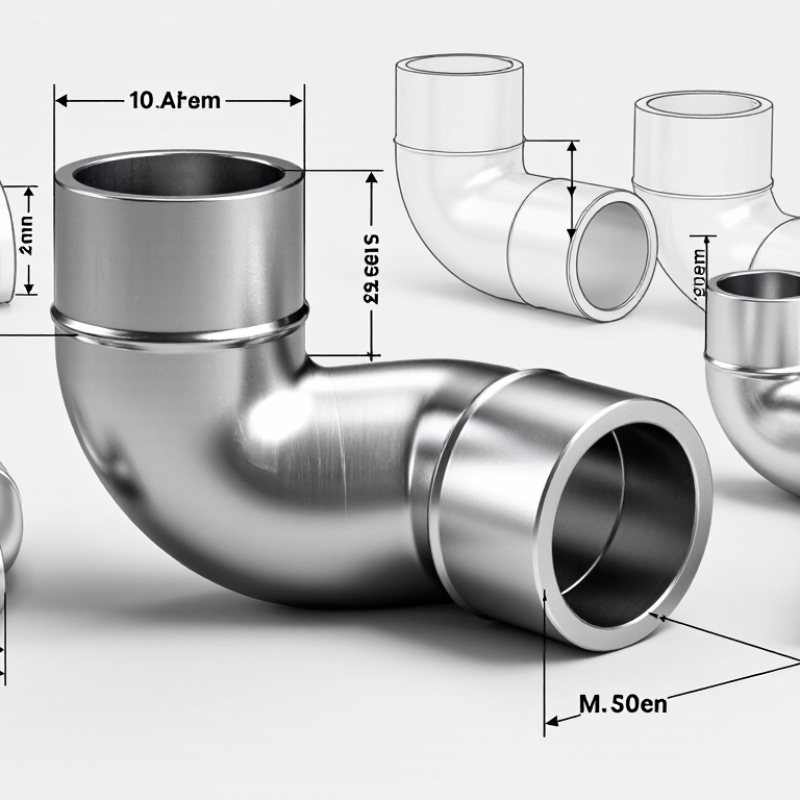
90° Long Radius Elbows: How the 1.5D Centerline Radius Is Defined
For a 90° long radius elbow, “1.5D” describes the bend radius measured along the pipe centerline. It means the centerline radius is 1.5 times the pipe’s nominal size, not 1.5 times its outside diameter. This distinction matters. For example, a nominal 6-inch elbow has a nominal centerline radius of 9 inches. The actual outside diameter is different, so using it in the calculation gives the wrong result.
The centerline radius runs from the elbow’s center of curvature to the midpoint of its bore. On a standard 90° elbow, this radius also corresponds to the center-to-end dimension shown on many dimensional tables. Check the applicable product standard and drawing, since dimensions and tolerances can vary by size and specification. Measure from the tangent end, not the outer curve. A tape measure on the outside arc can mislead.
For procurement, confirm whether dimensions are listed in NPS, DN, or millimeters, and verify wall thickness separately. Radius alone does not confirm fit or flow performance. Manufacturing checks may also include end-to-center dimensions, ovality, and wall thinning at the bend. These details are easy to overlook. A clear drawing helps, though ambiguous notation still deserves a question before production.
